

Regency Mahogany Dining Table in the manner of Thomas Hope
Regency Mahogany Dining Table in the manner of Thomas Hope
English
circa 1805 - 1810
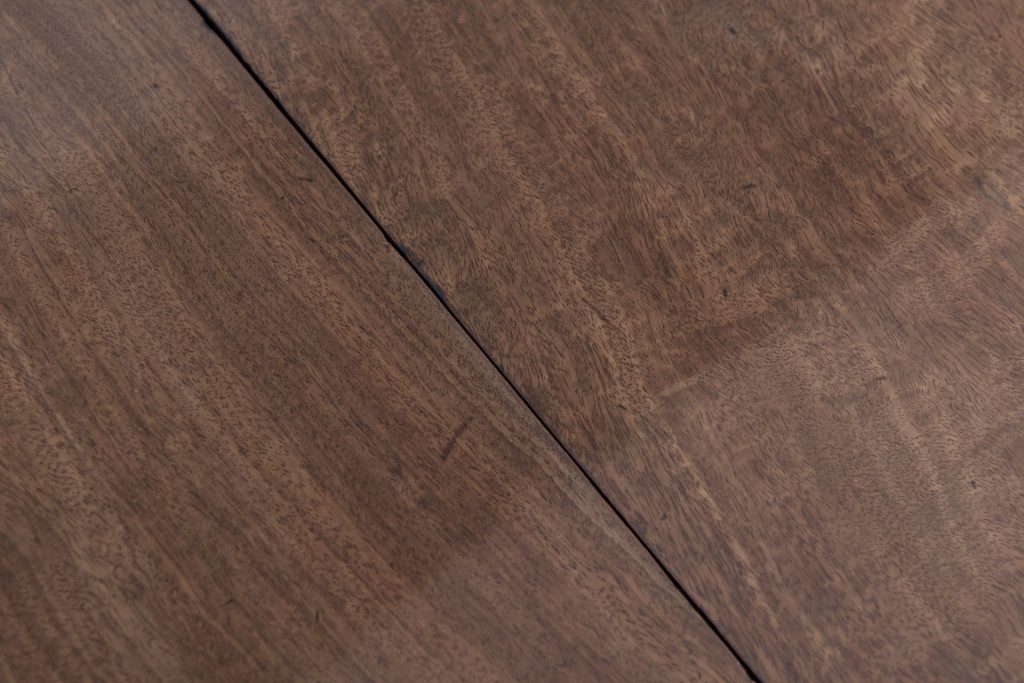
A Highly Unusual & Rare Early 19th Century Period Mahogany Dining Table
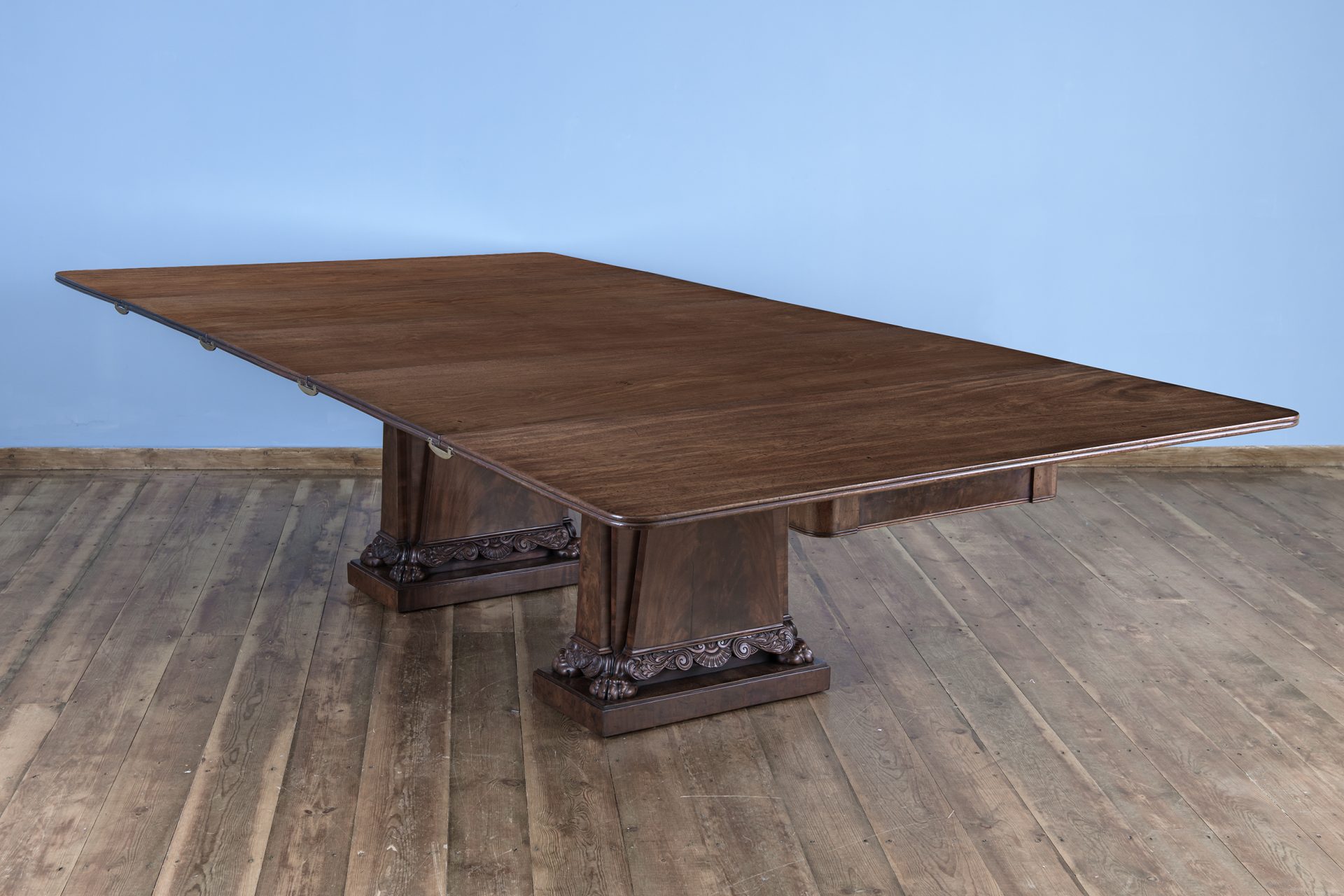
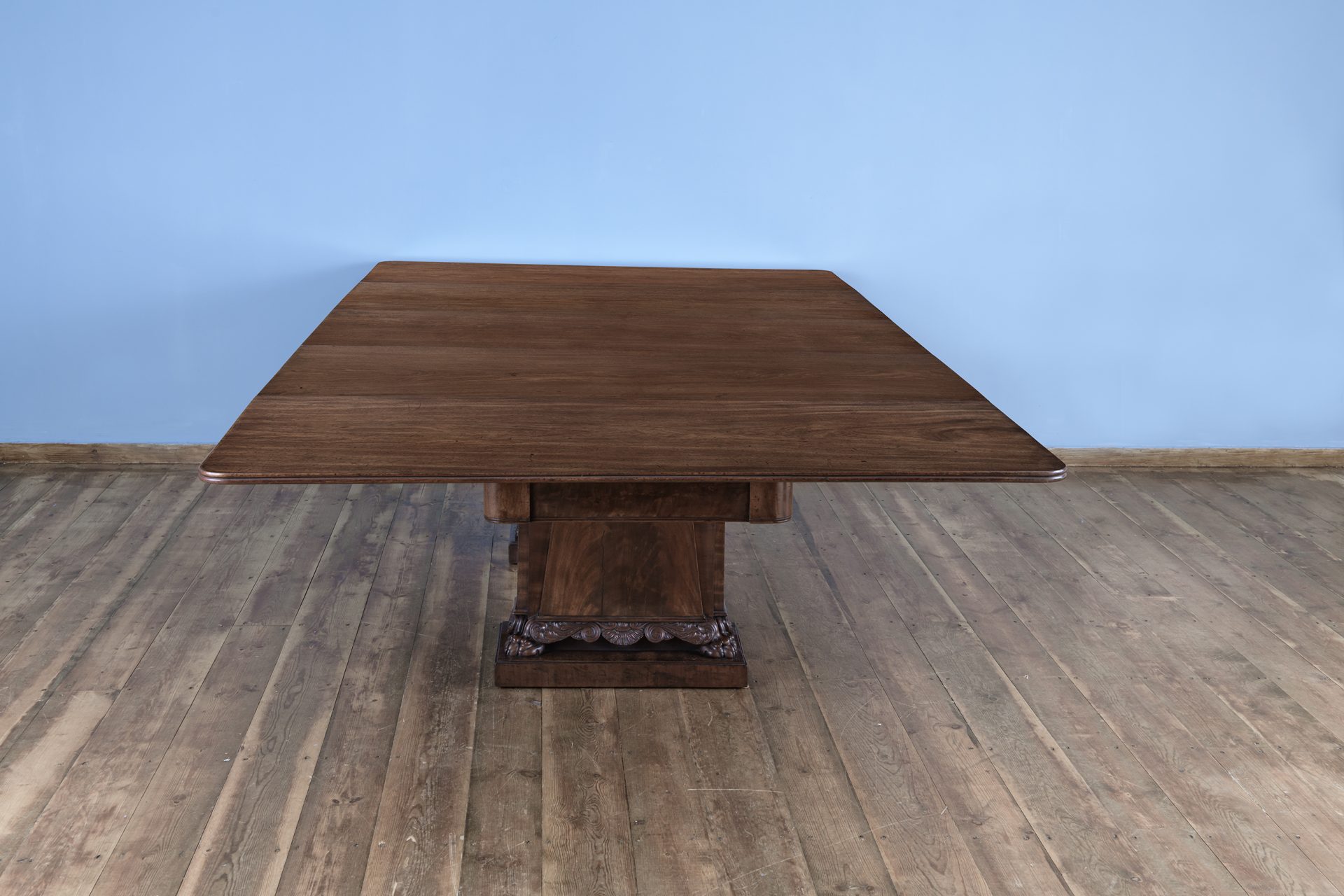
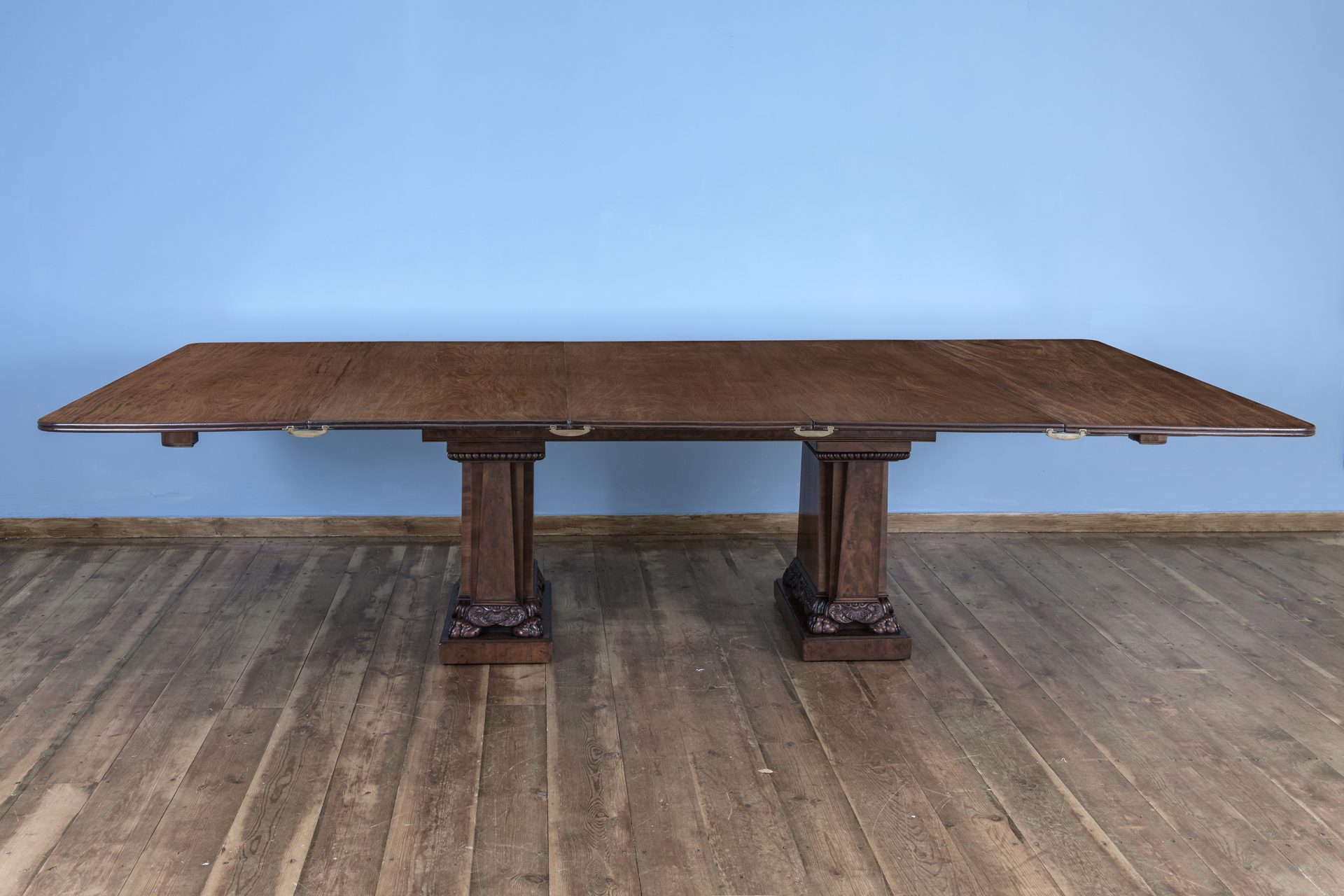
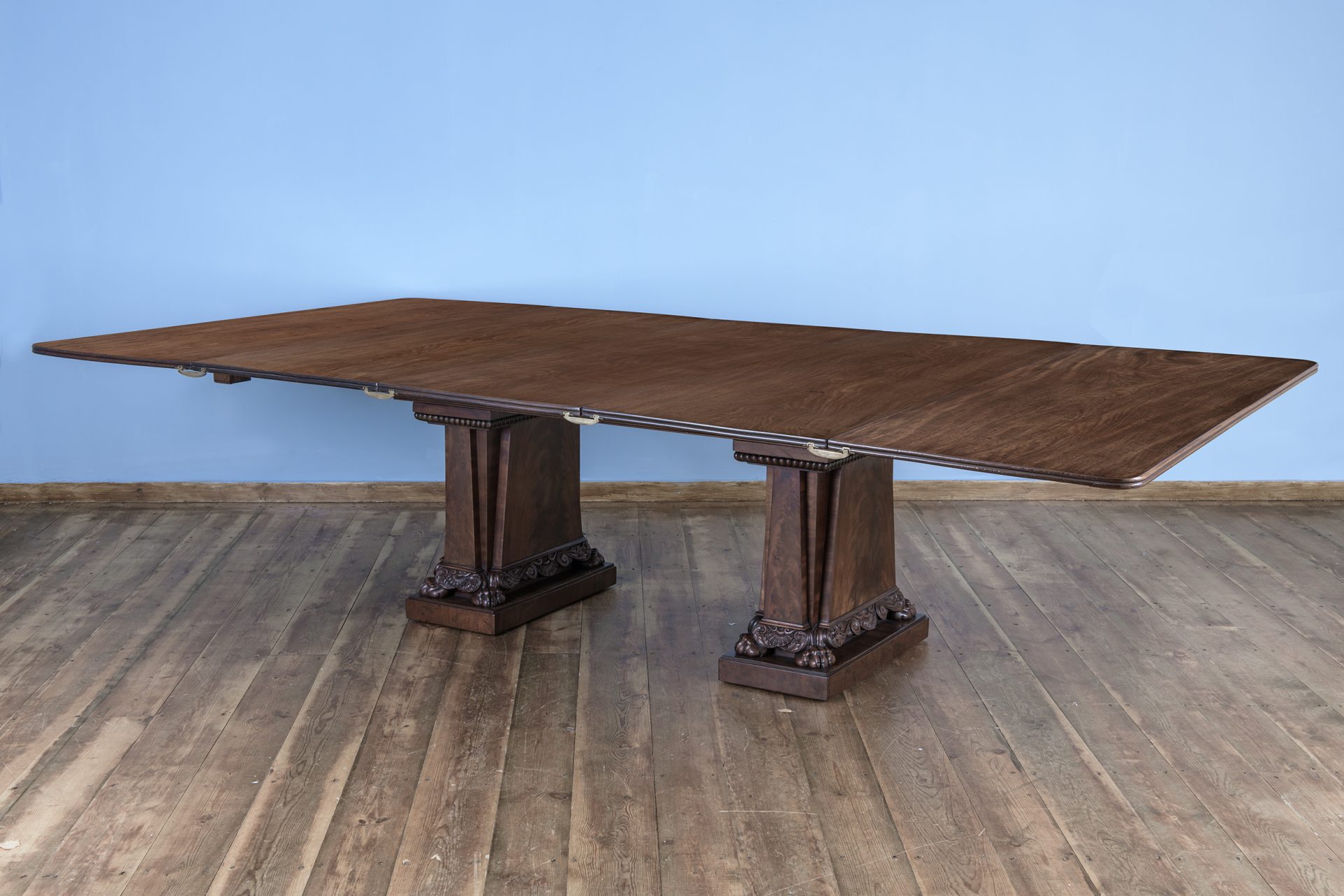
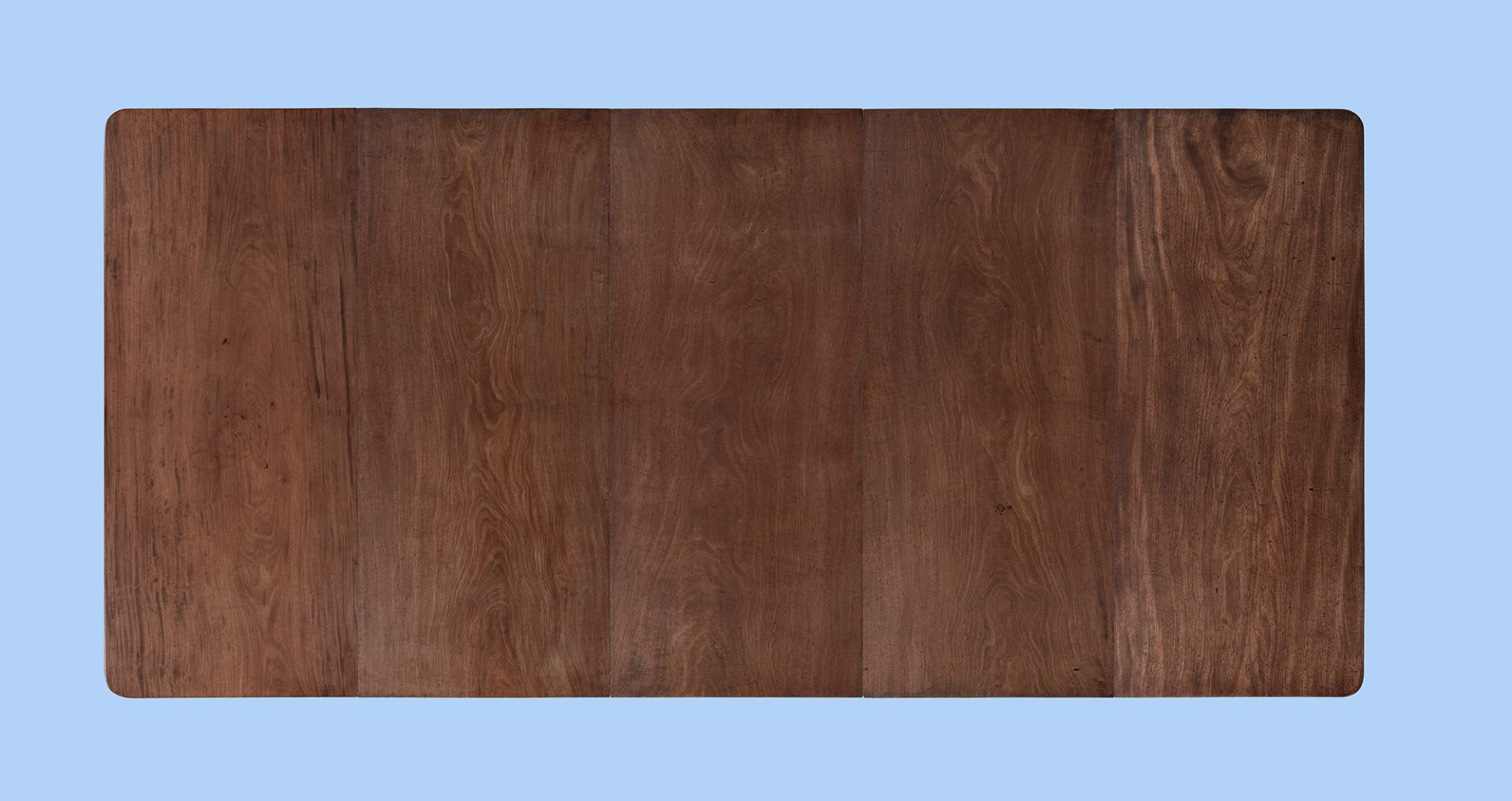
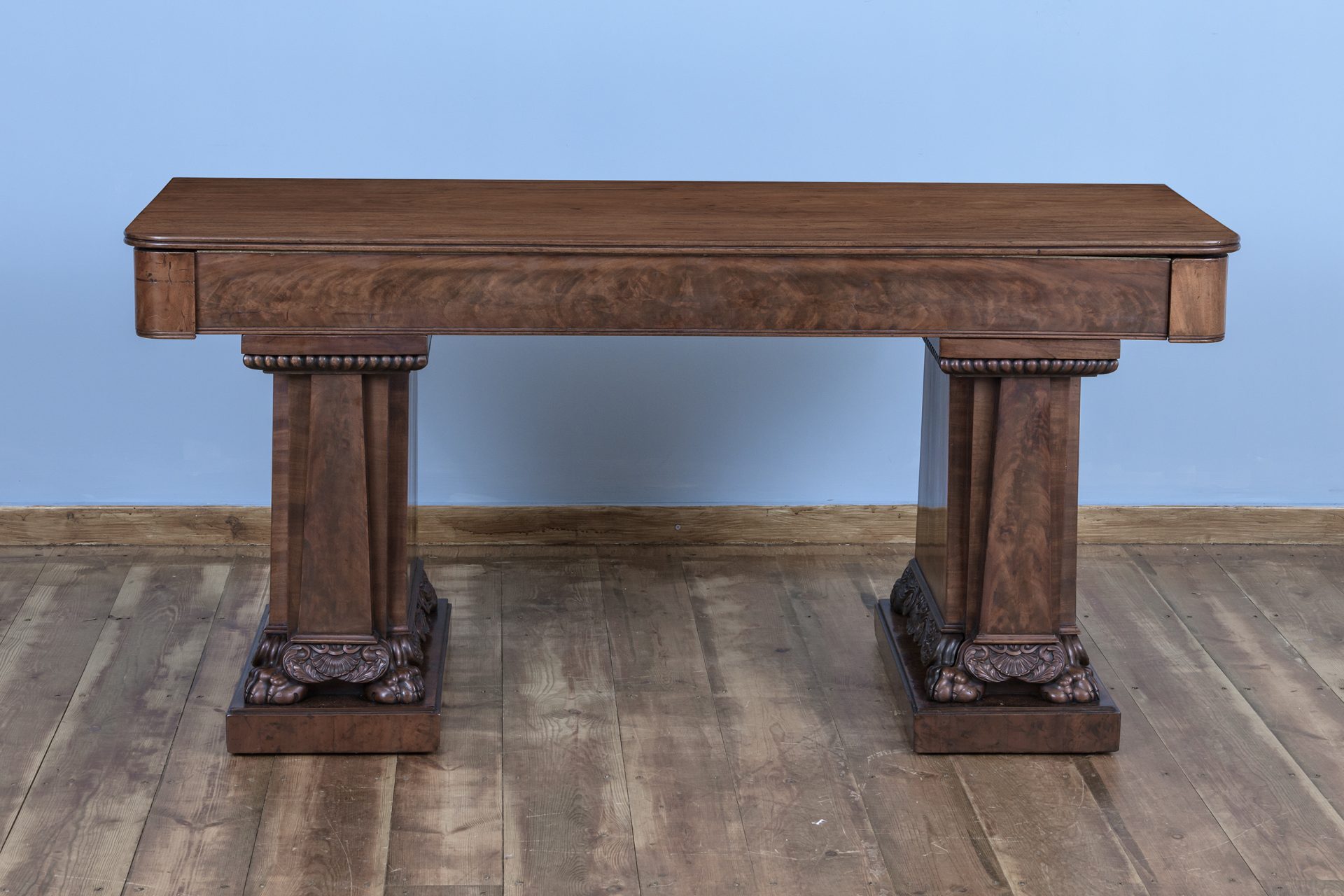
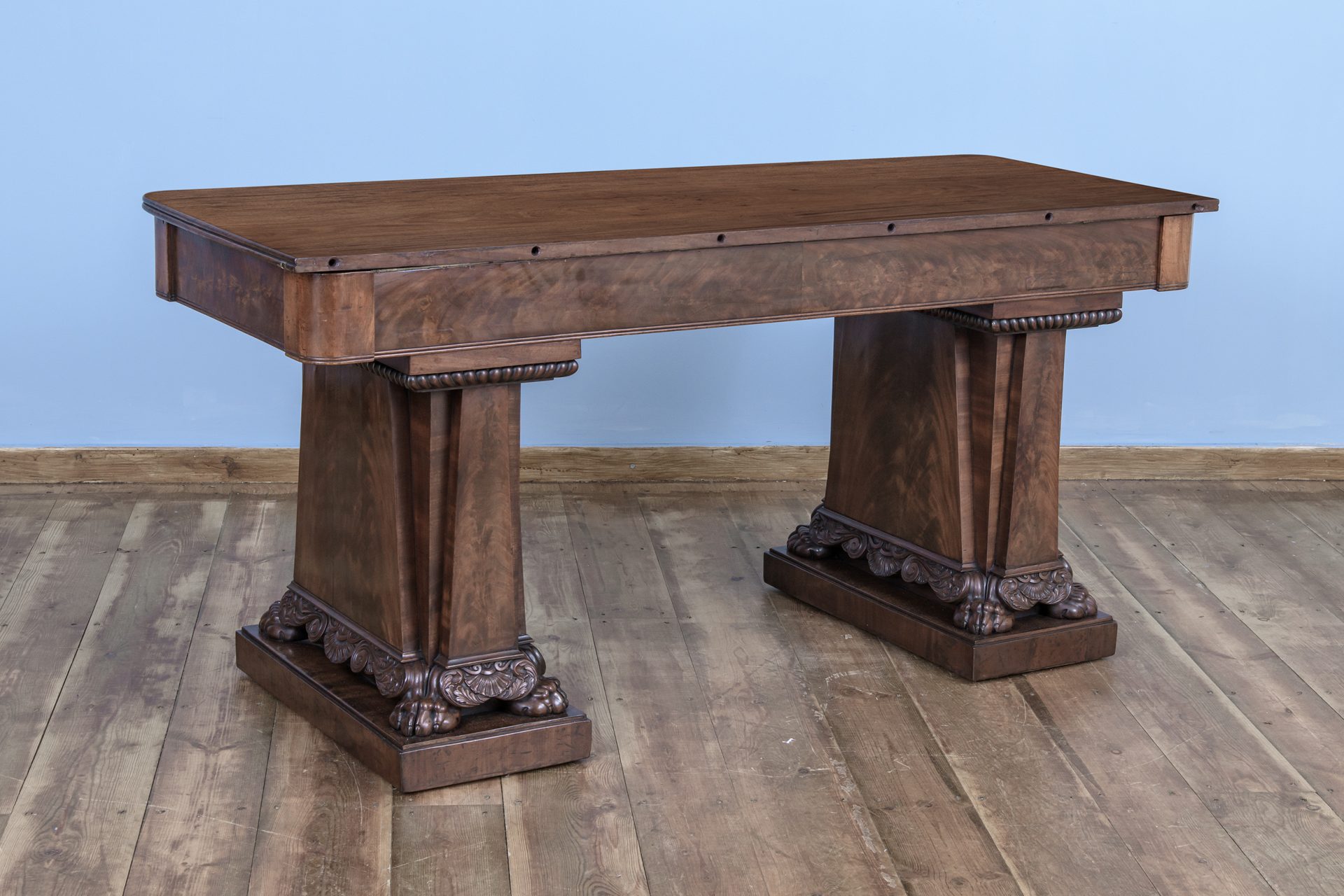
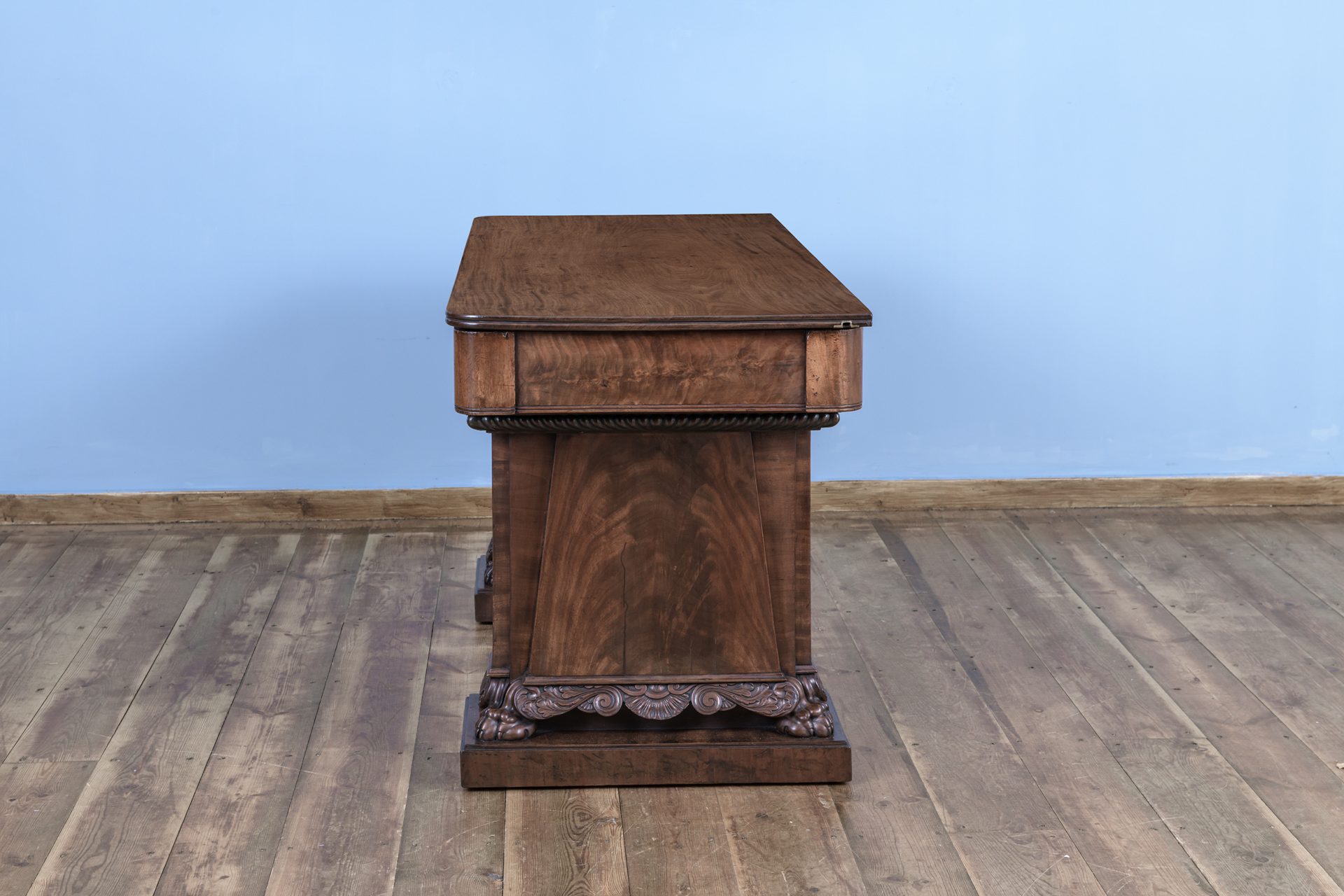
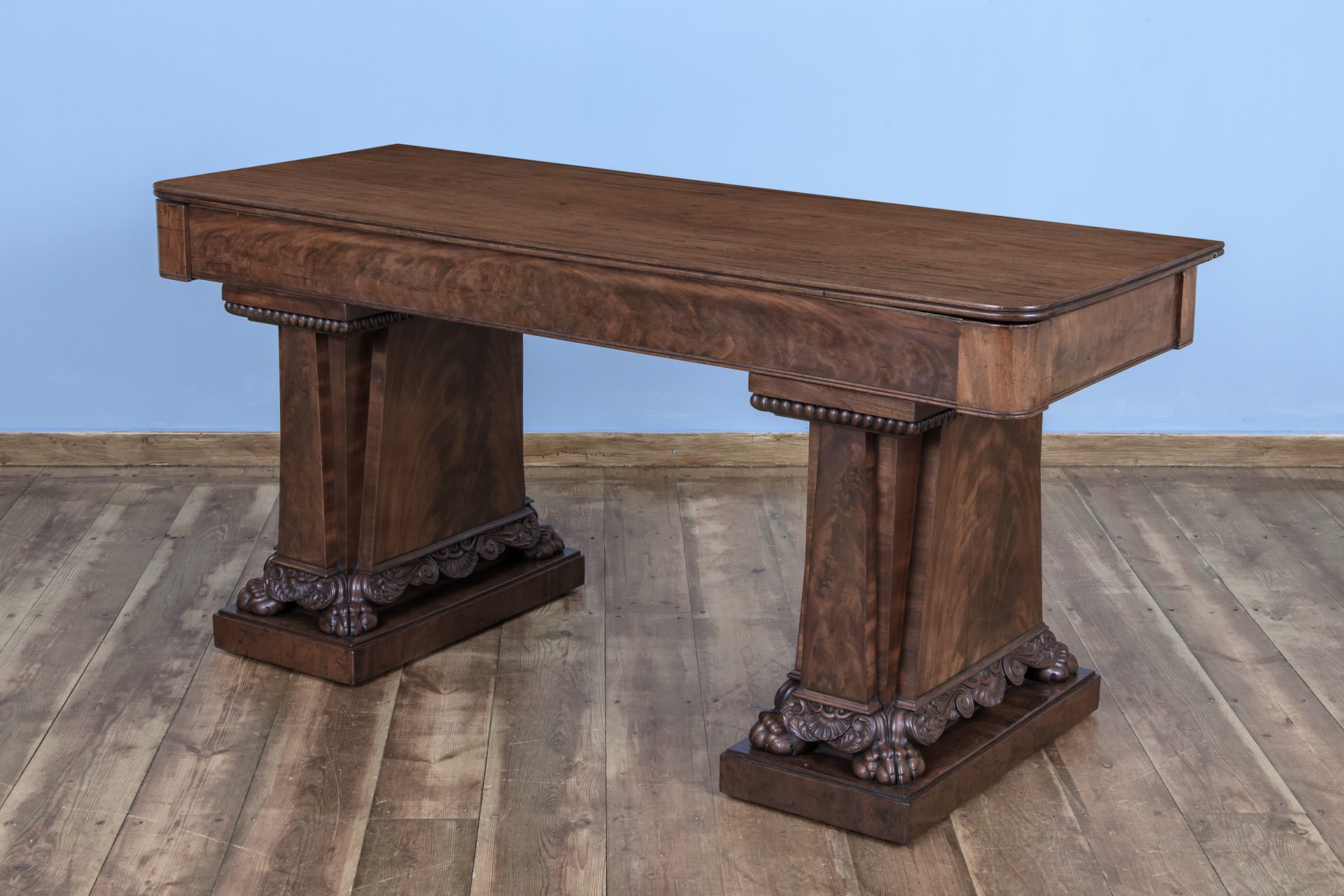
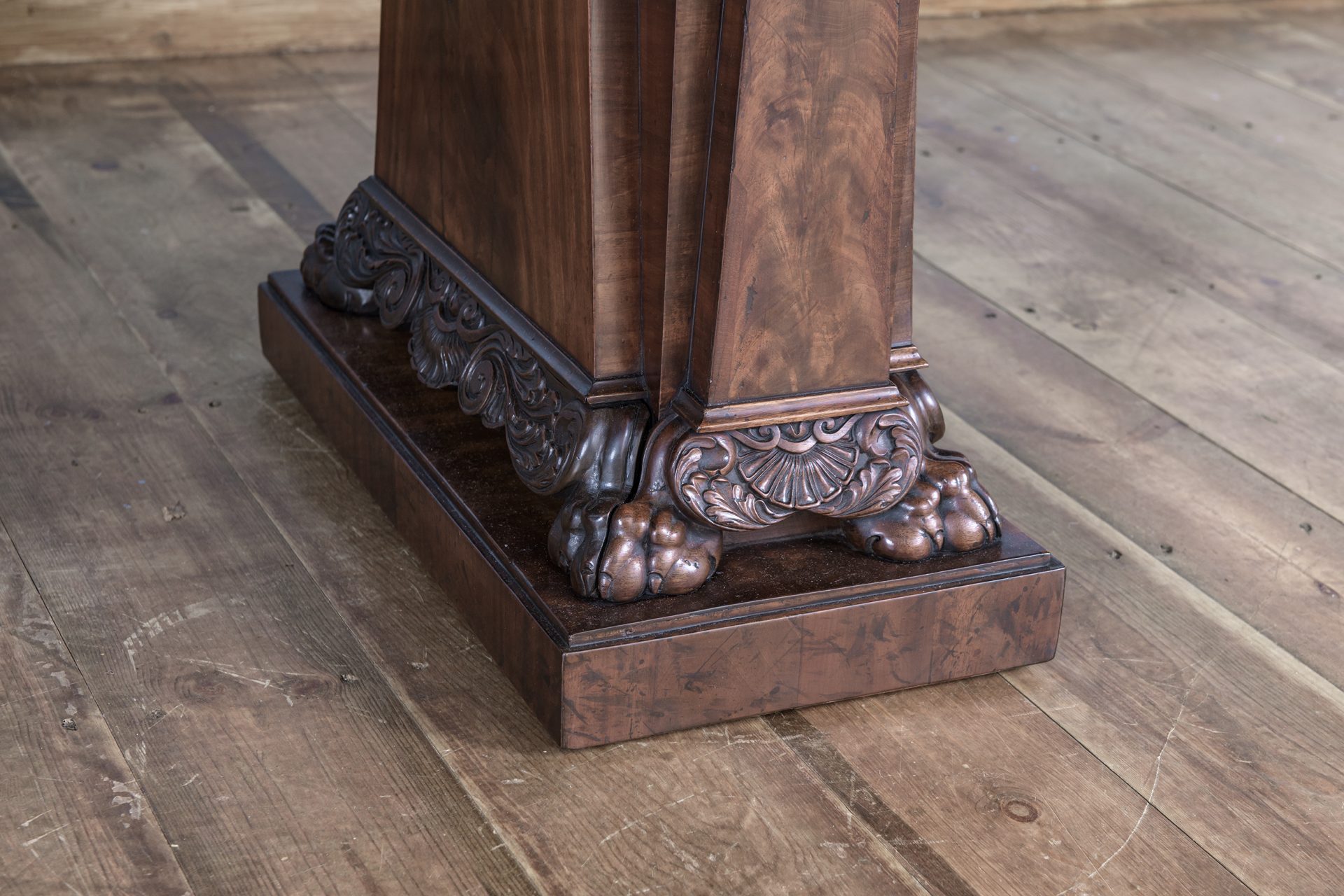
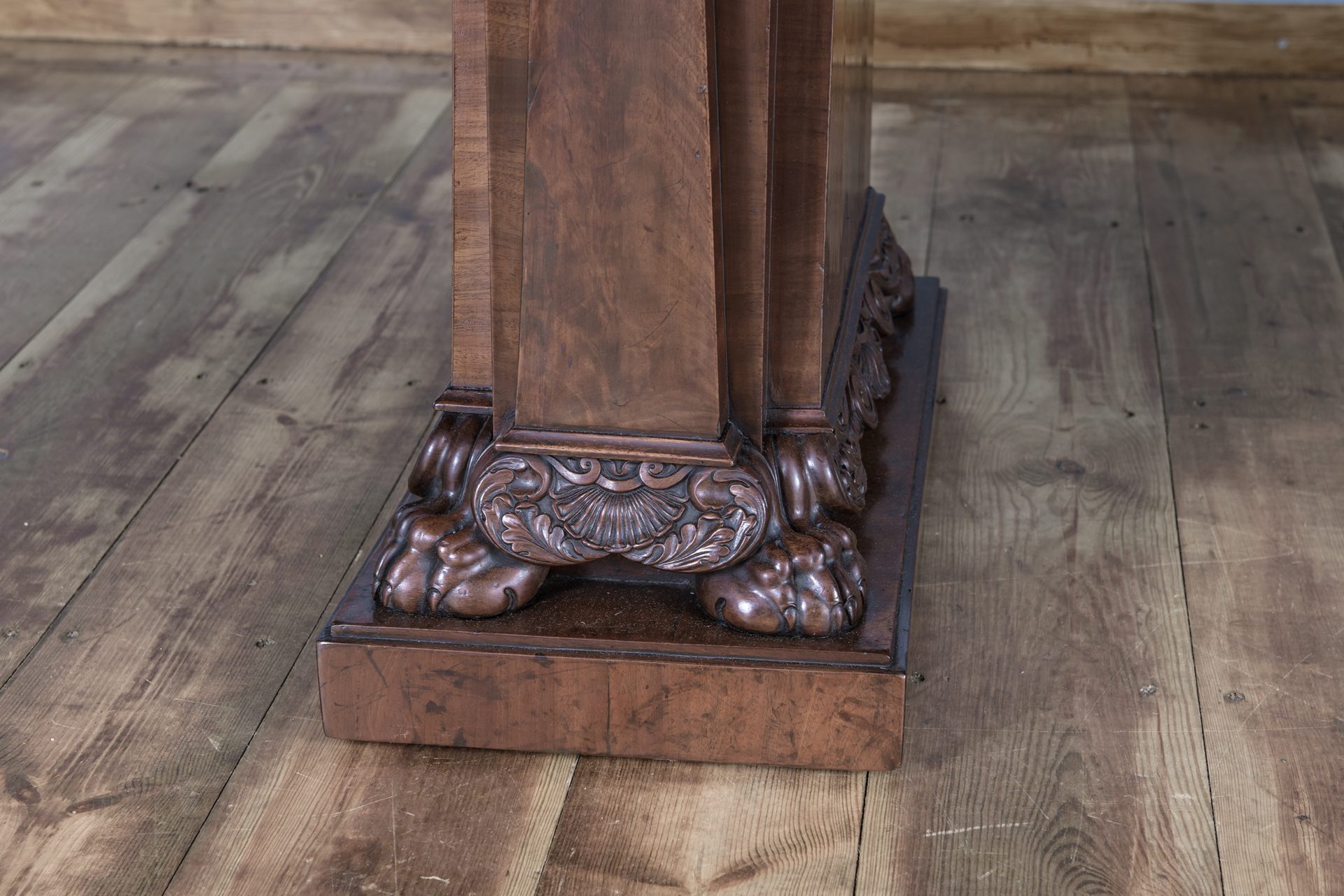
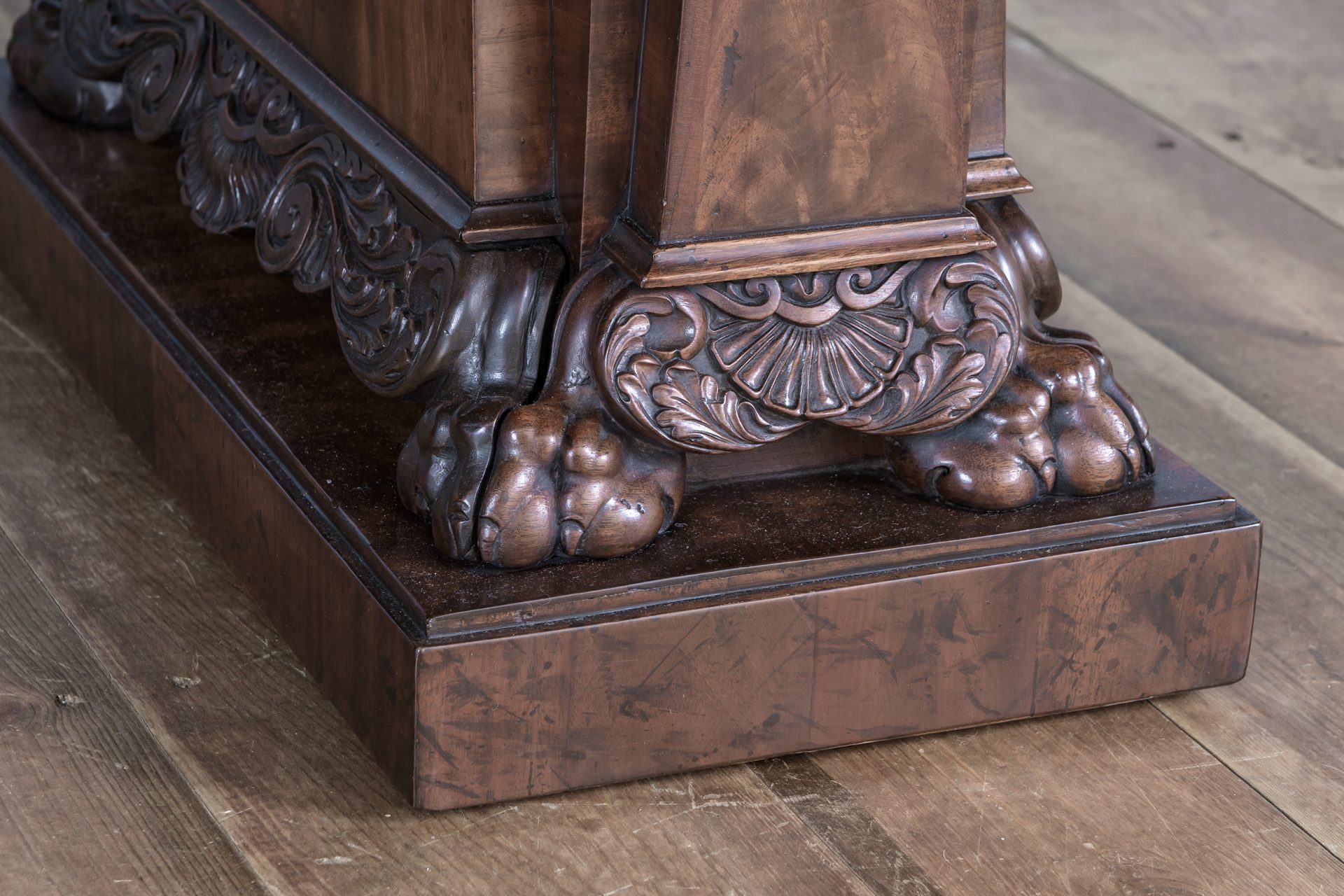
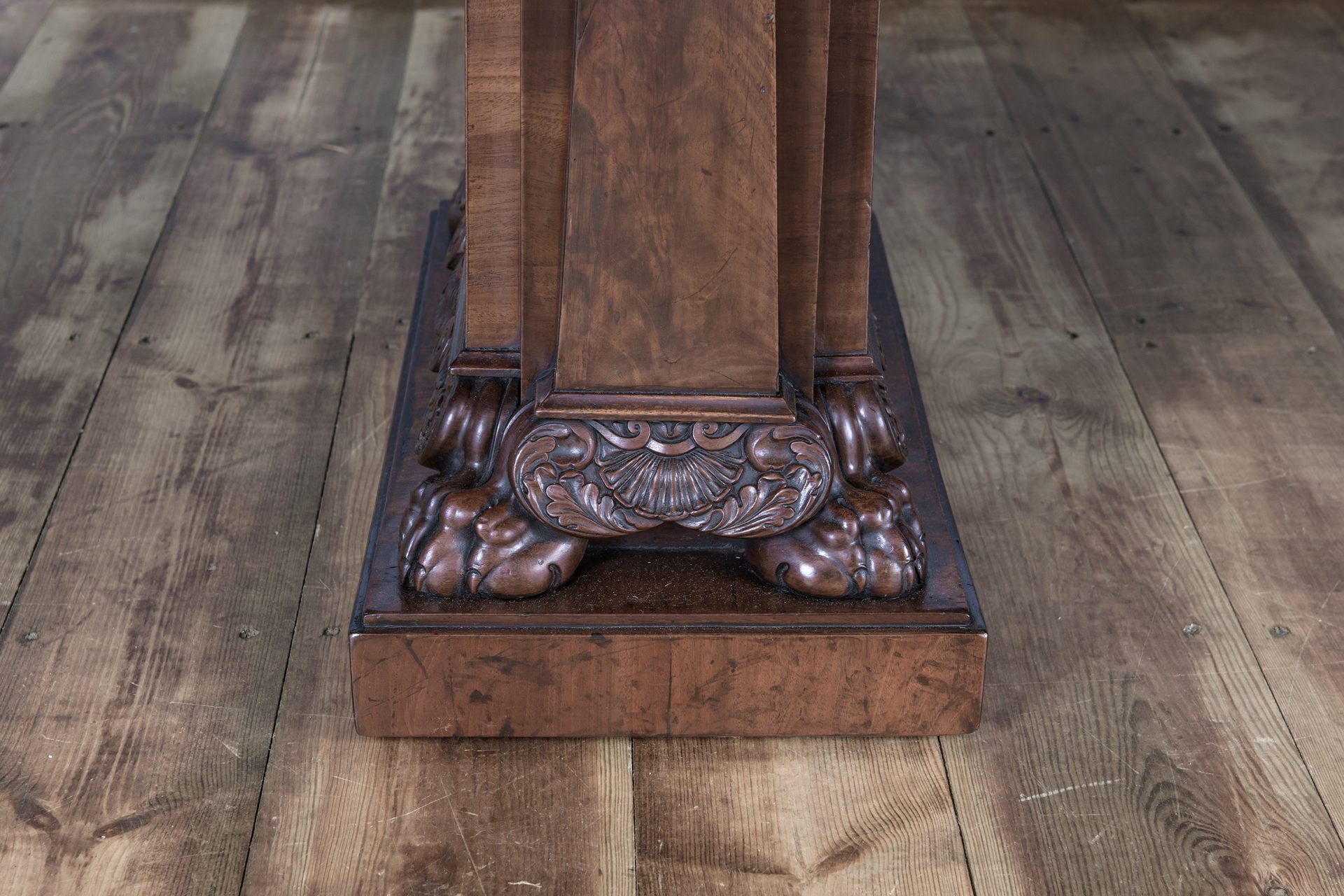
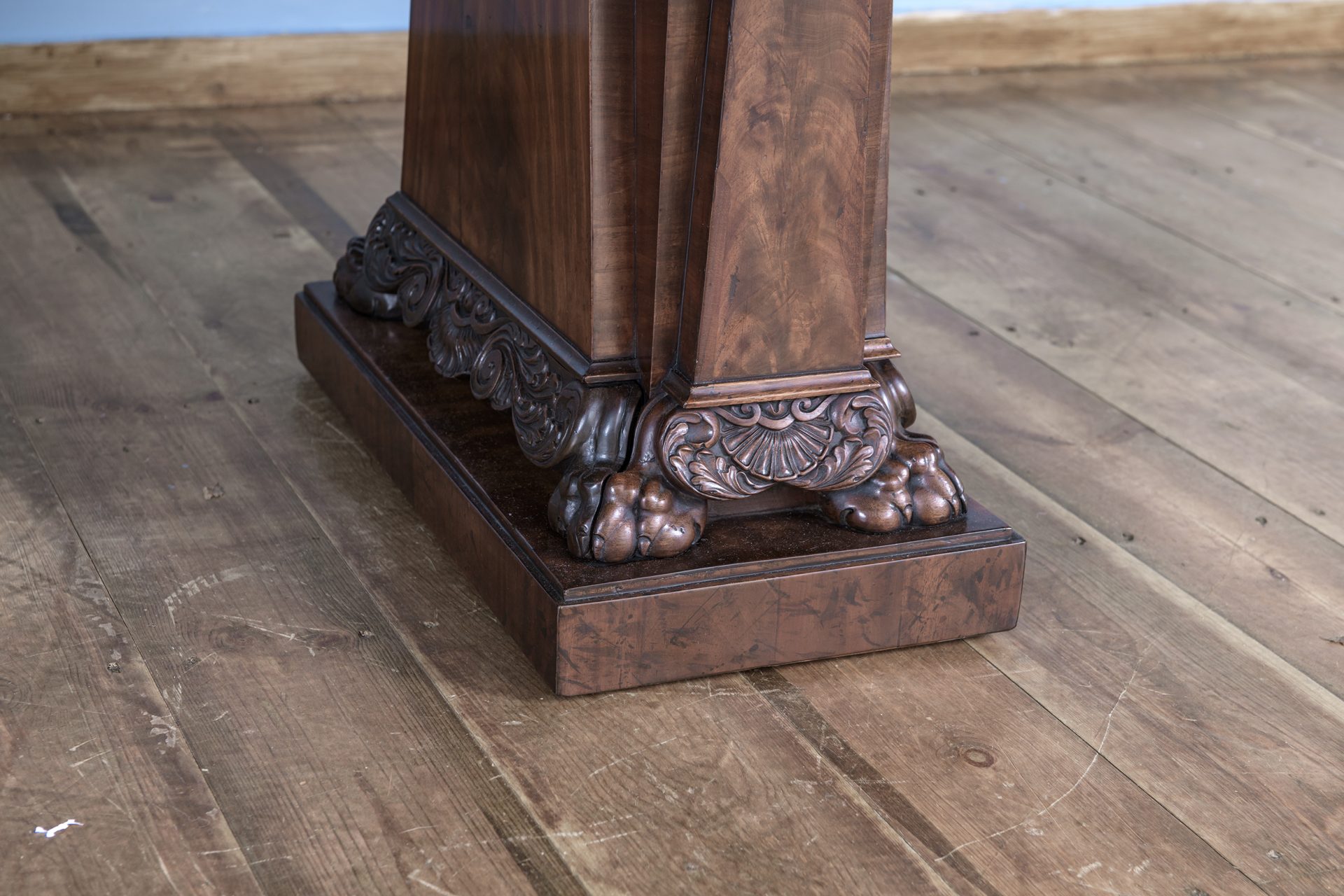
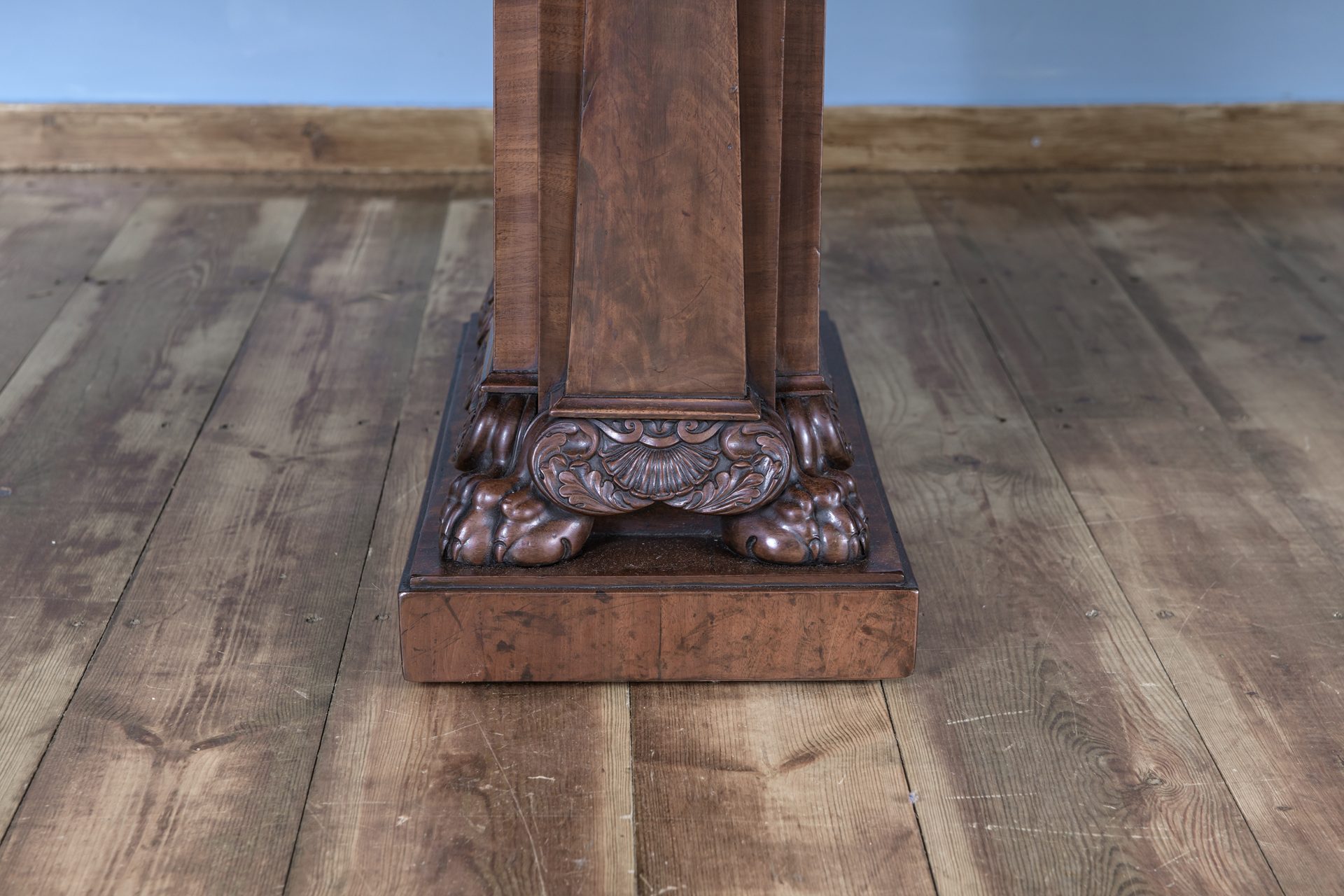
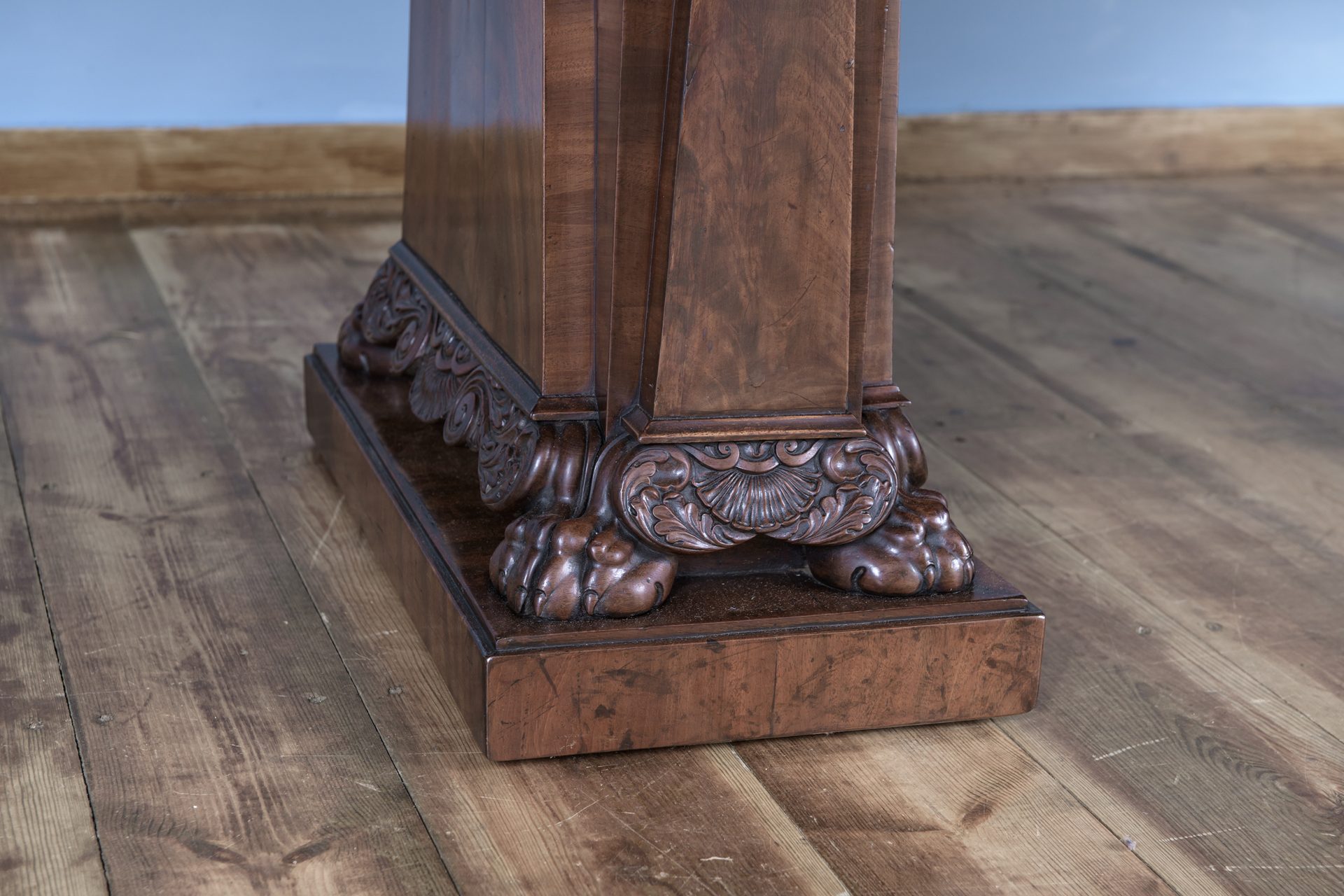
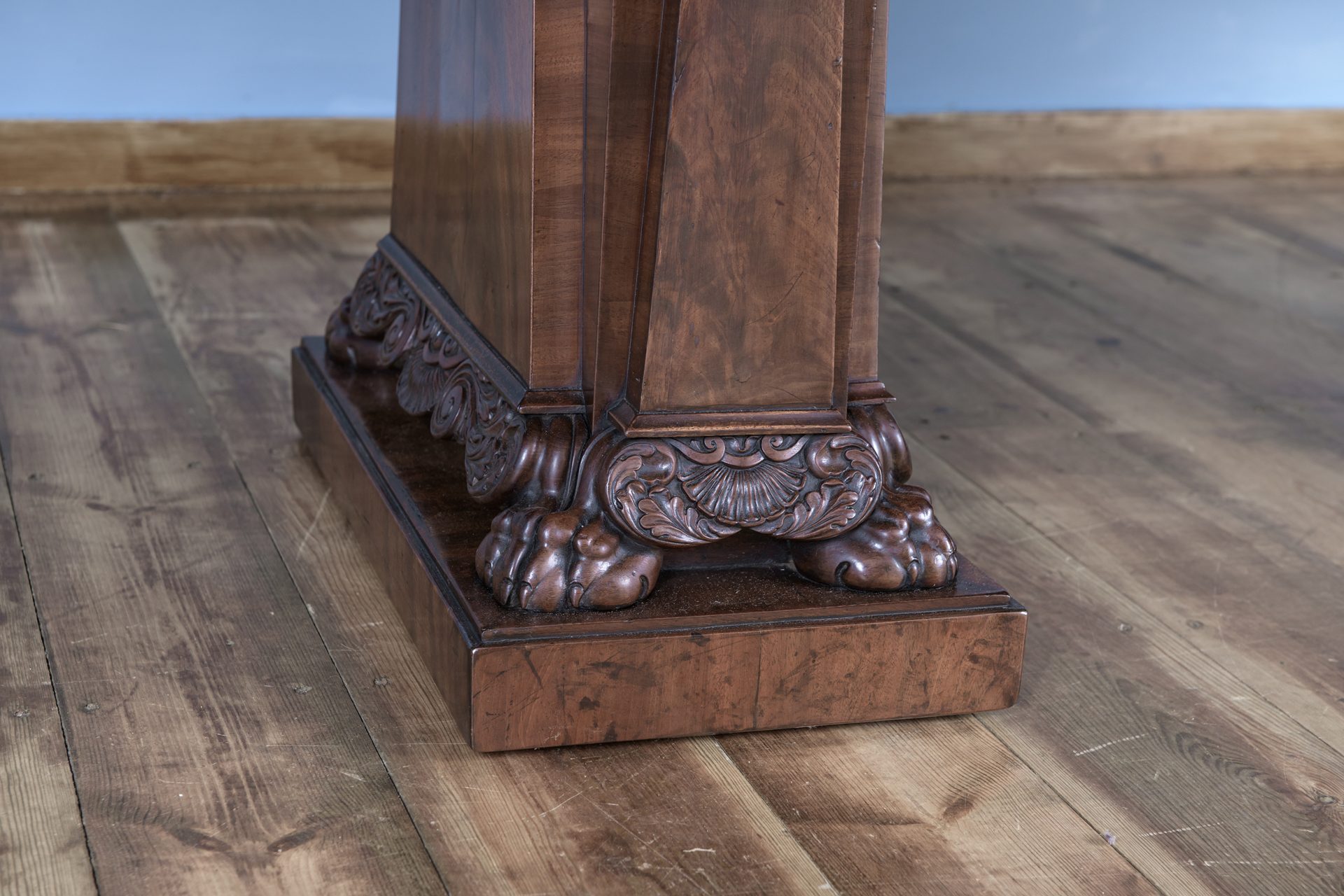
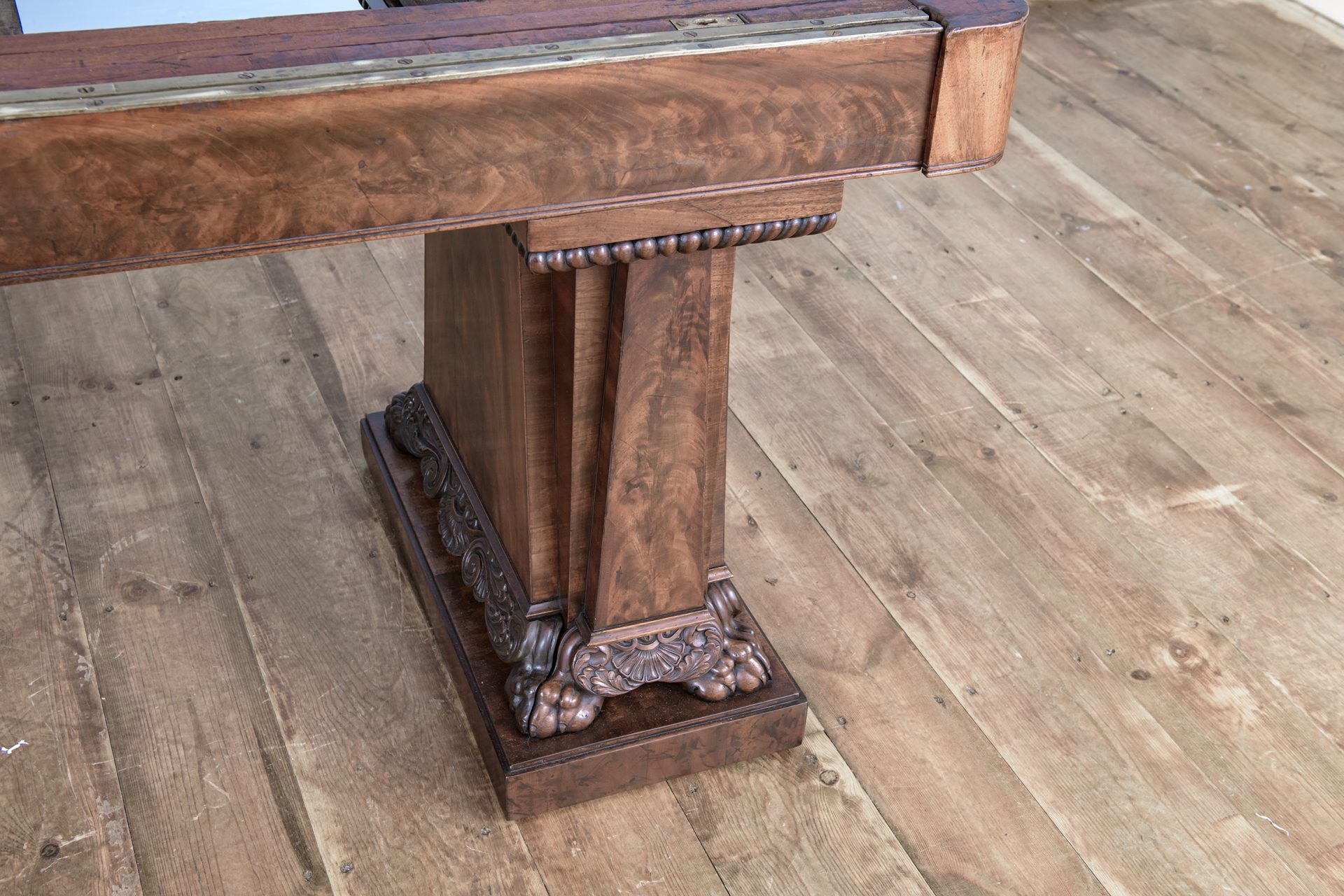
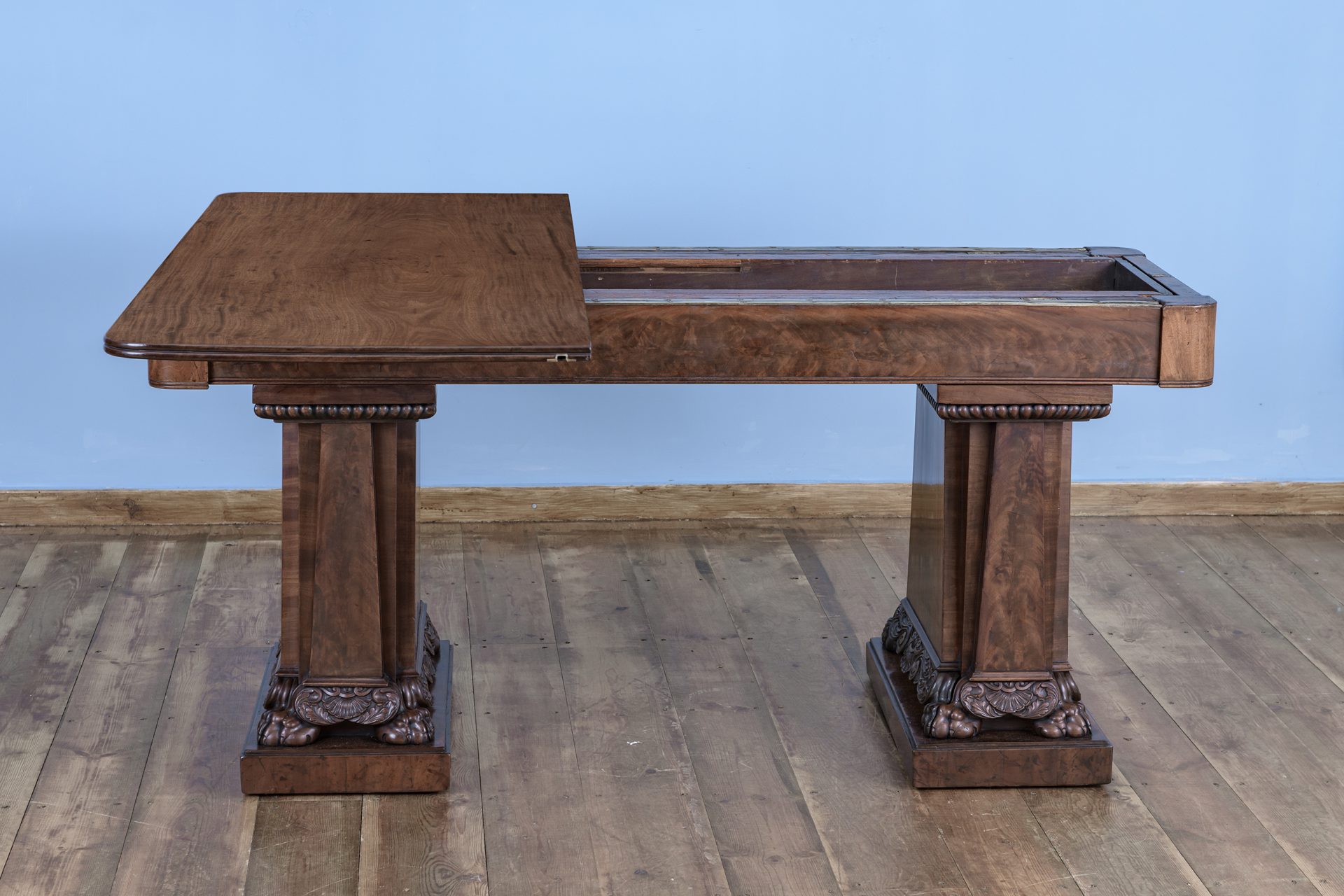
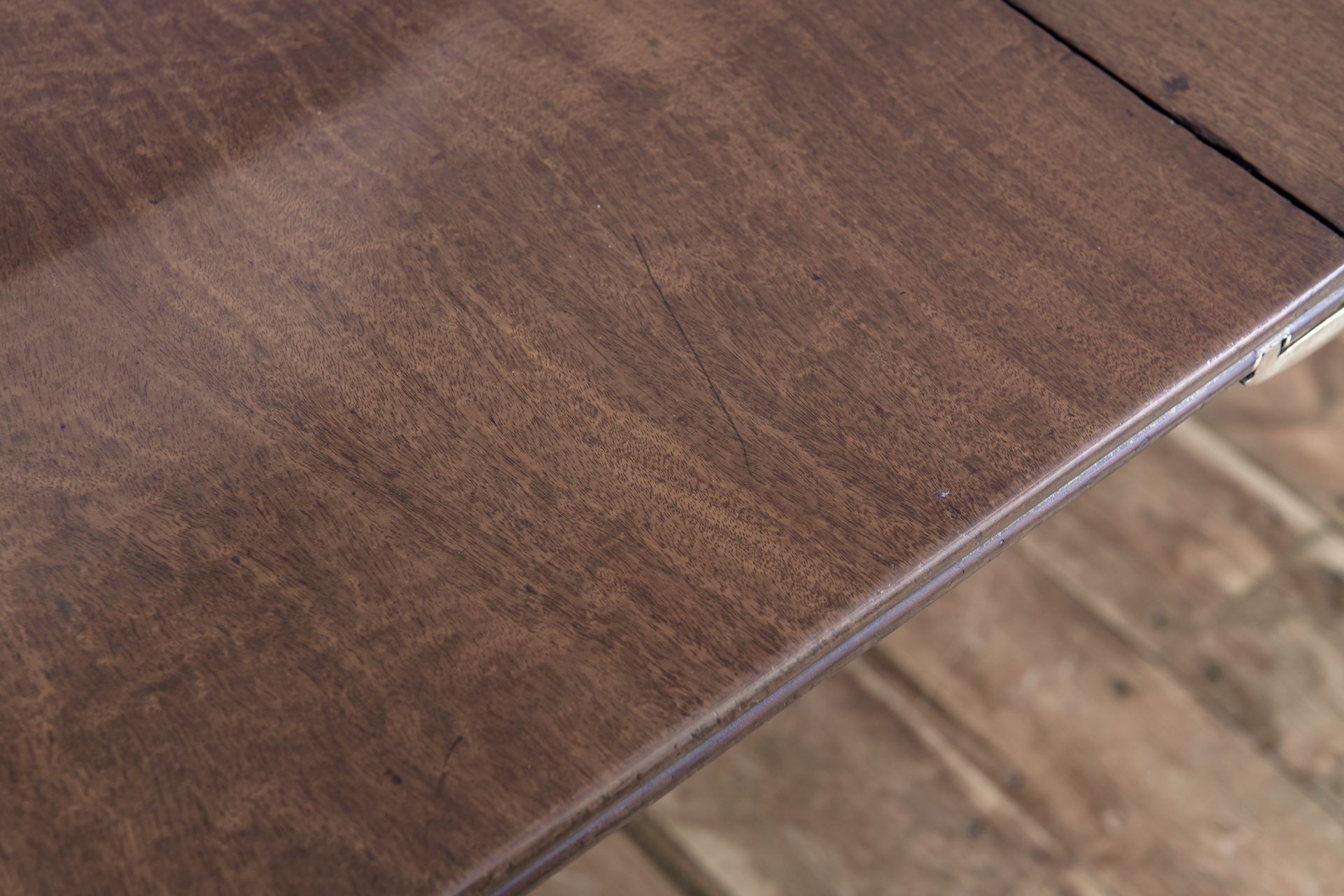
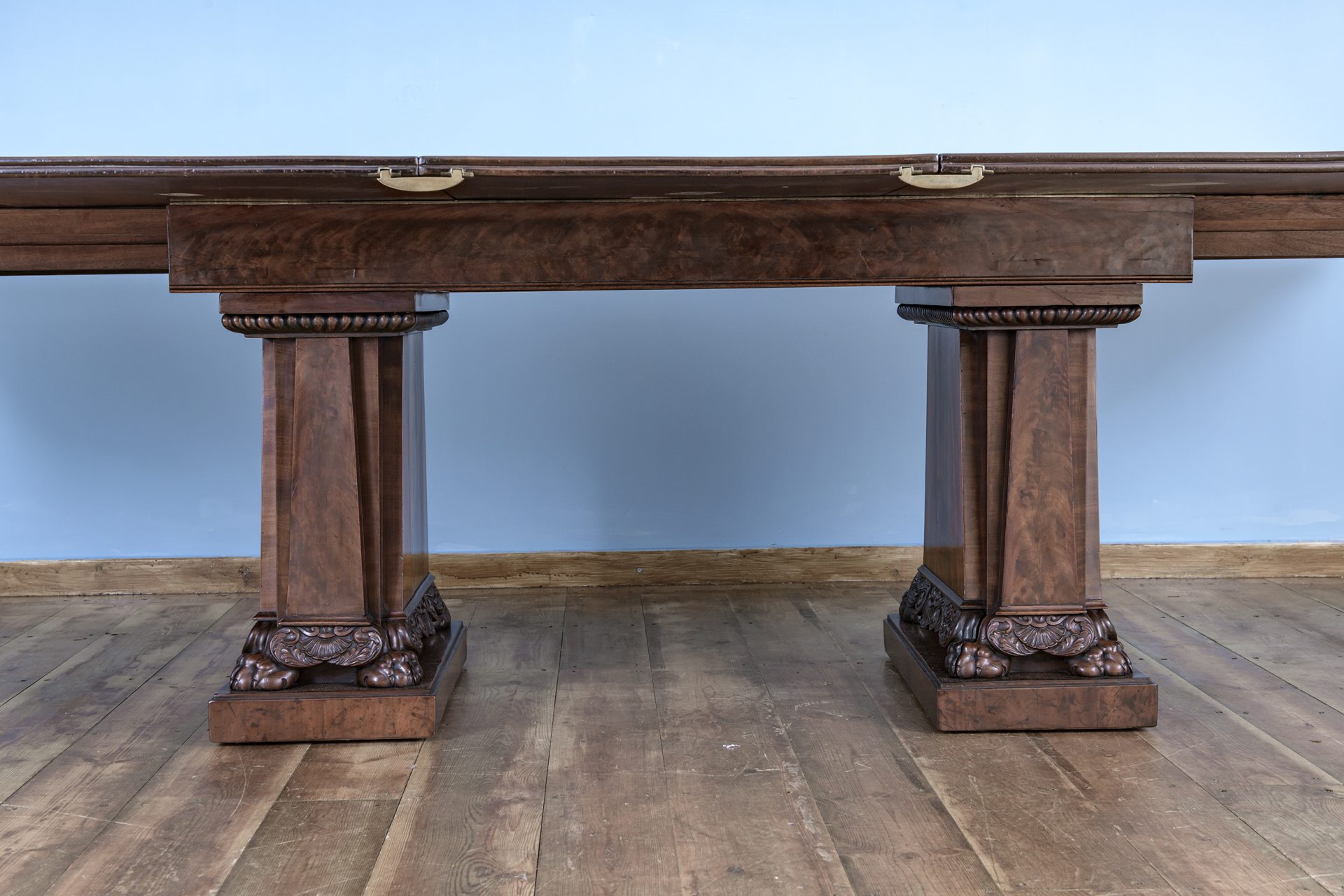
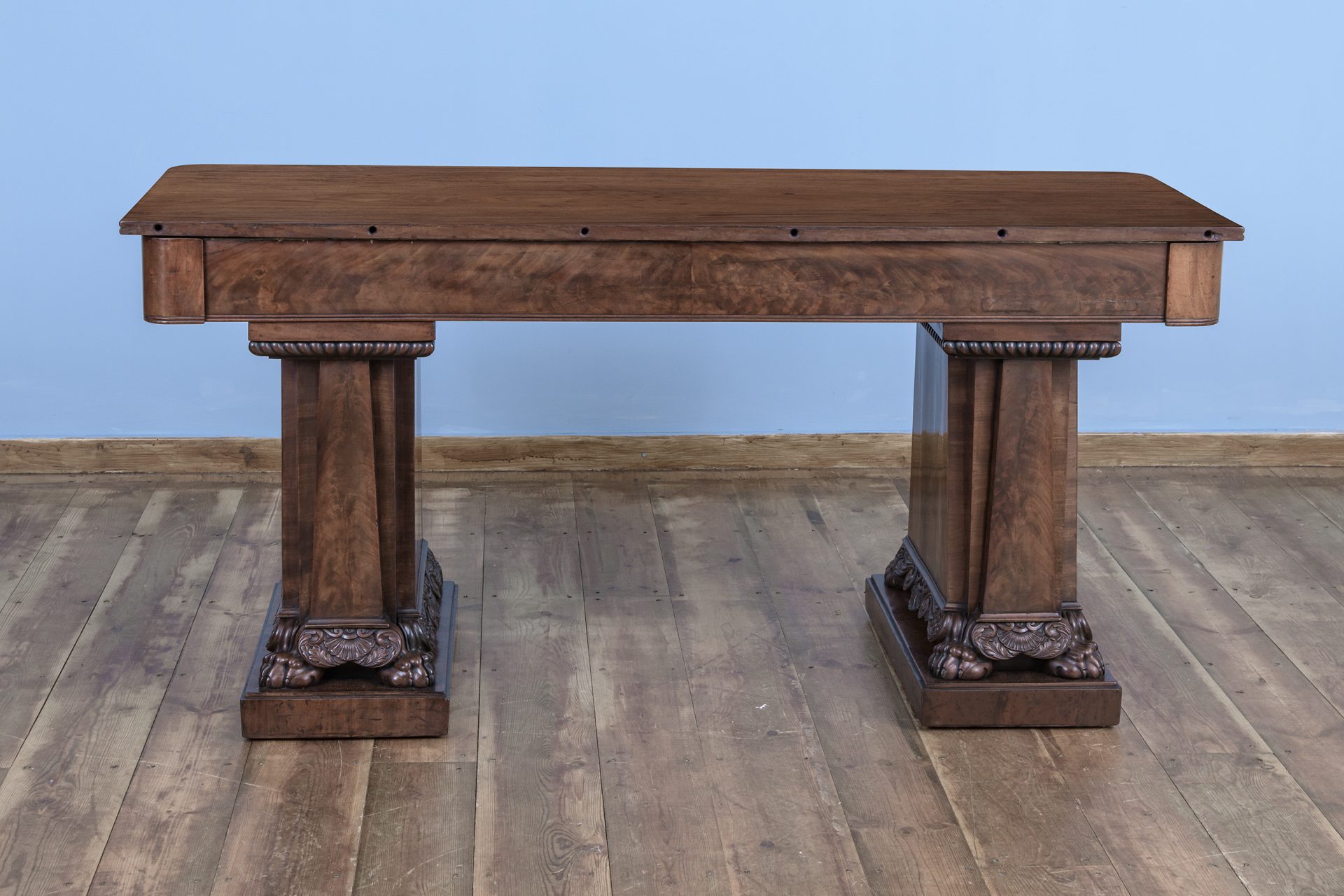
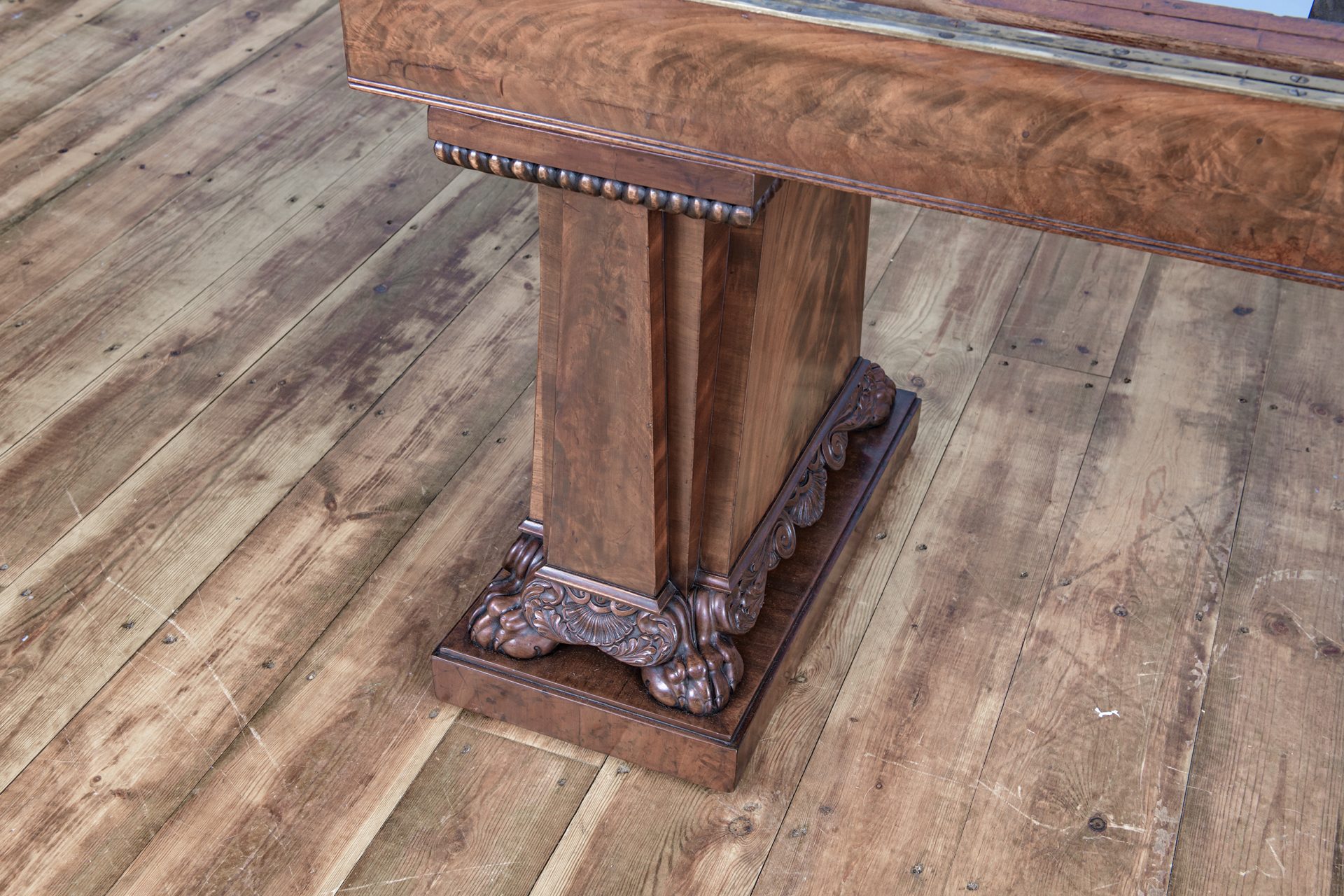
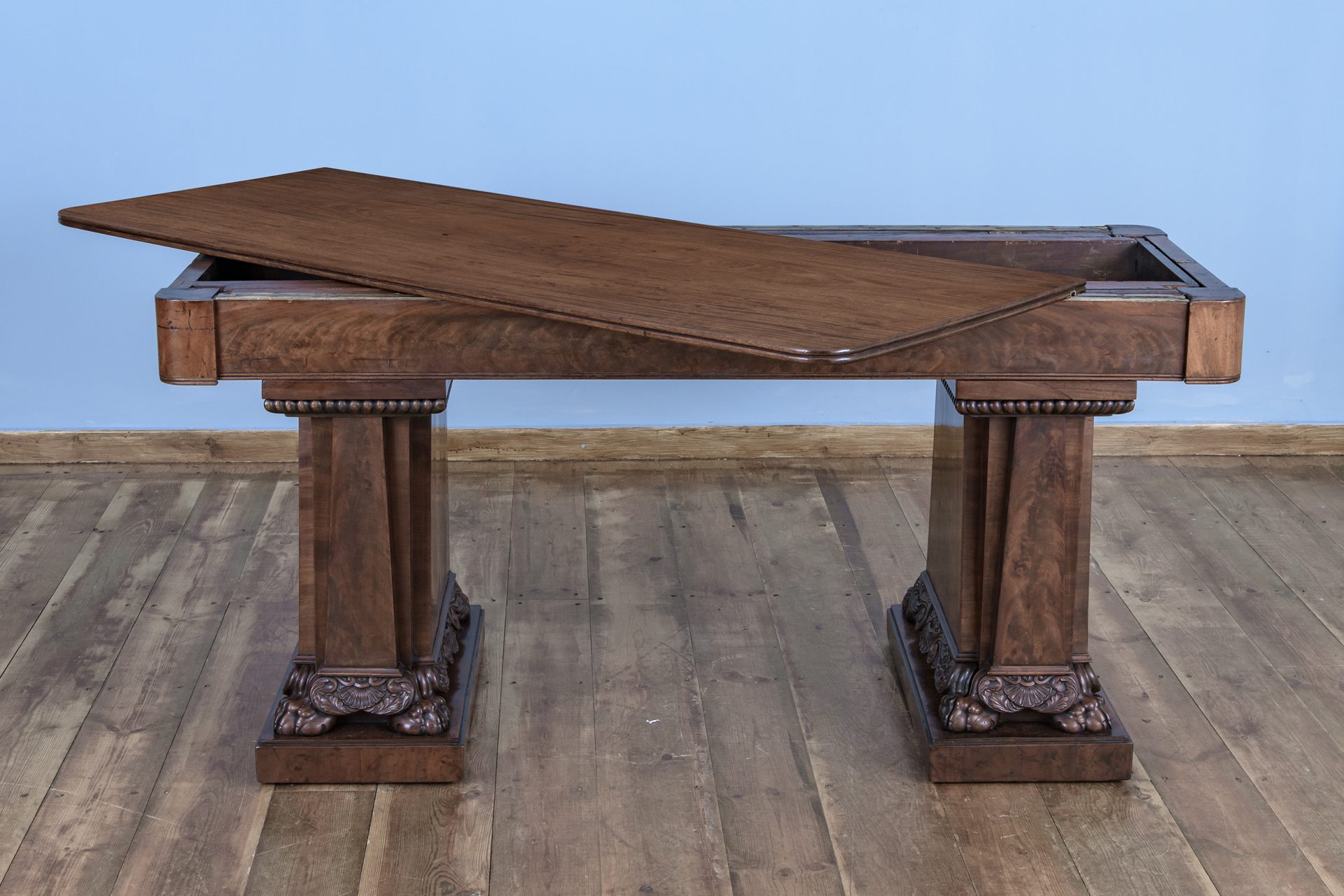
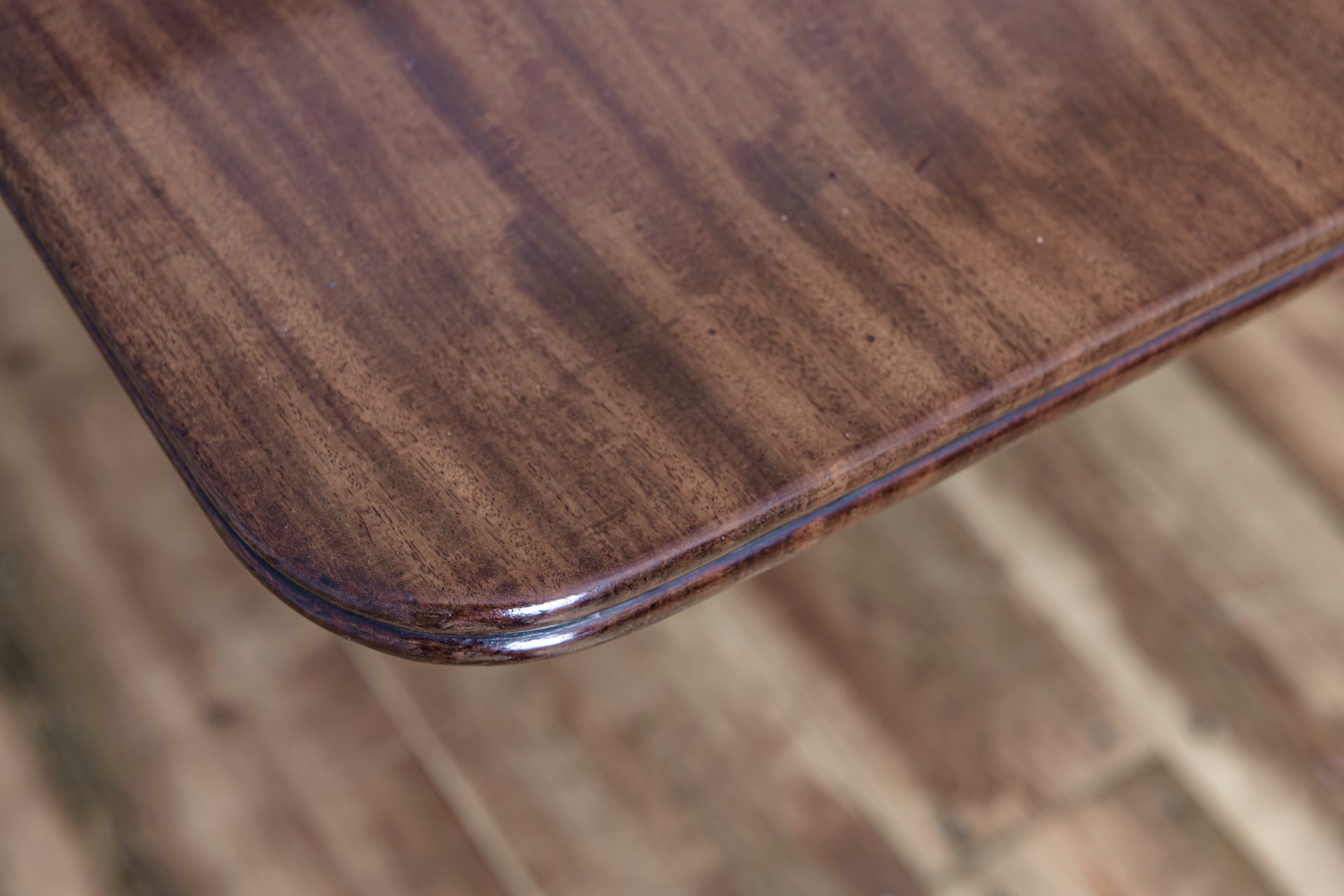
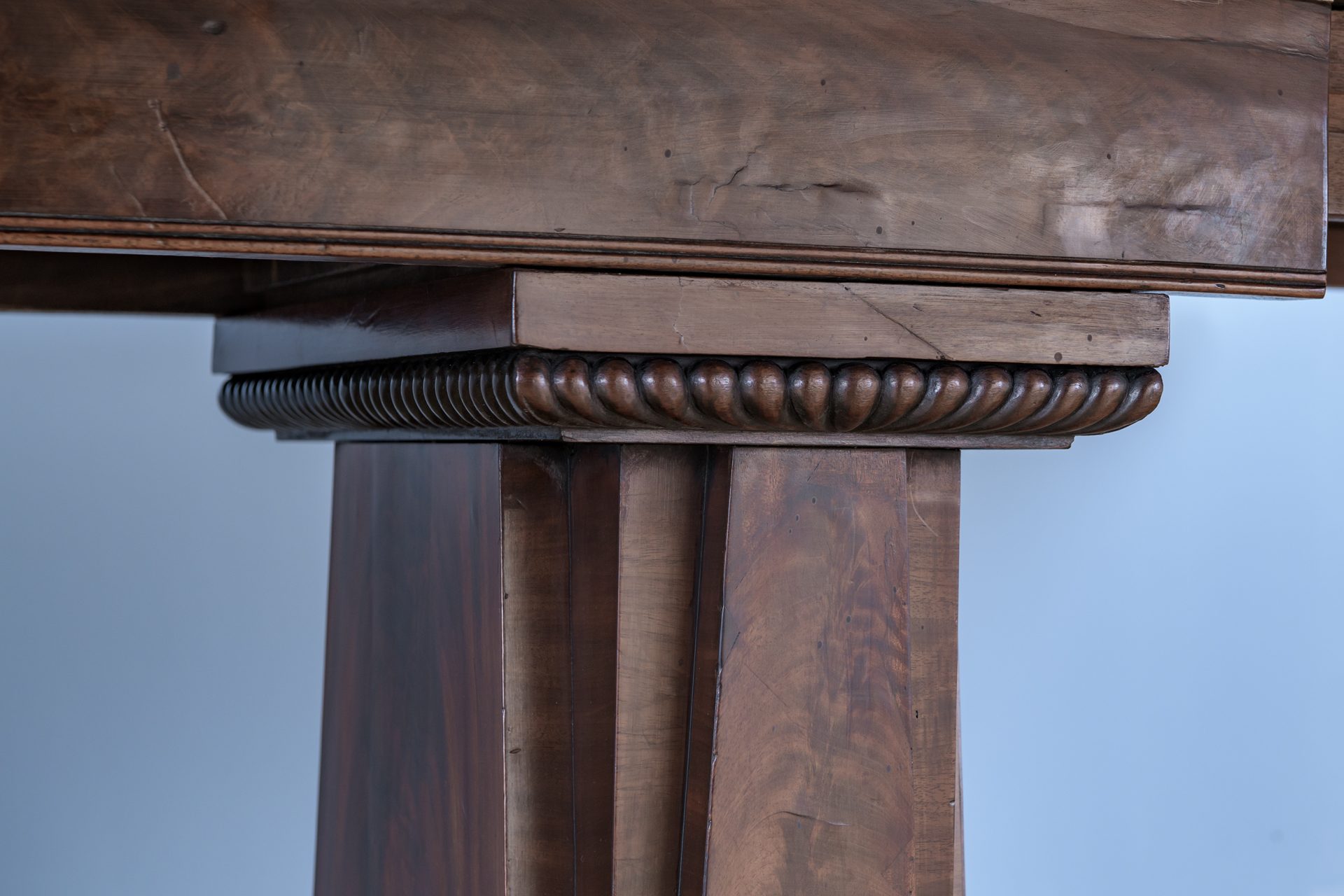
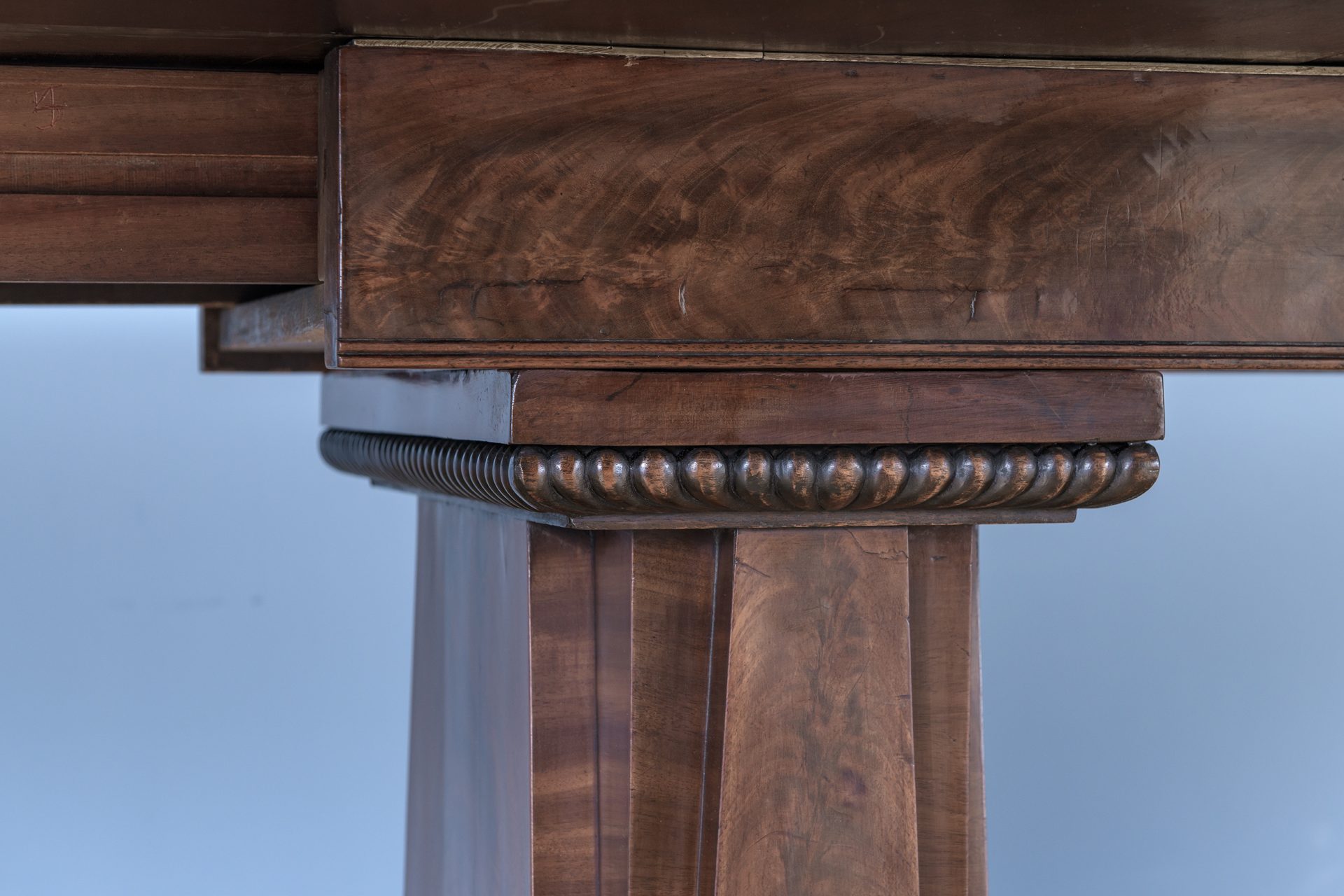
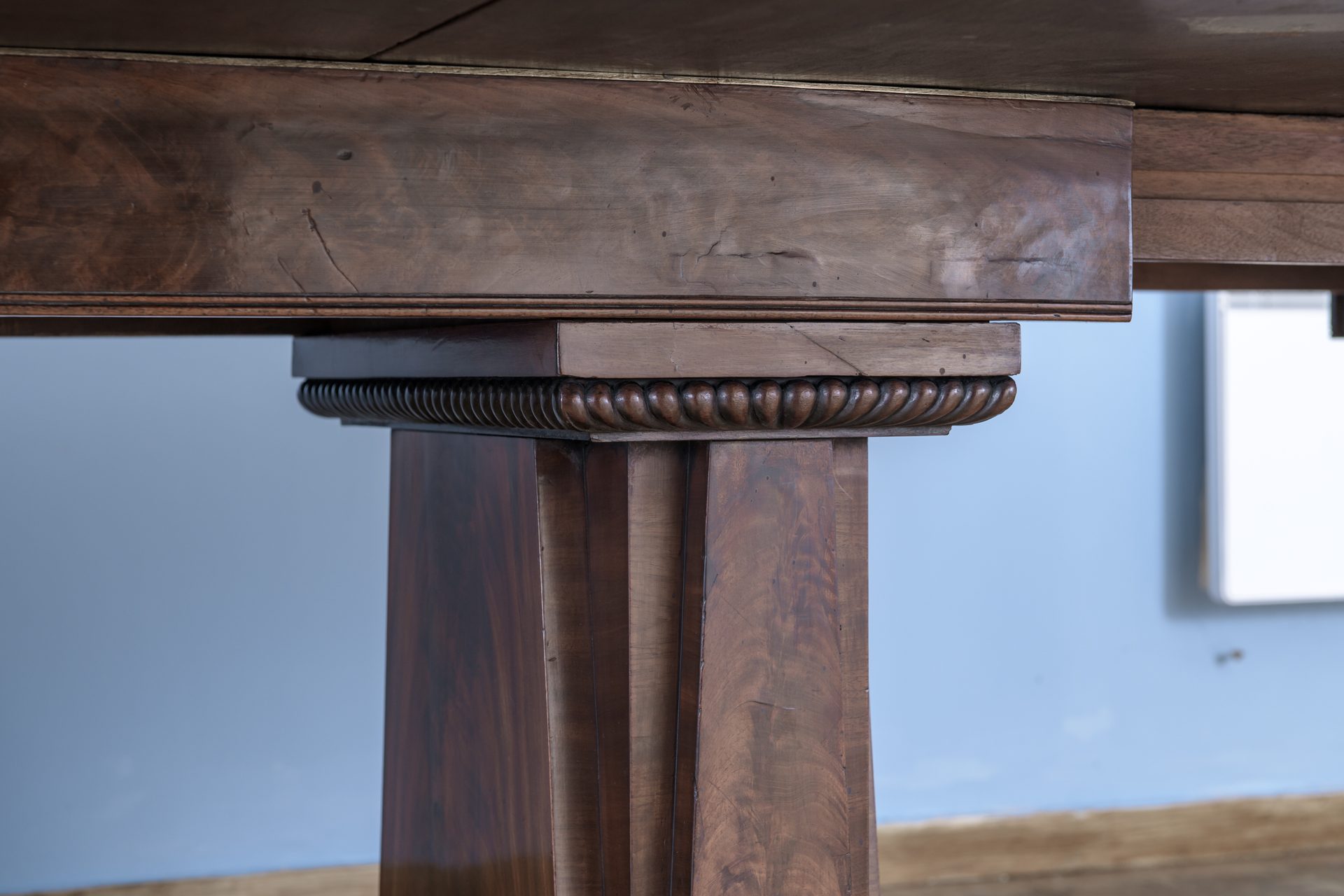
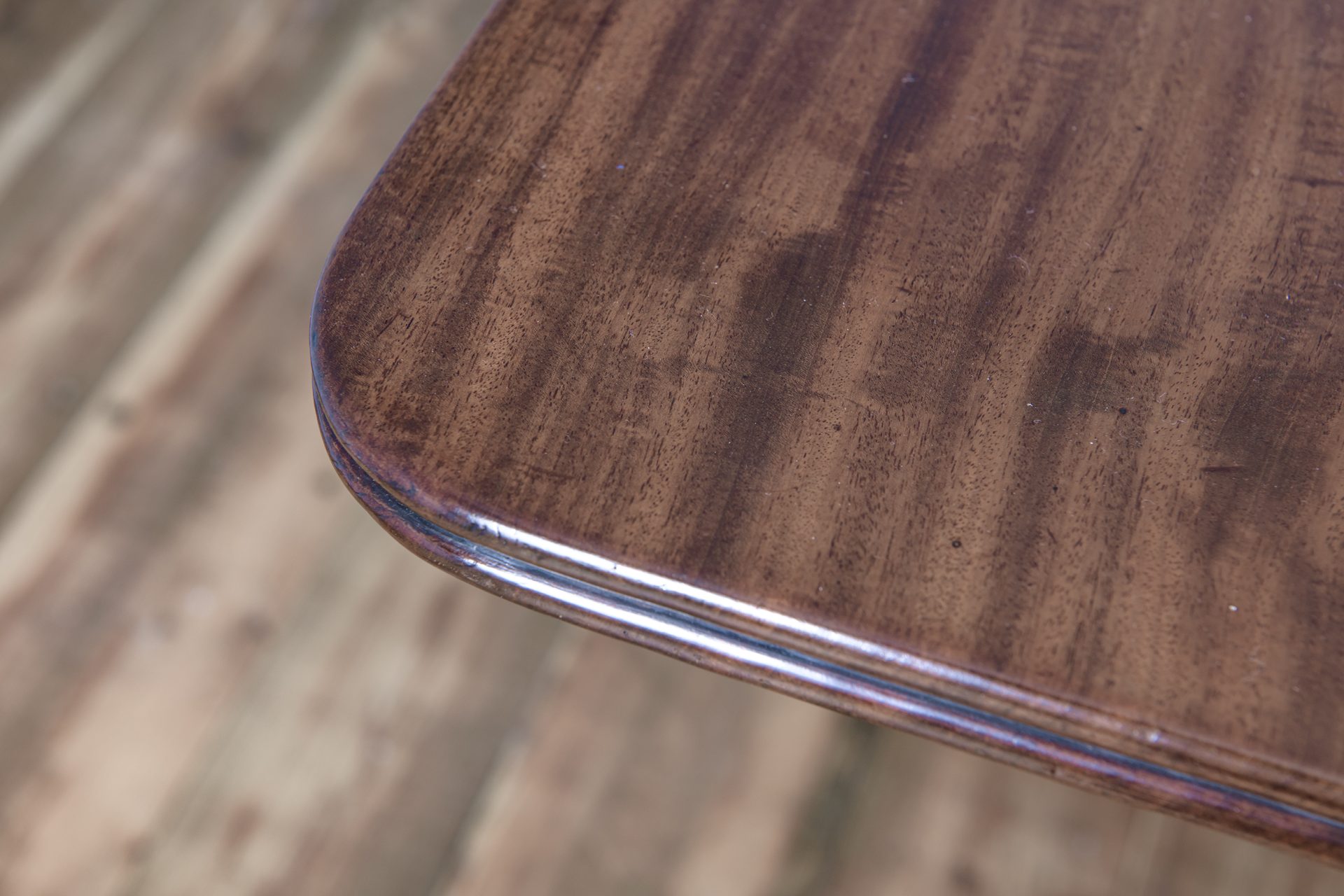
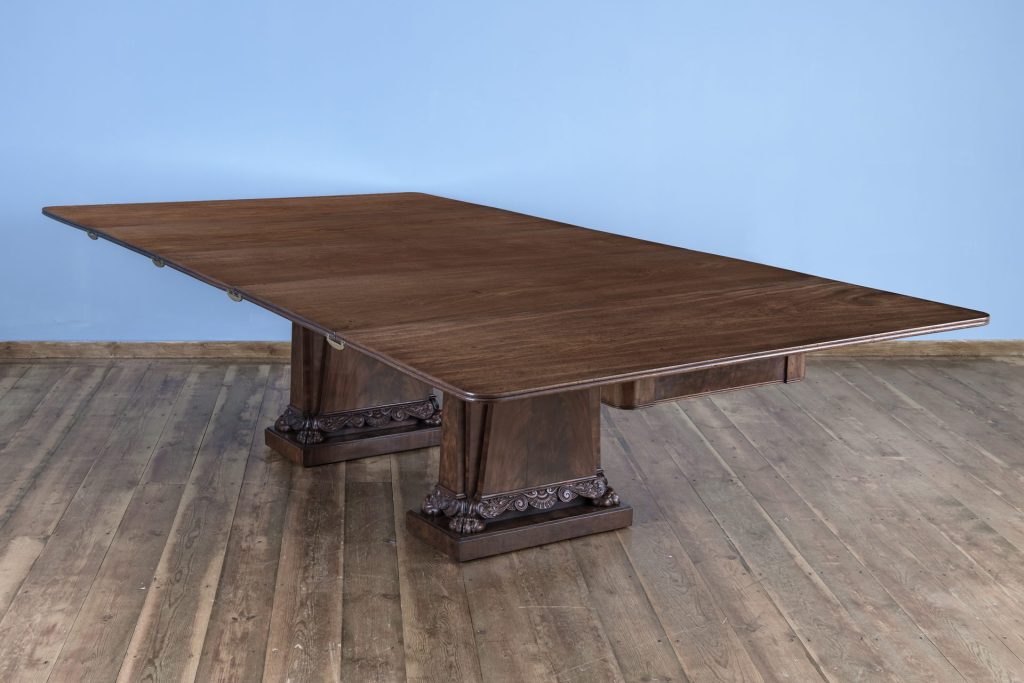
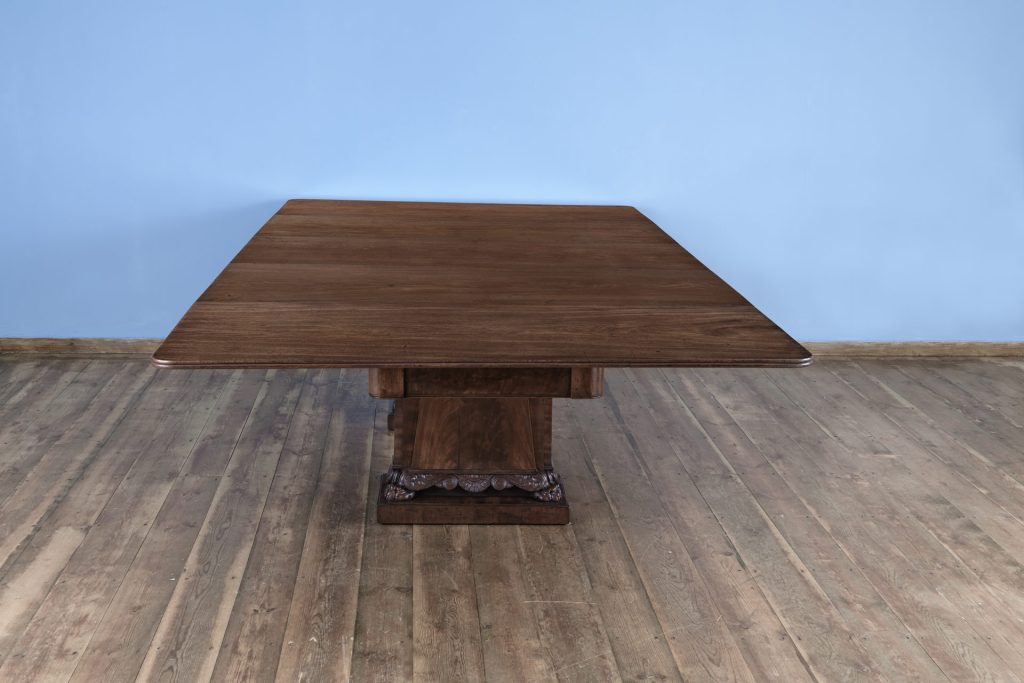
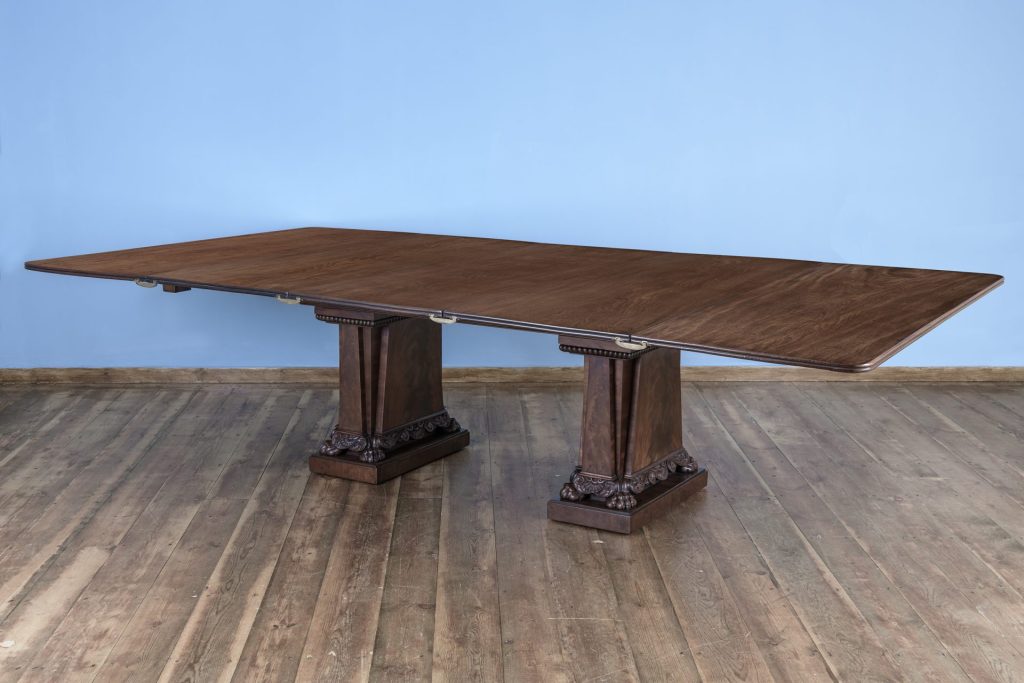
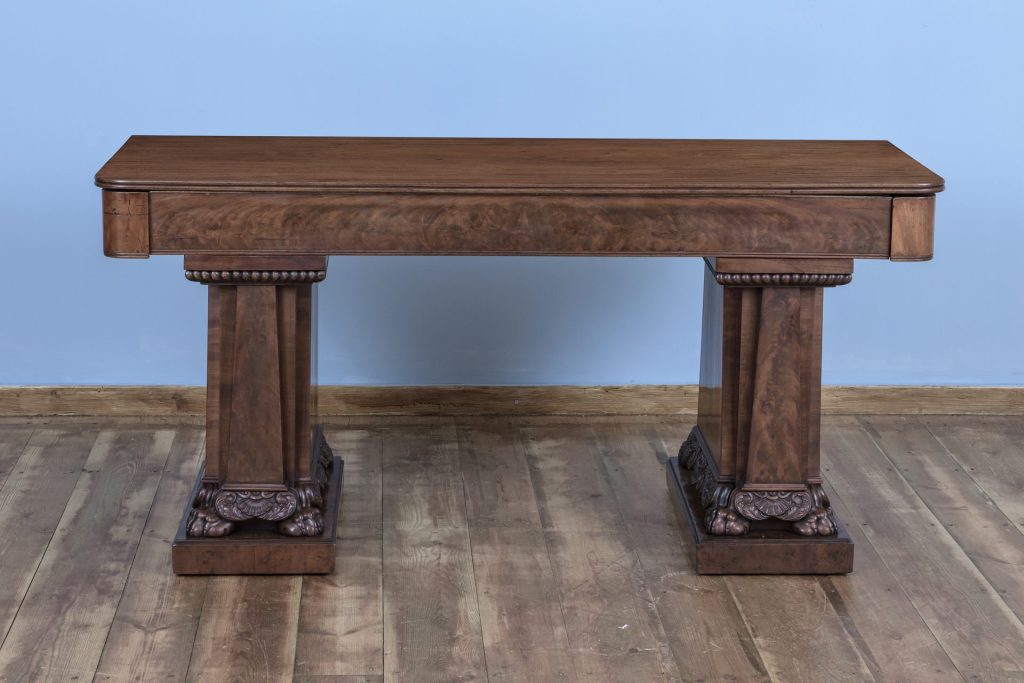
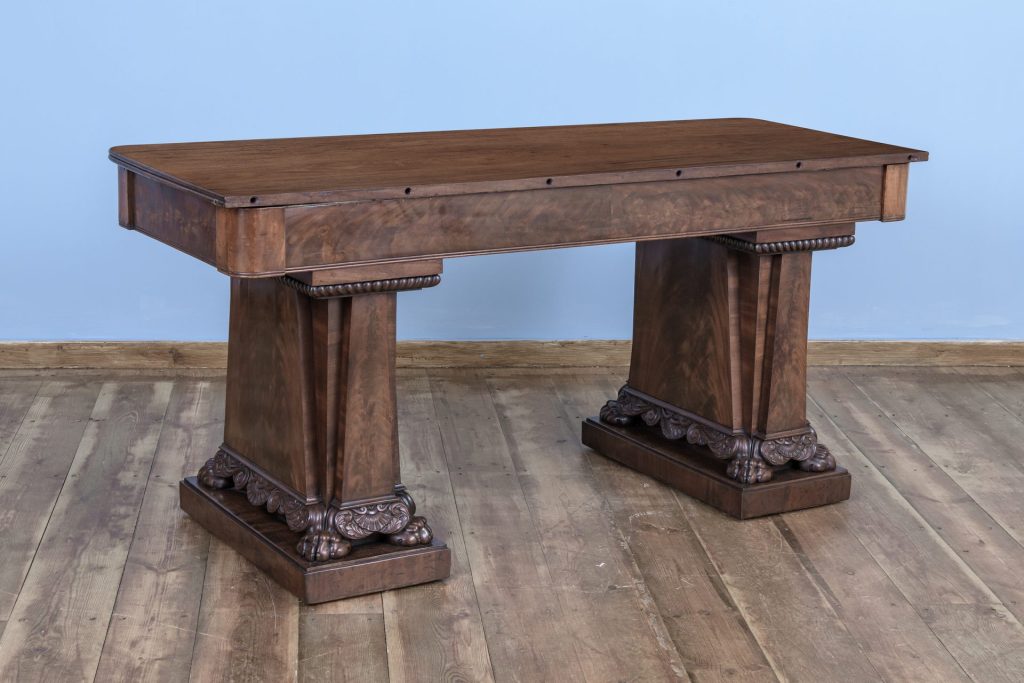
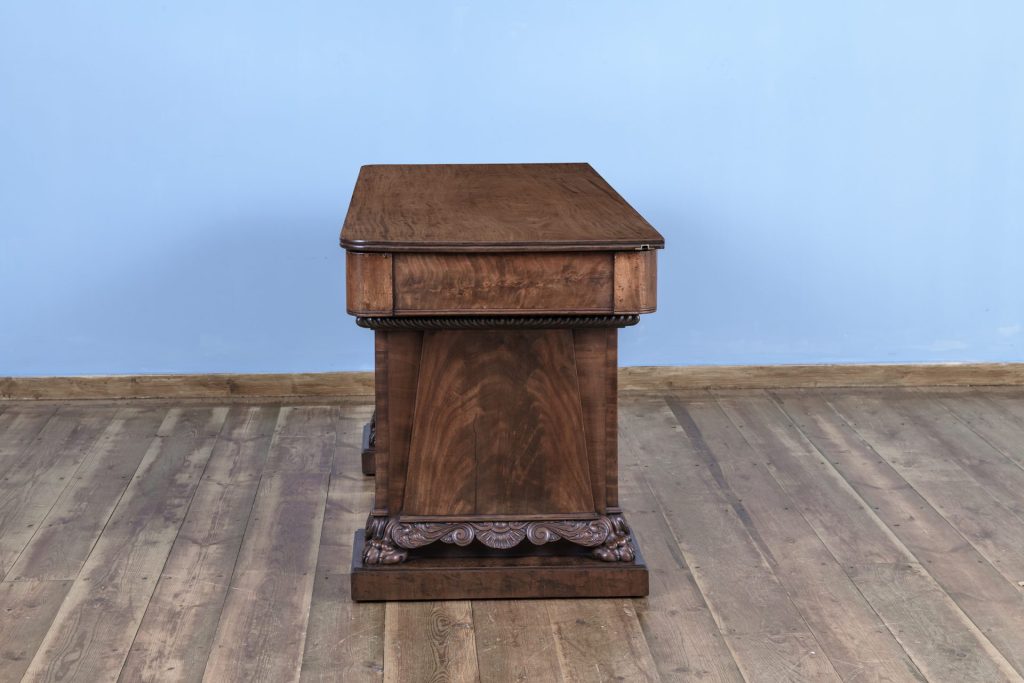
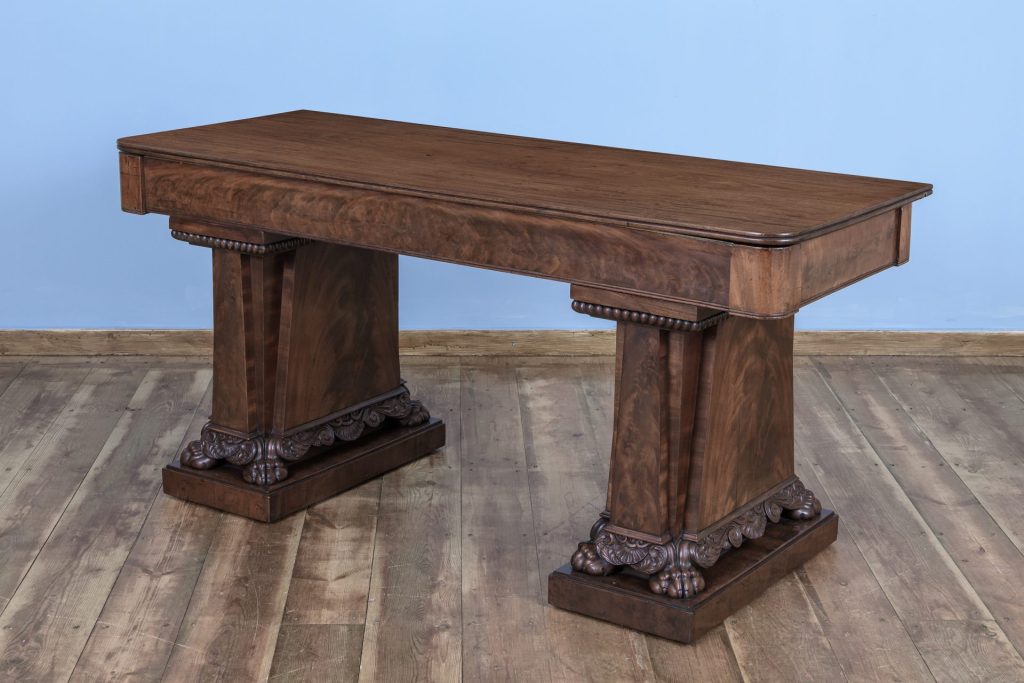
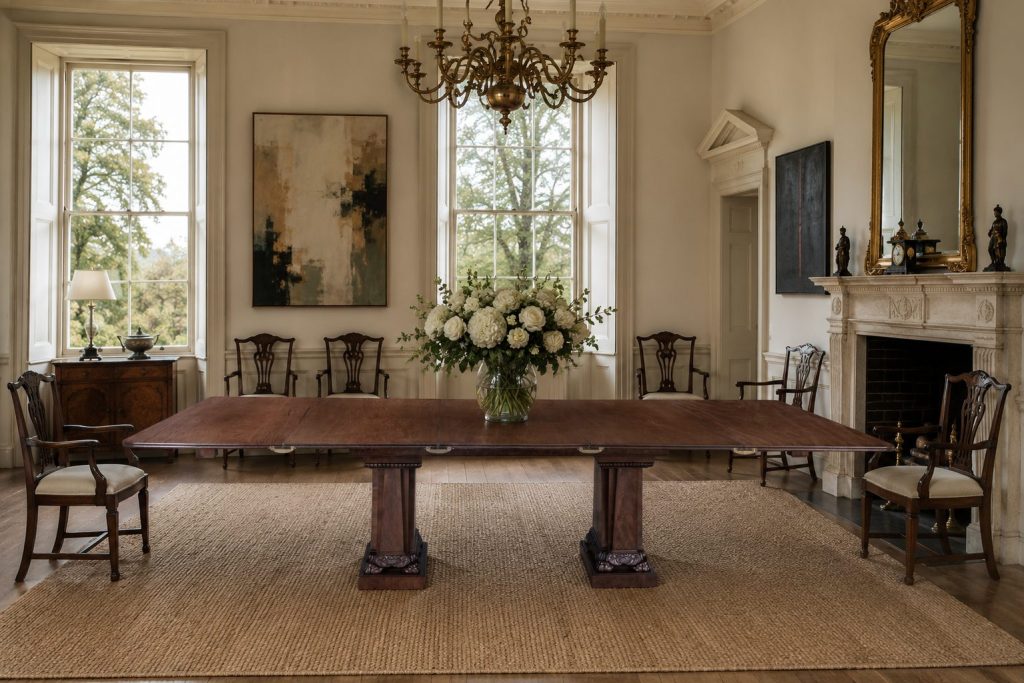
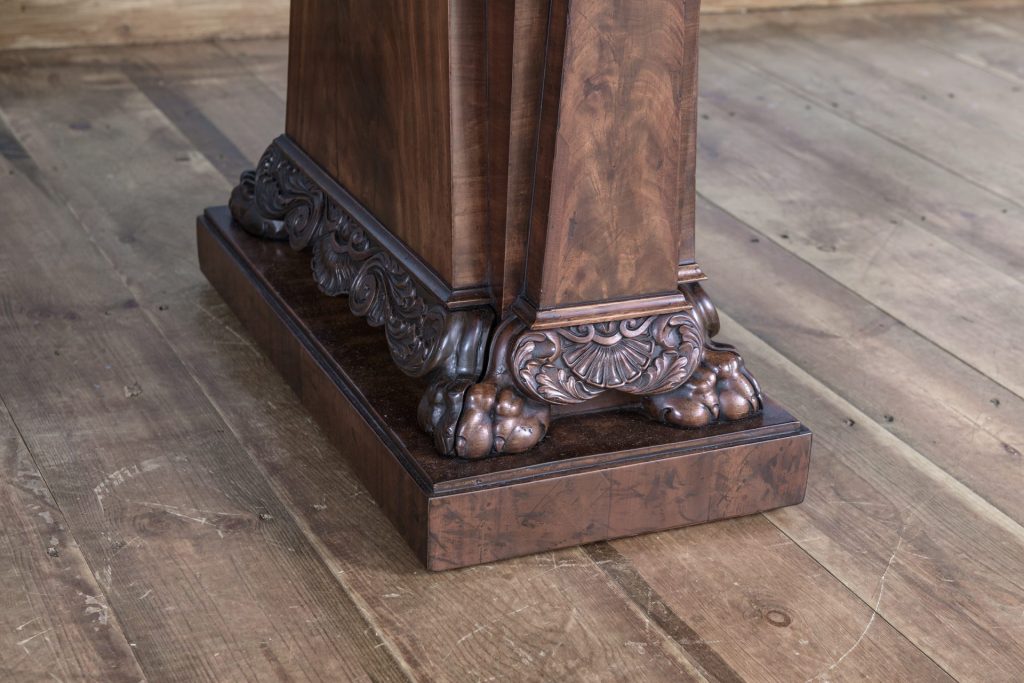
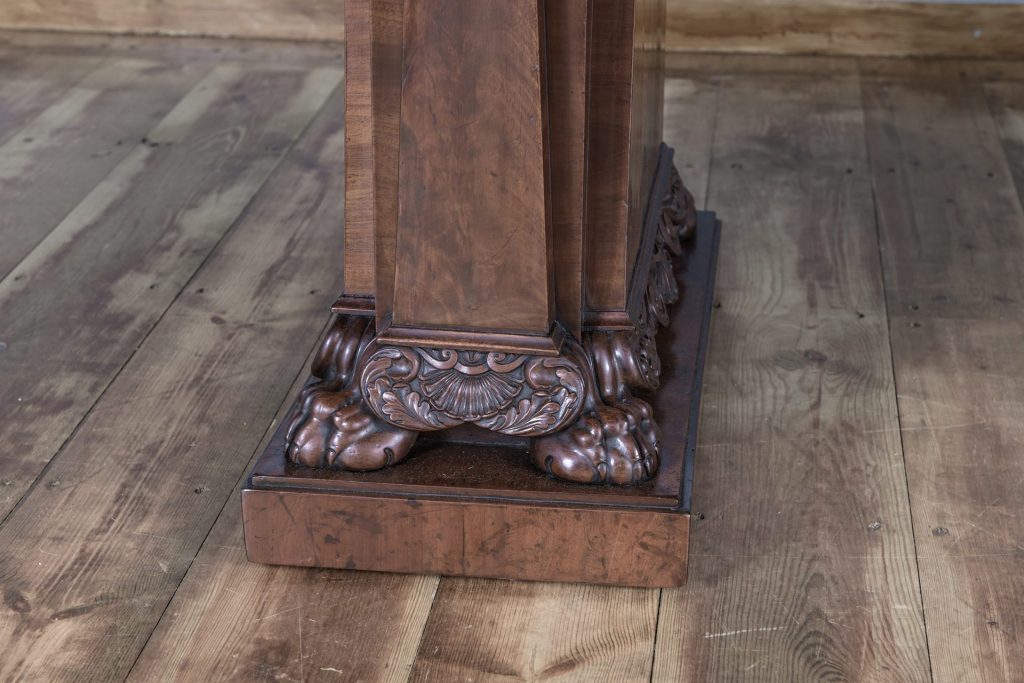
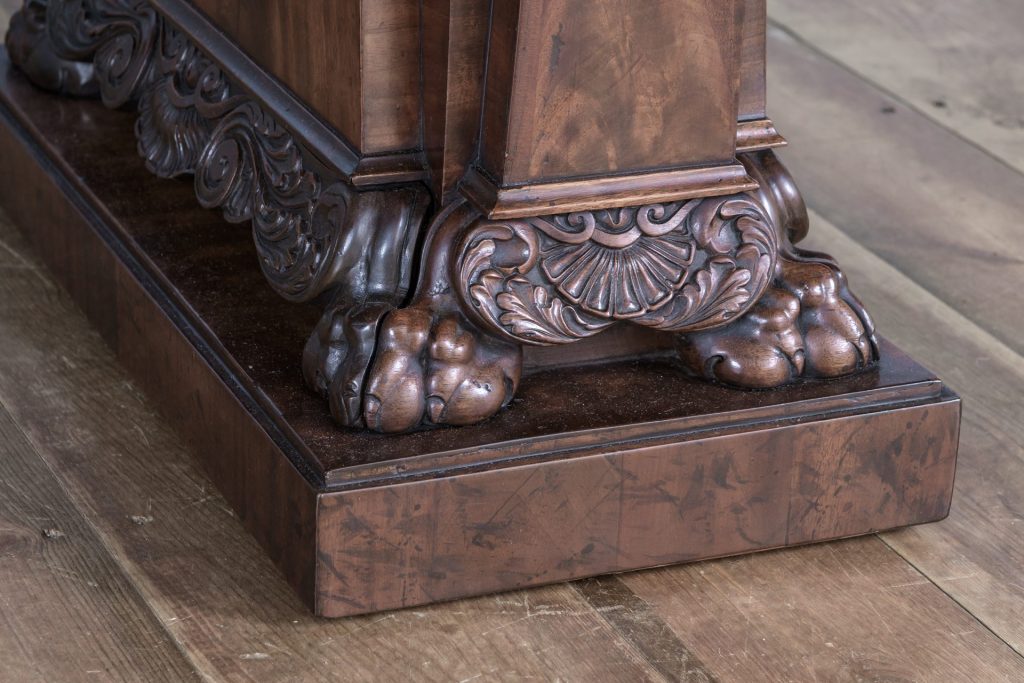
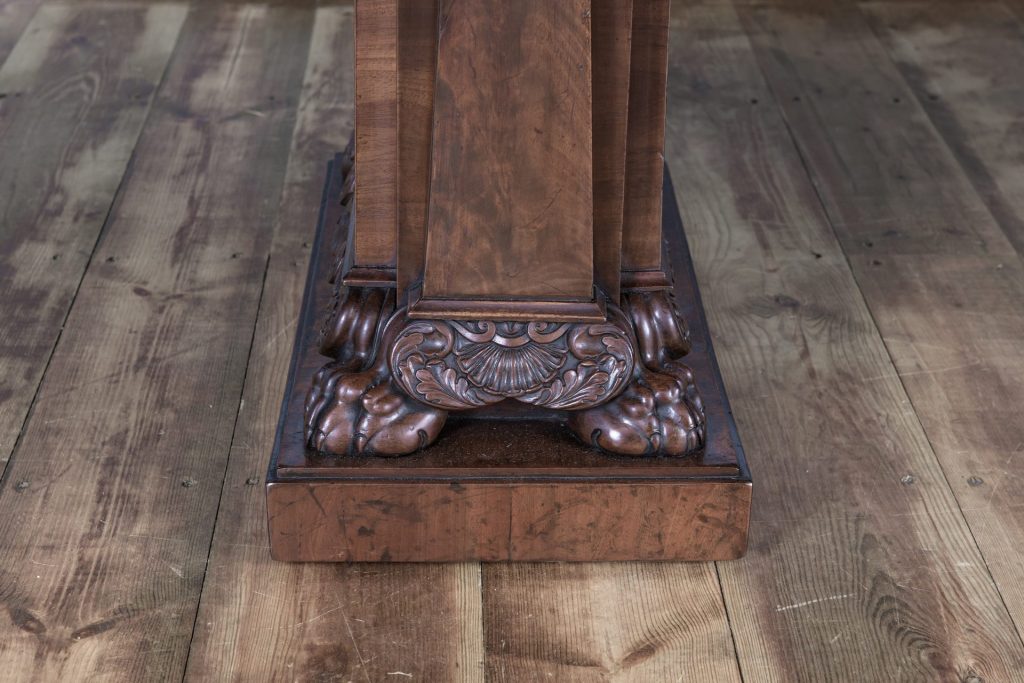
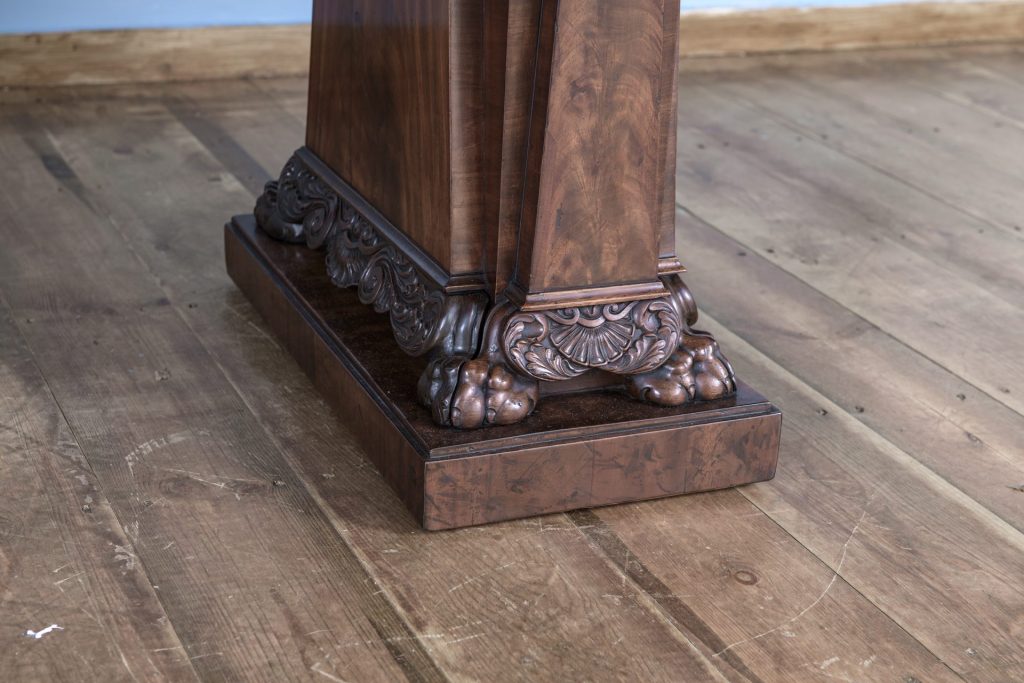
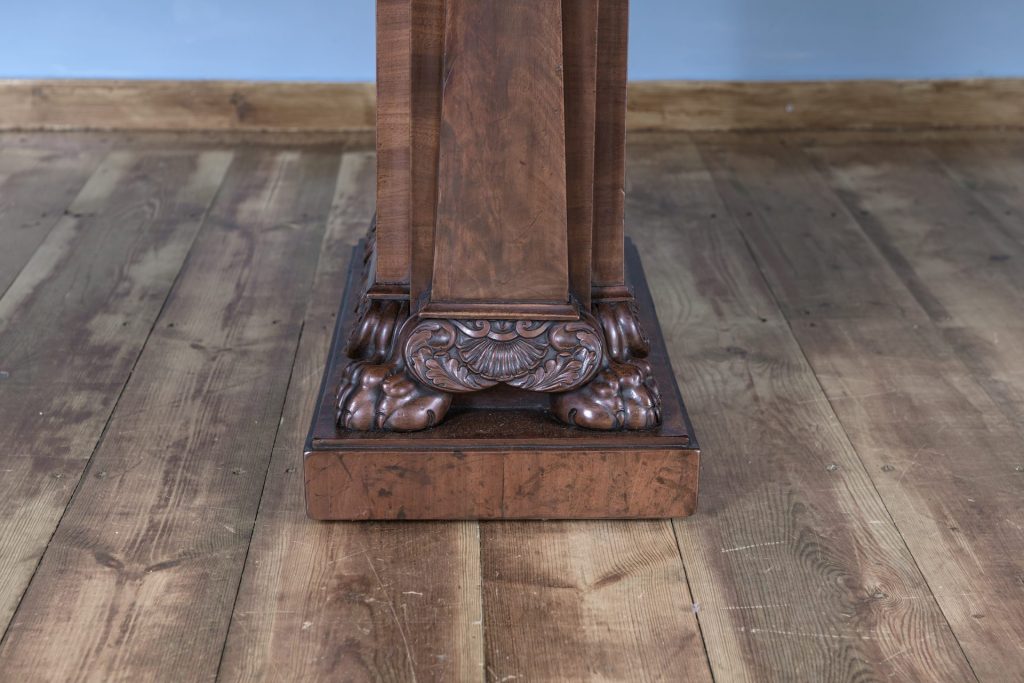
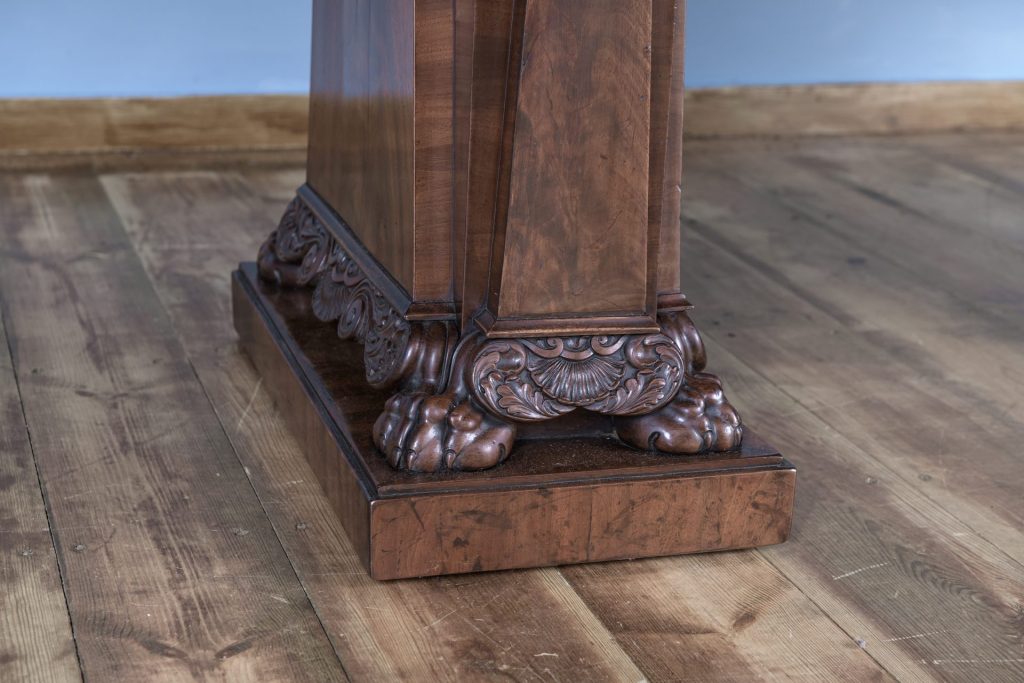
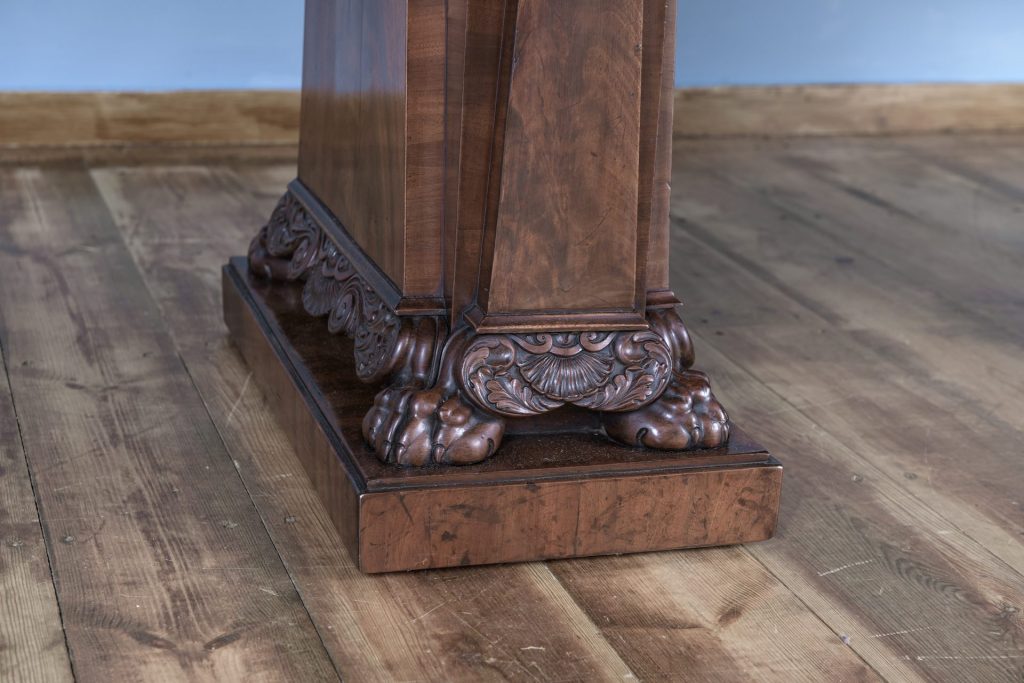
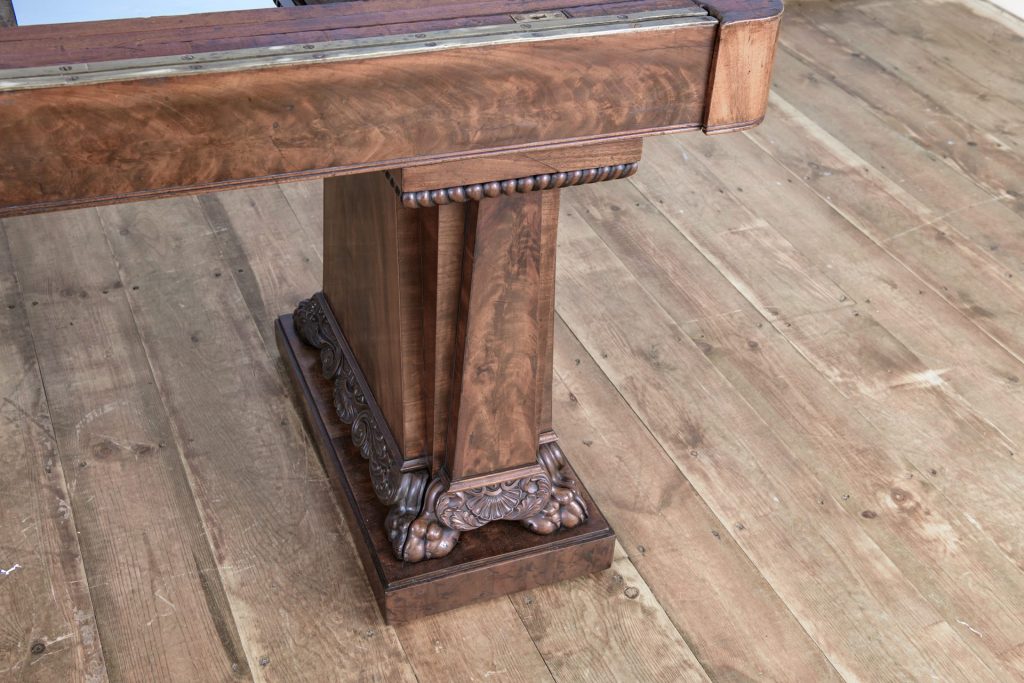
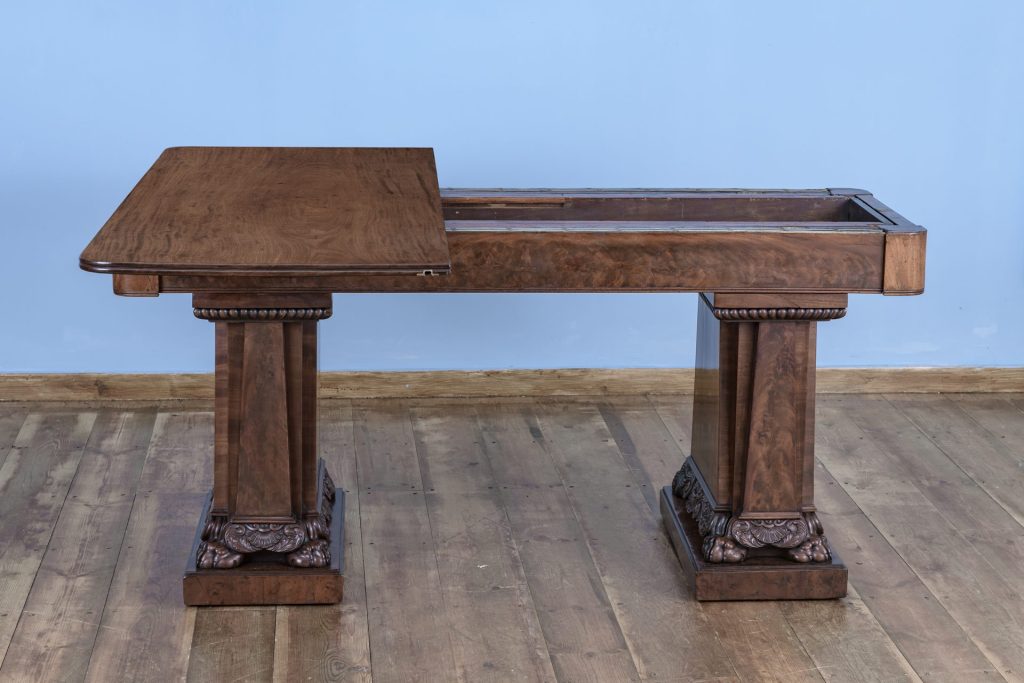
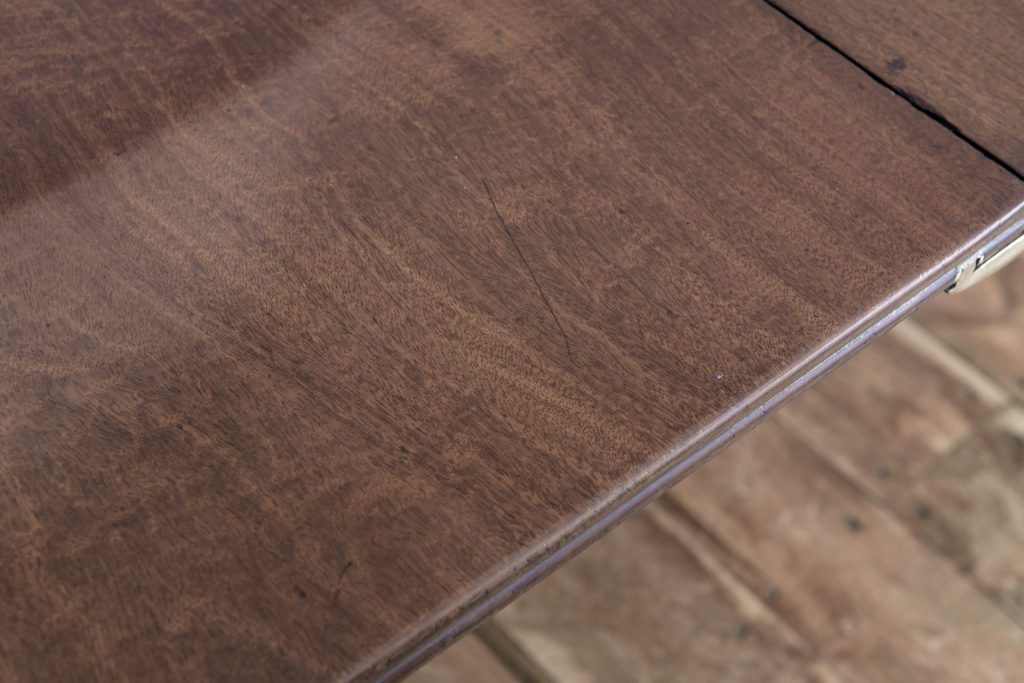
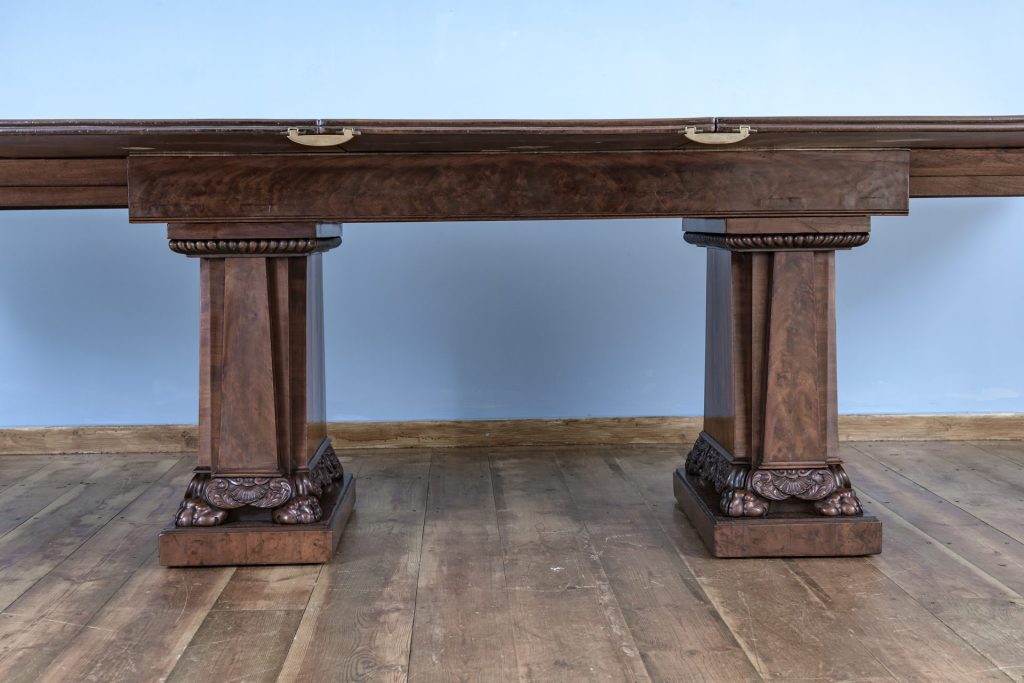
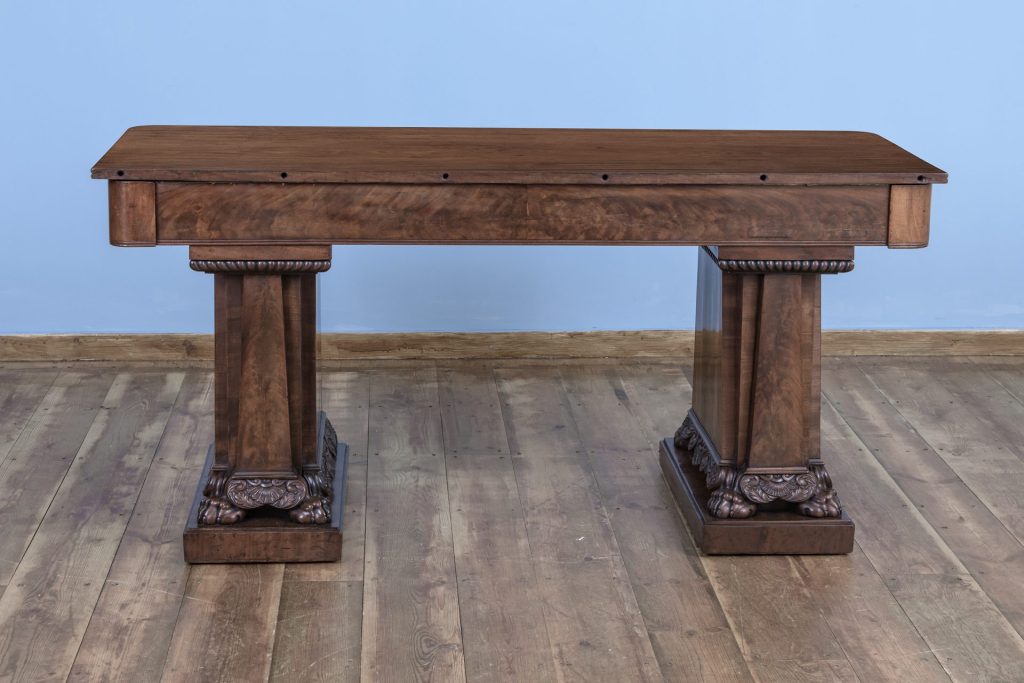
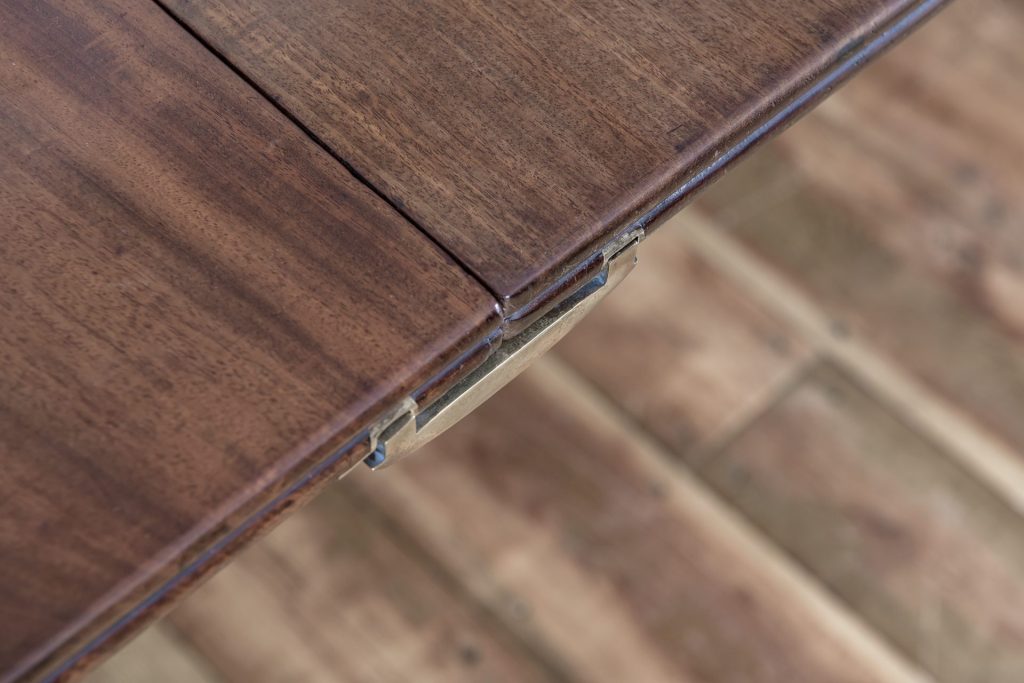
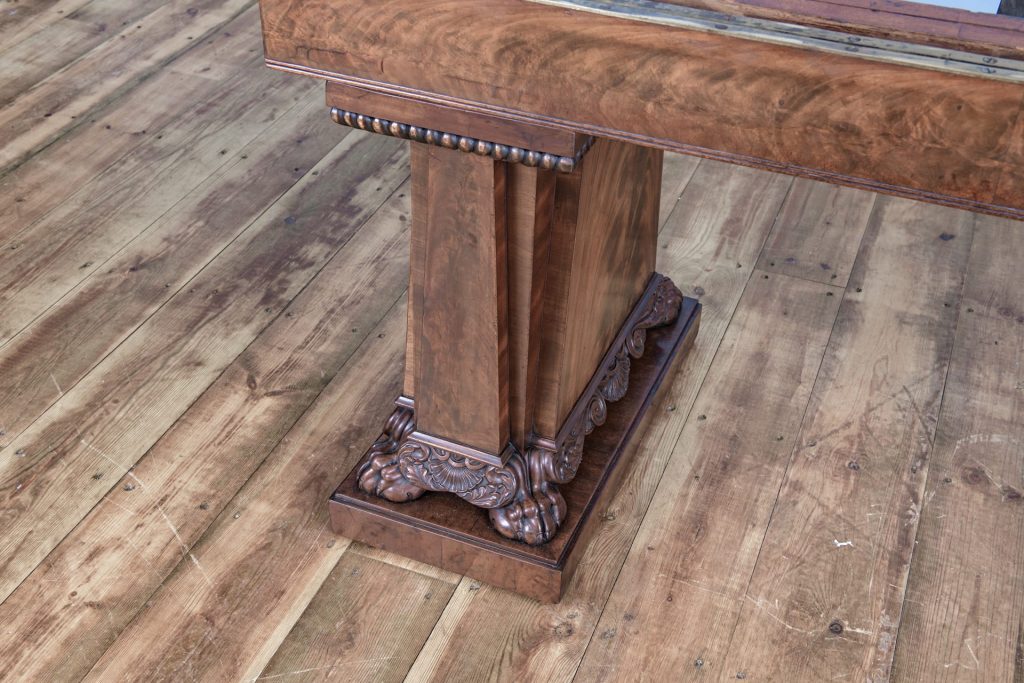
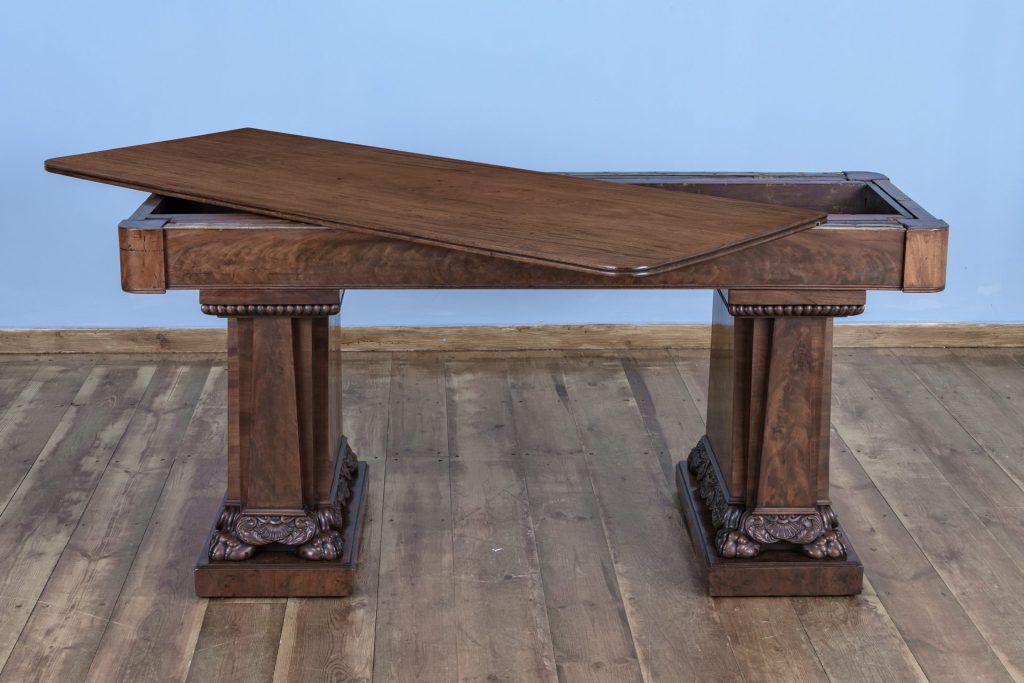
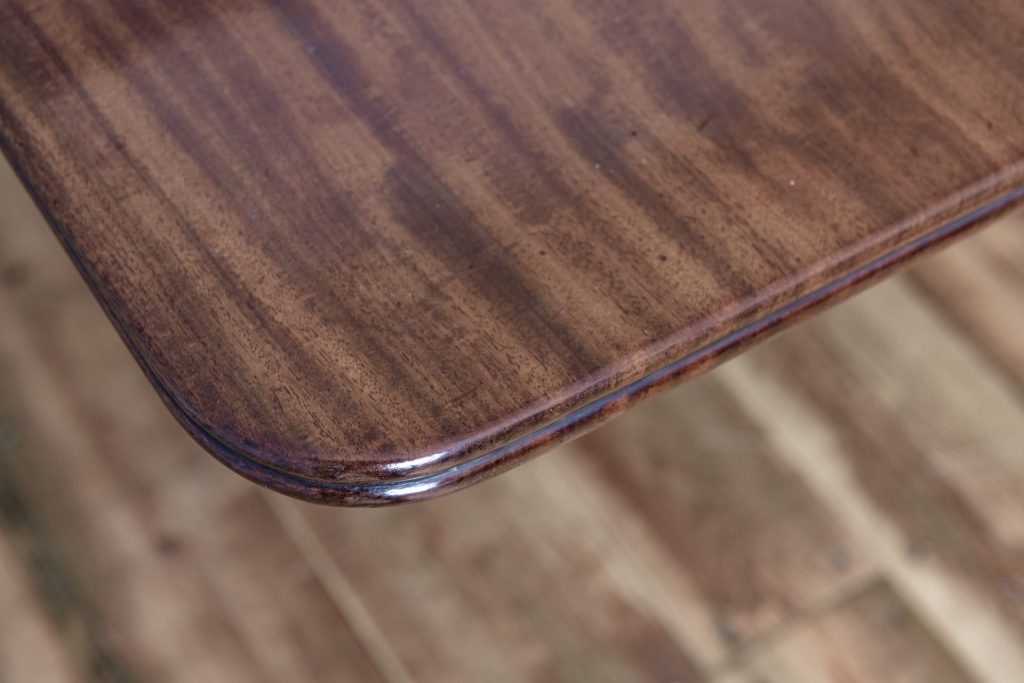
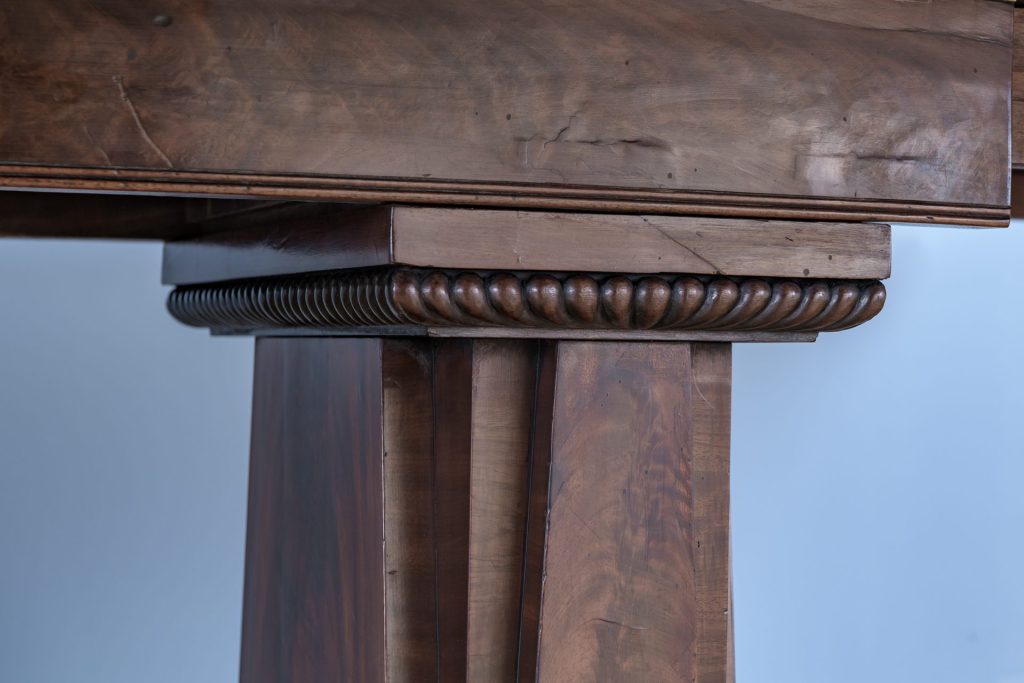
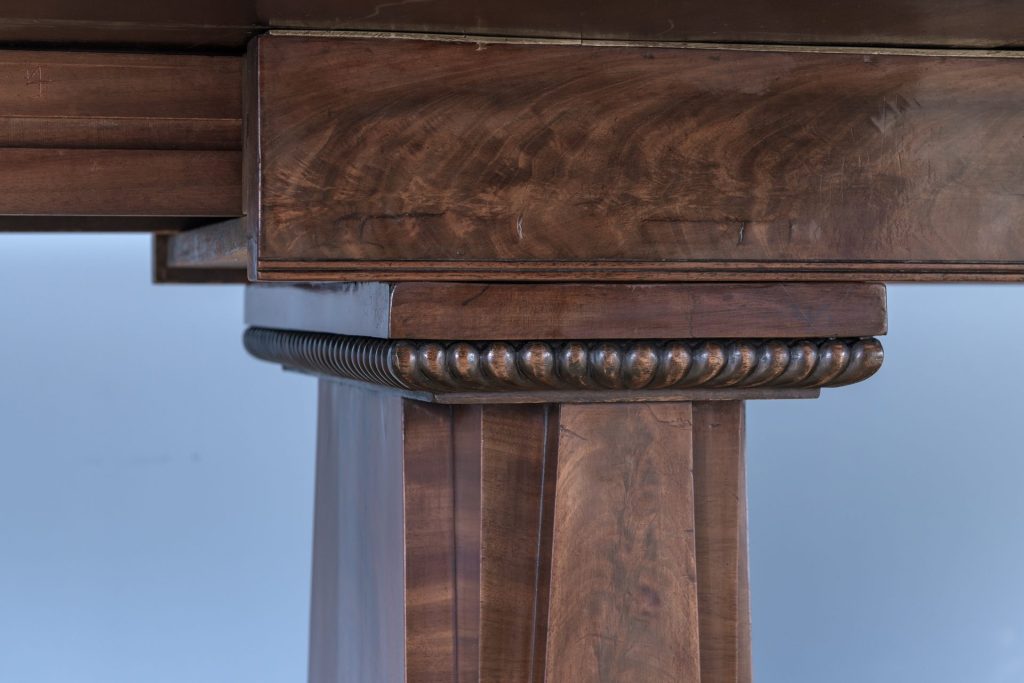
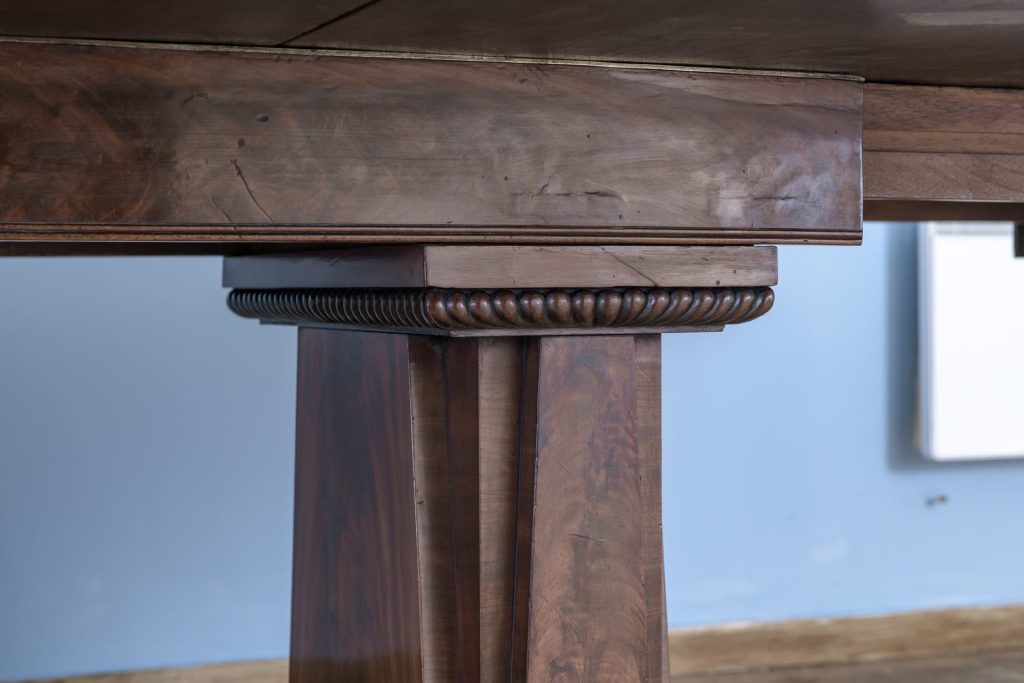
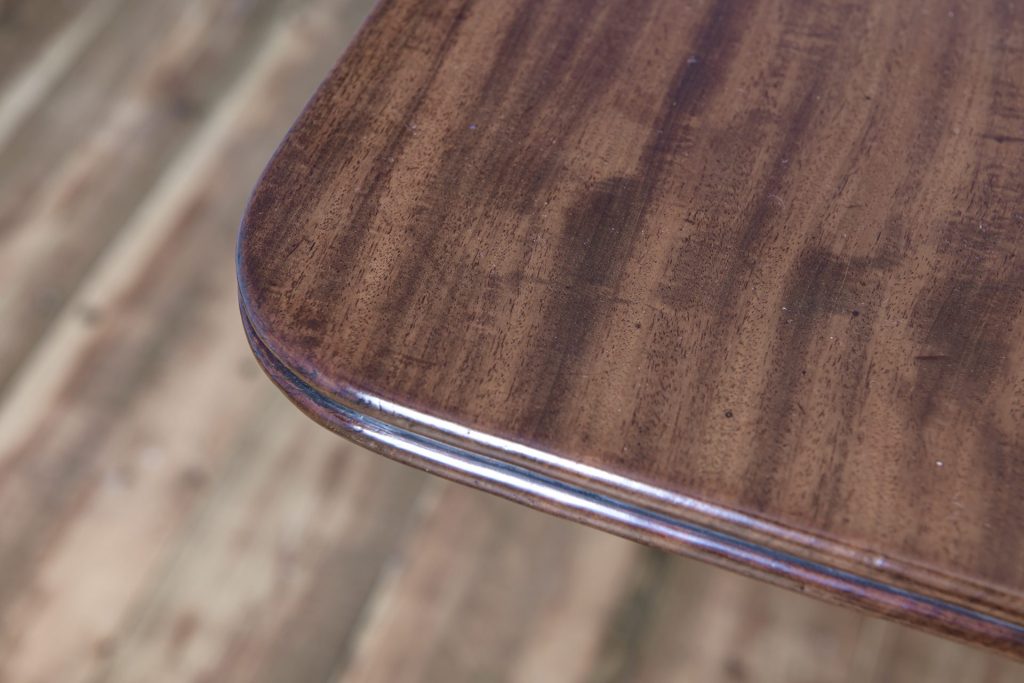
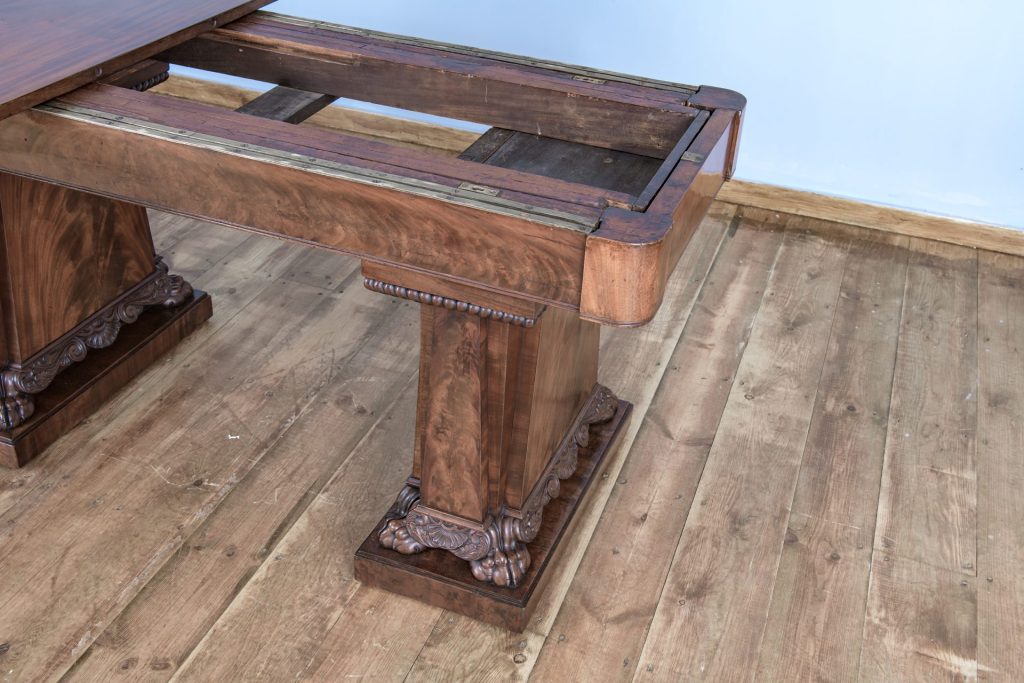
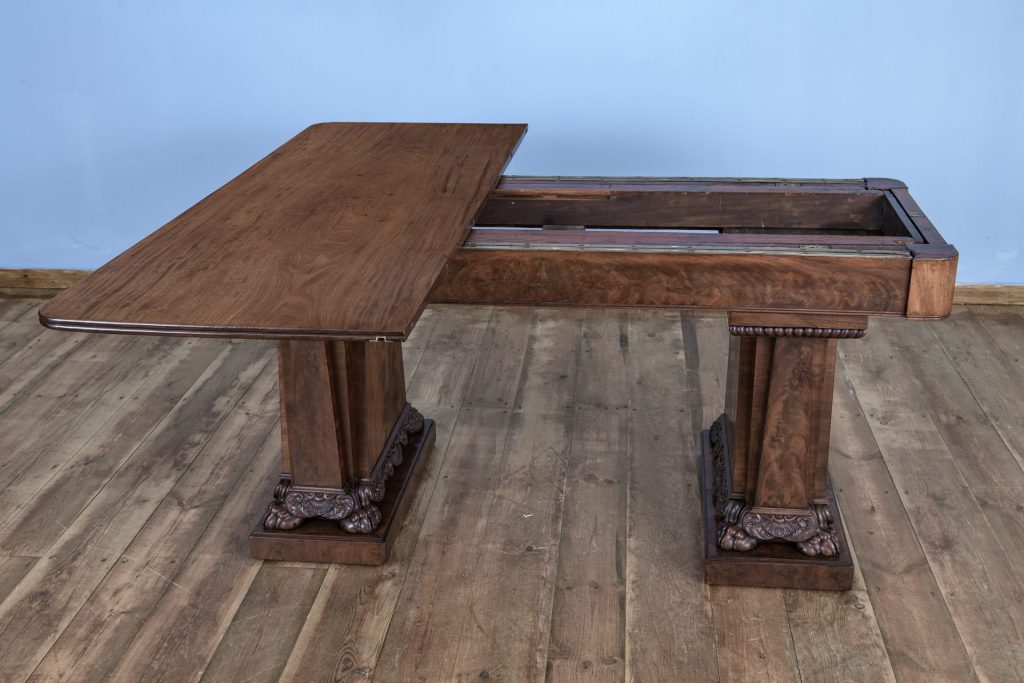
The rectangular top with rounded corners and a reeded edge above a pair of Grecian pedestals with gadrooned mouldings and scroll and foliate carved aprons with paw feet mounted on a pair of plinths.
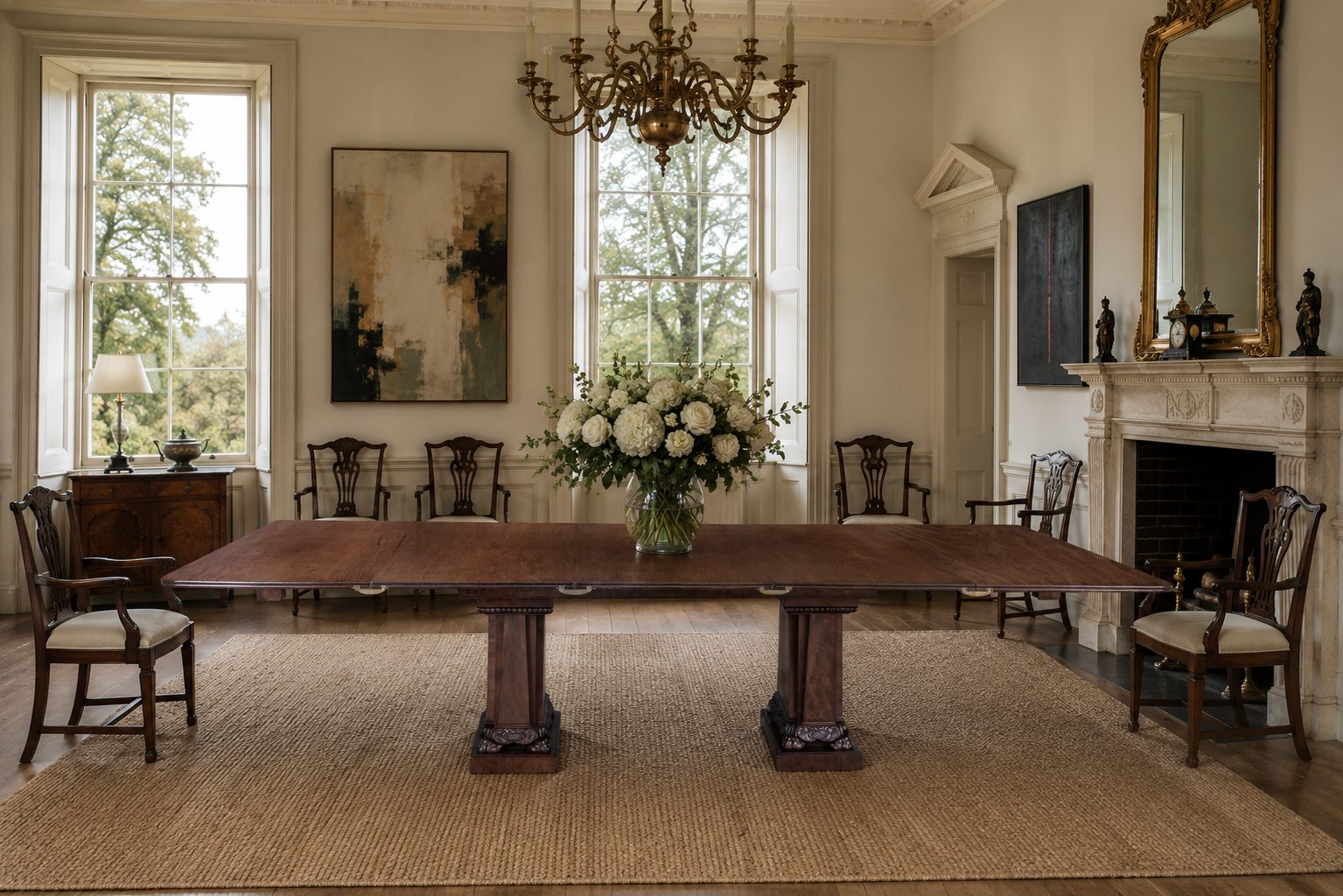
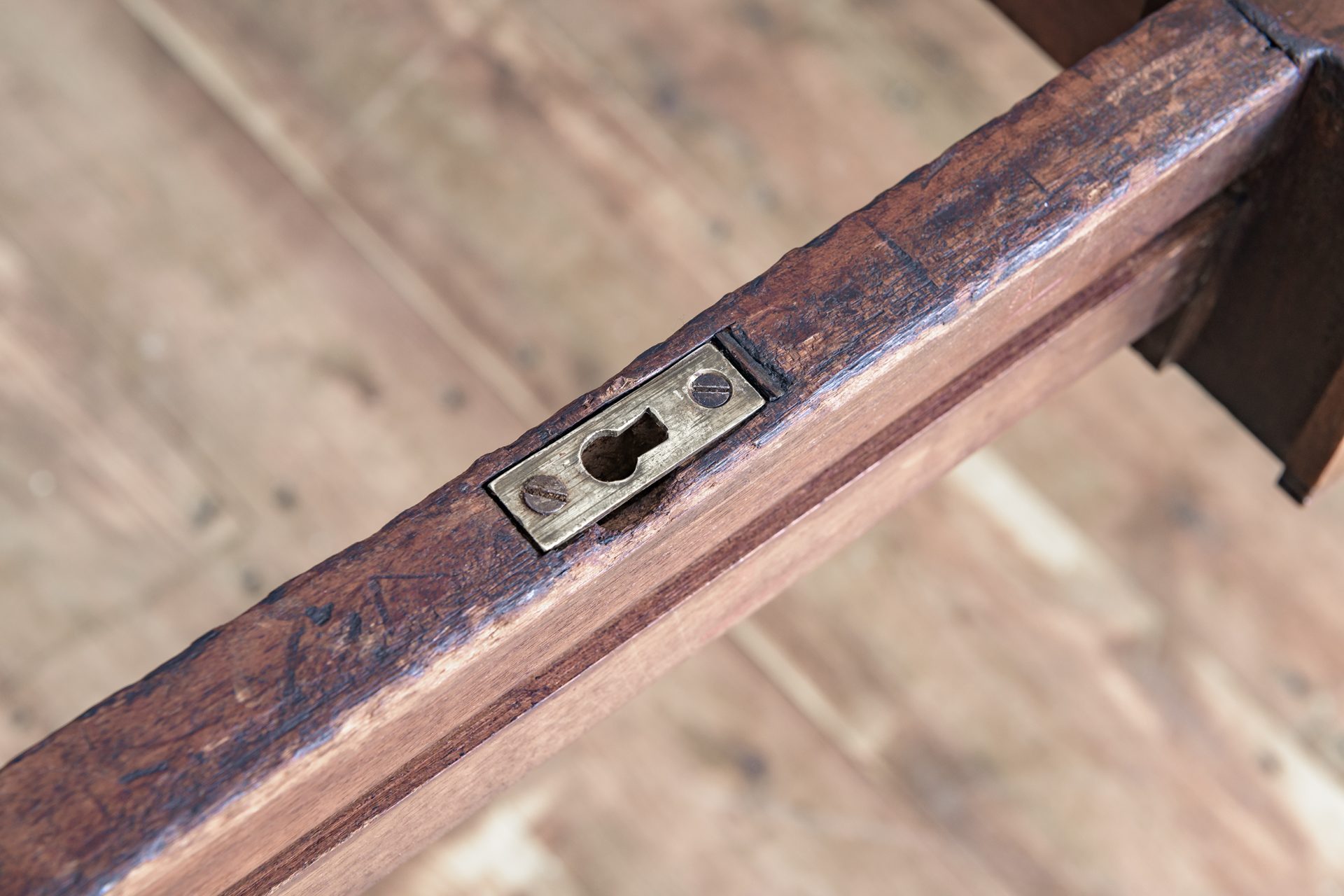
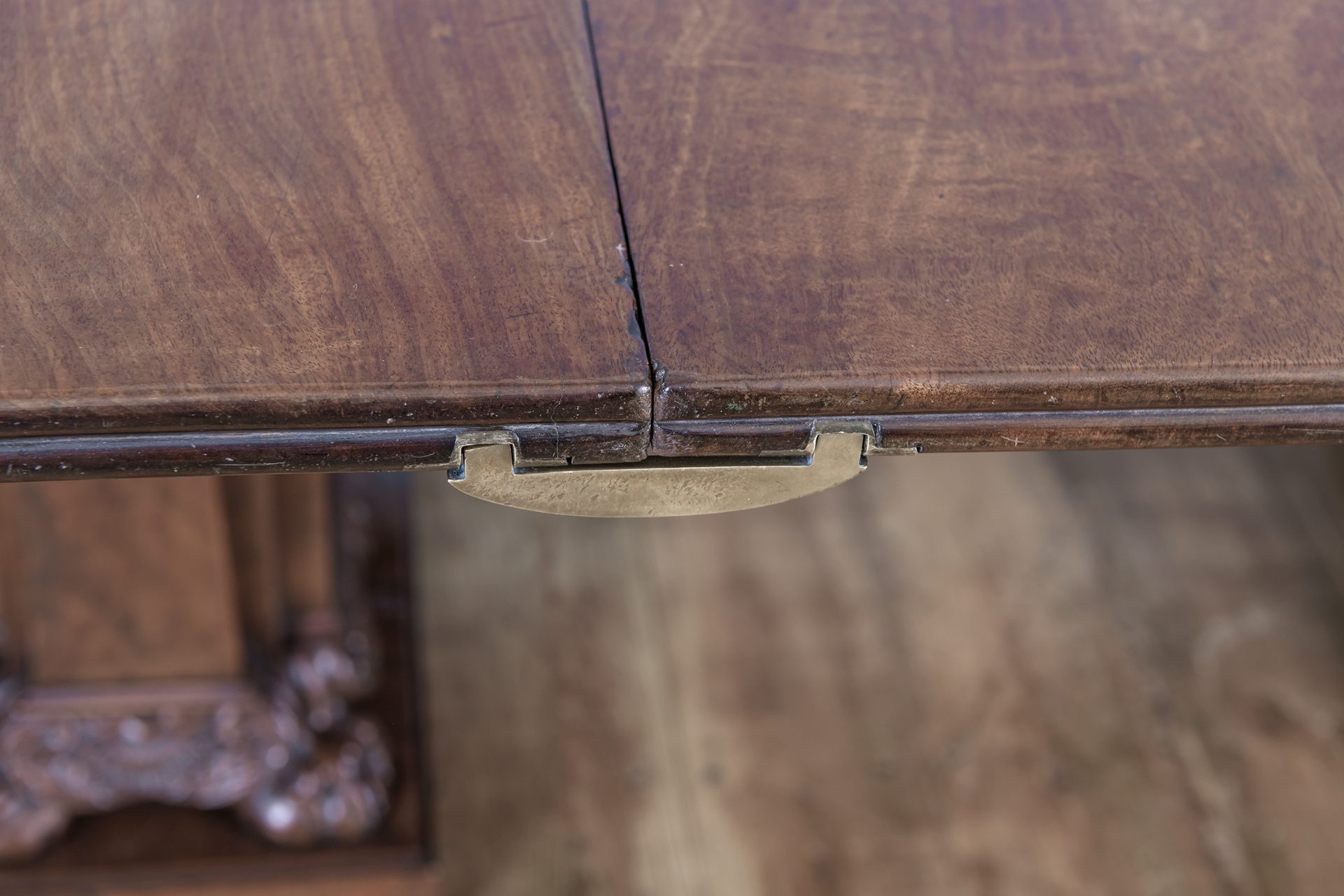
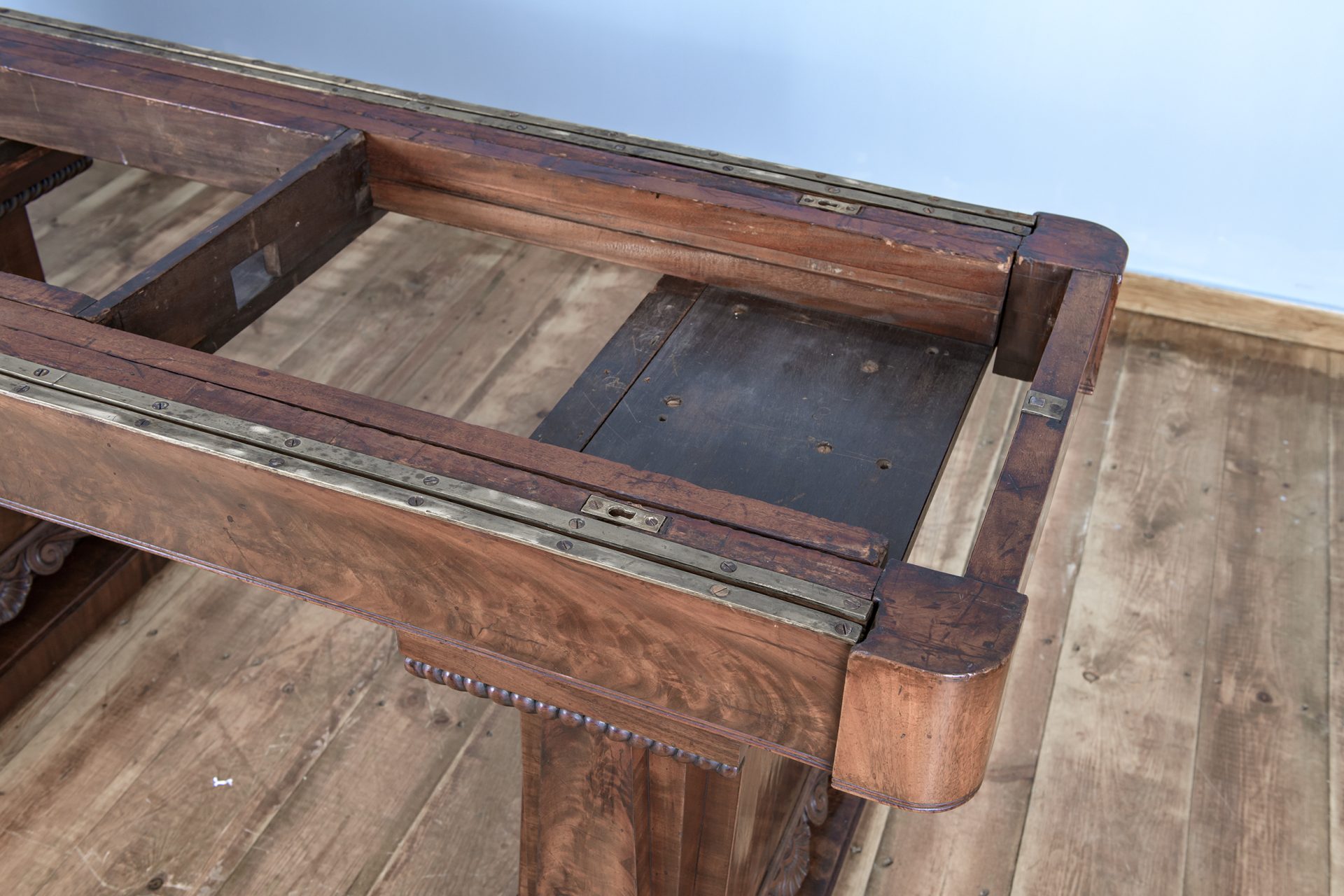
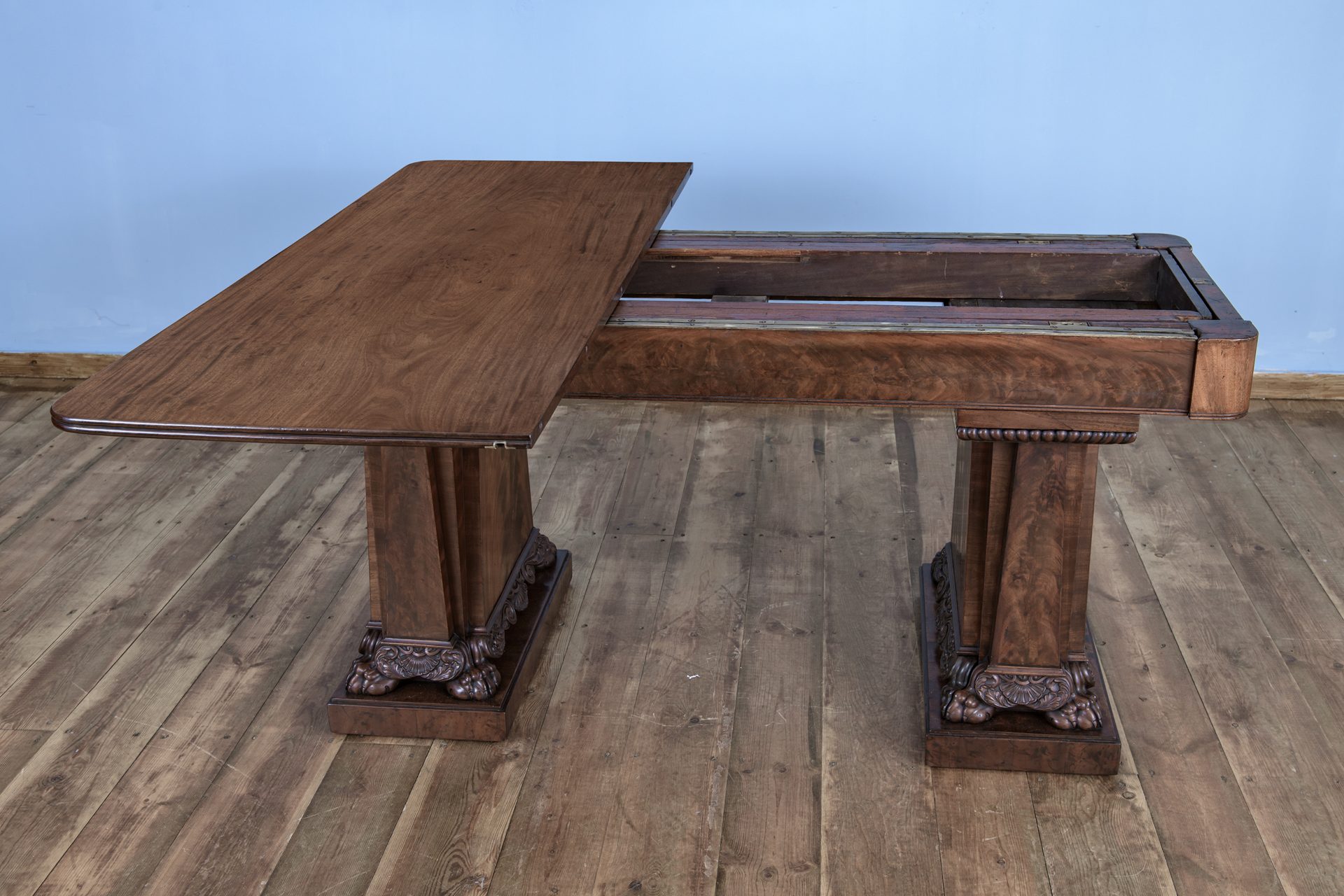
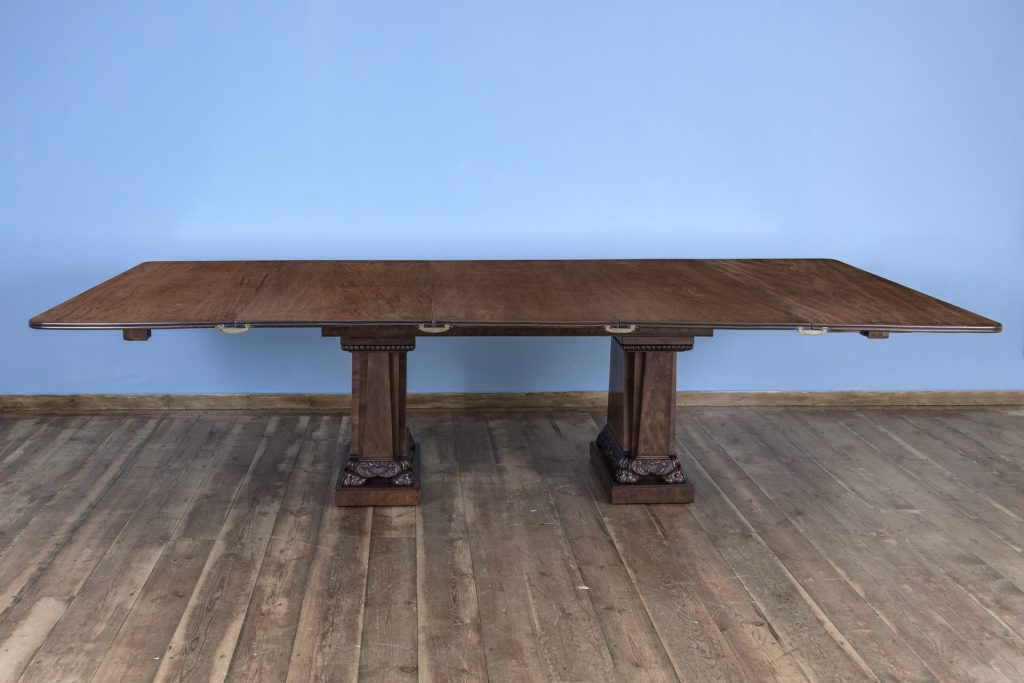
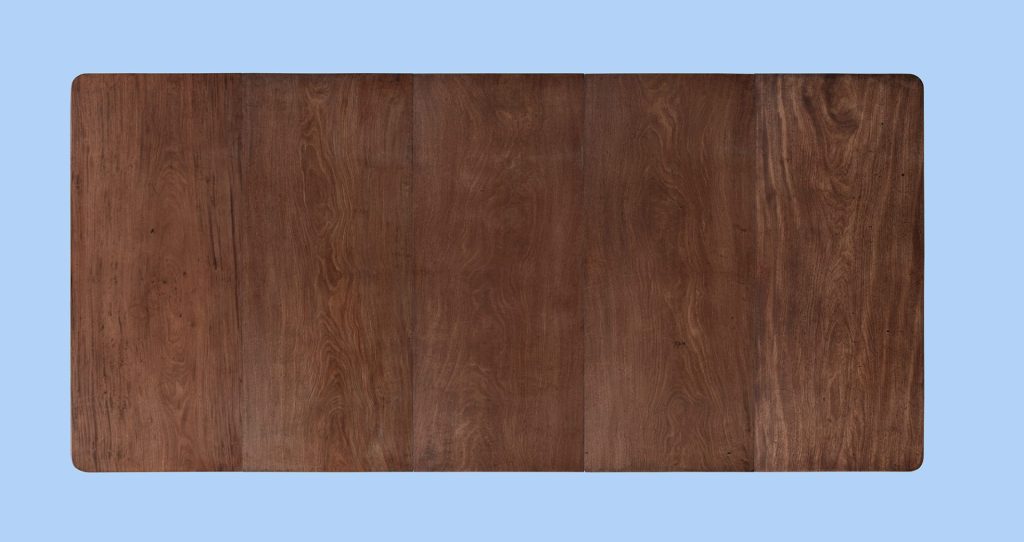
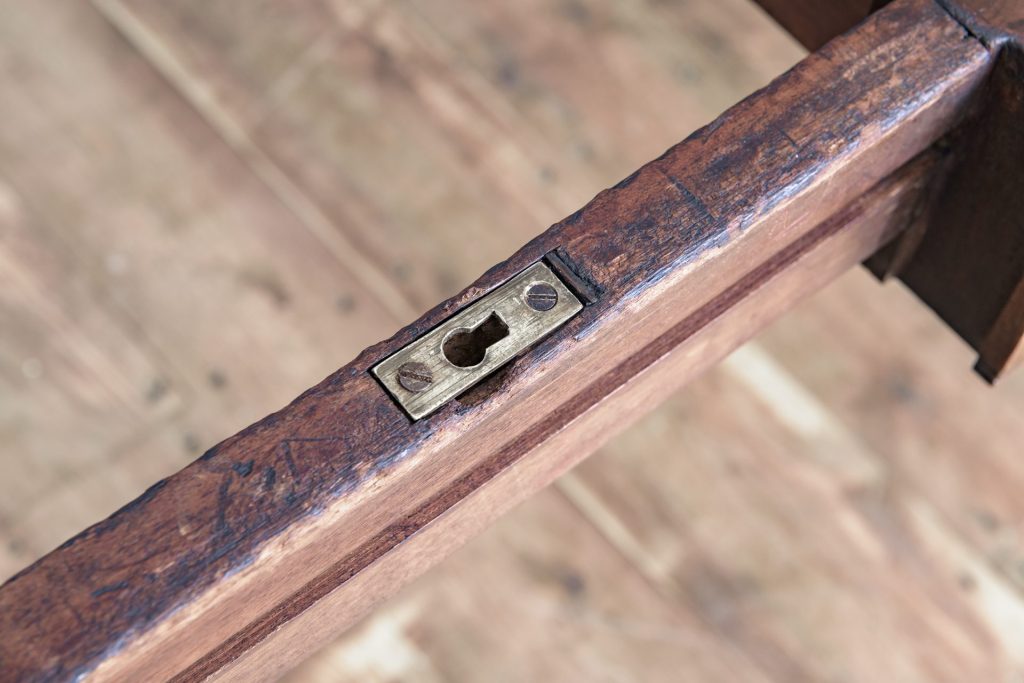
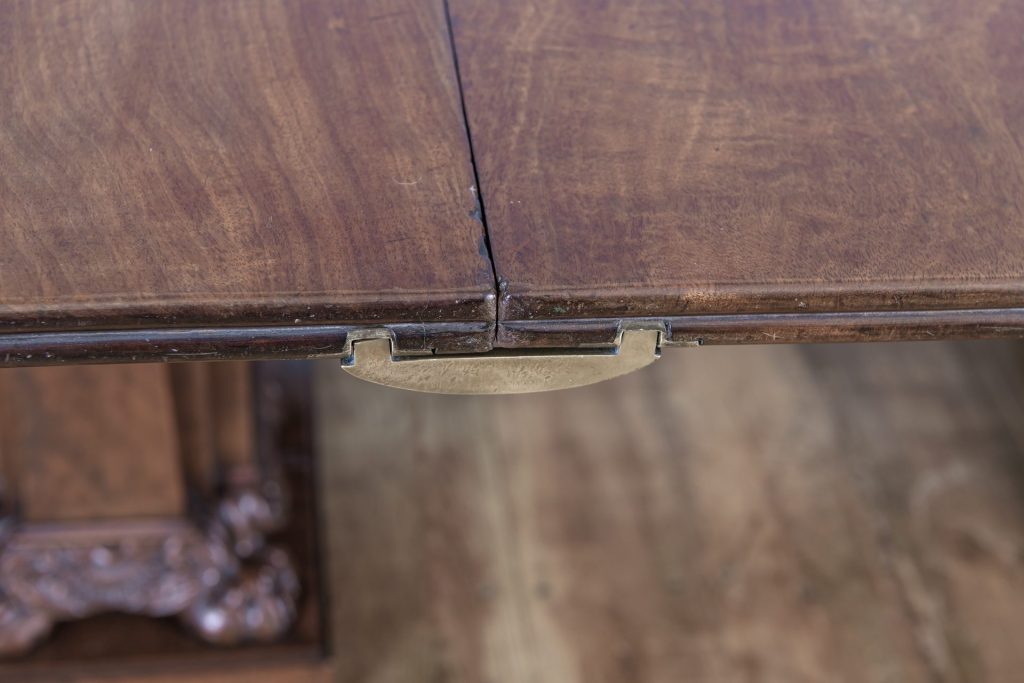
The metamorphic table can be set up as side table as well as dining table and will accommodate up fourteen guests with the options to remove or add the dining table leaves. The side table design has a concealed gilt brass bolt that locks the top into place but will swivel clockwise to a horizontal position on the pedestal base to allow the table to change form.
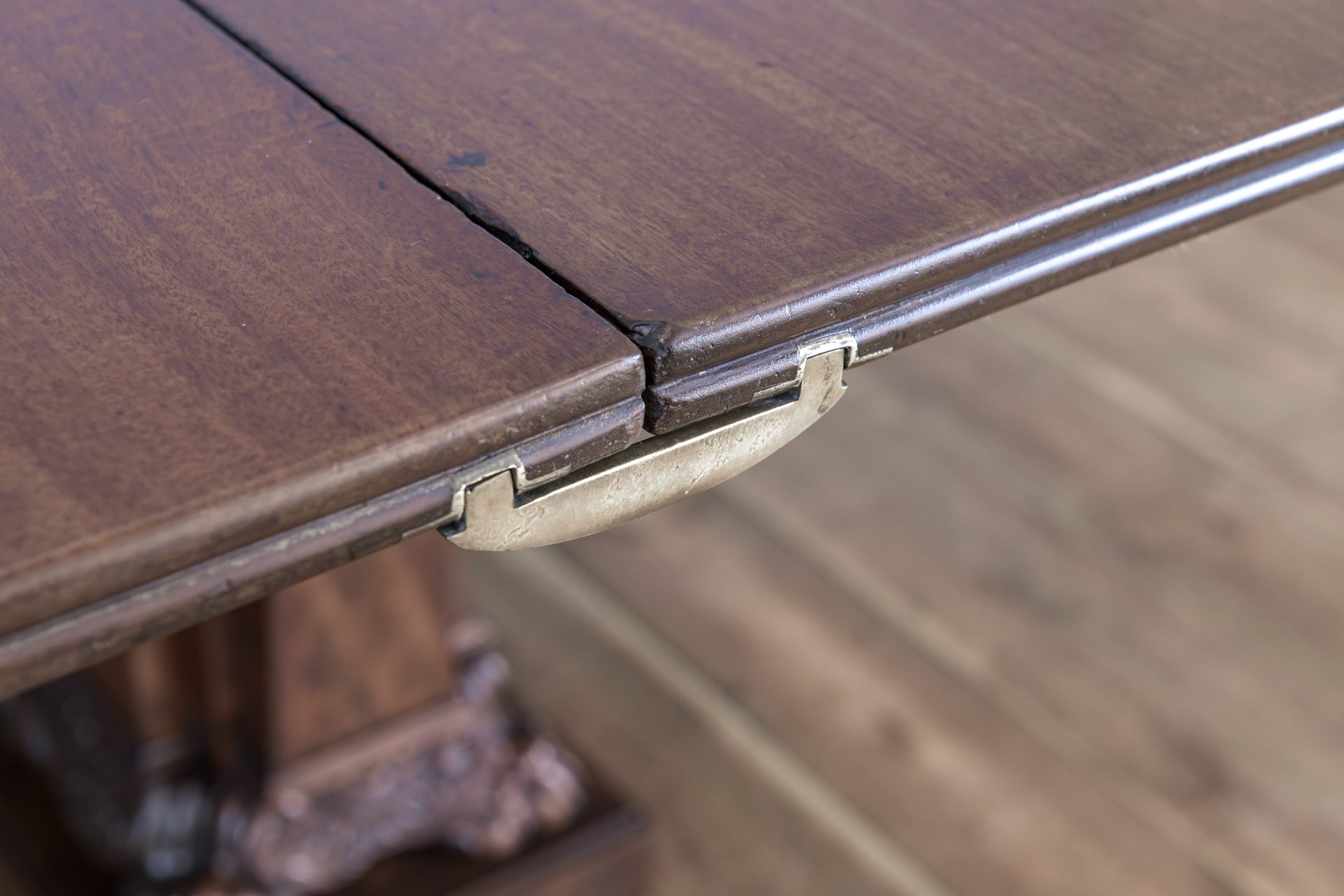
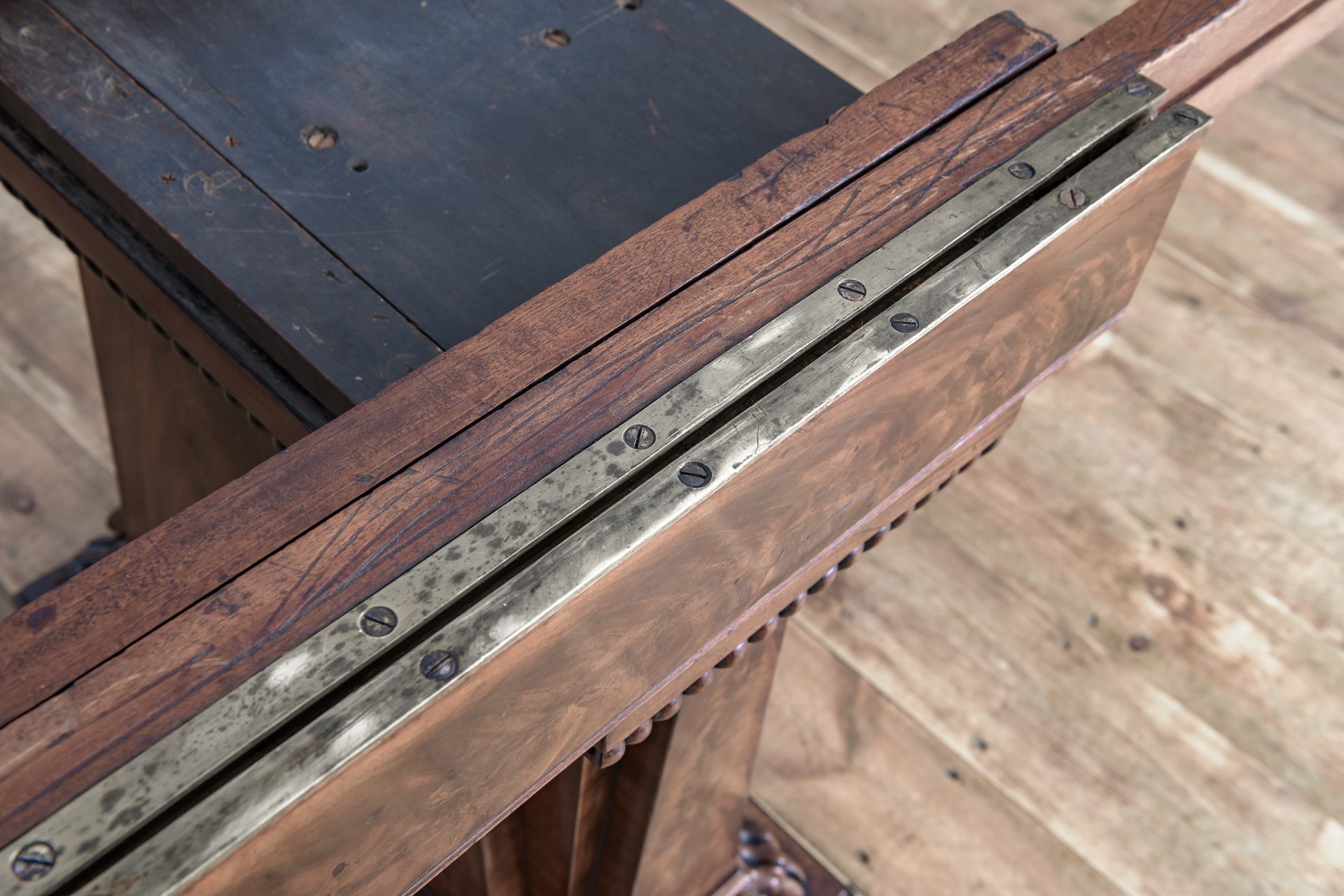
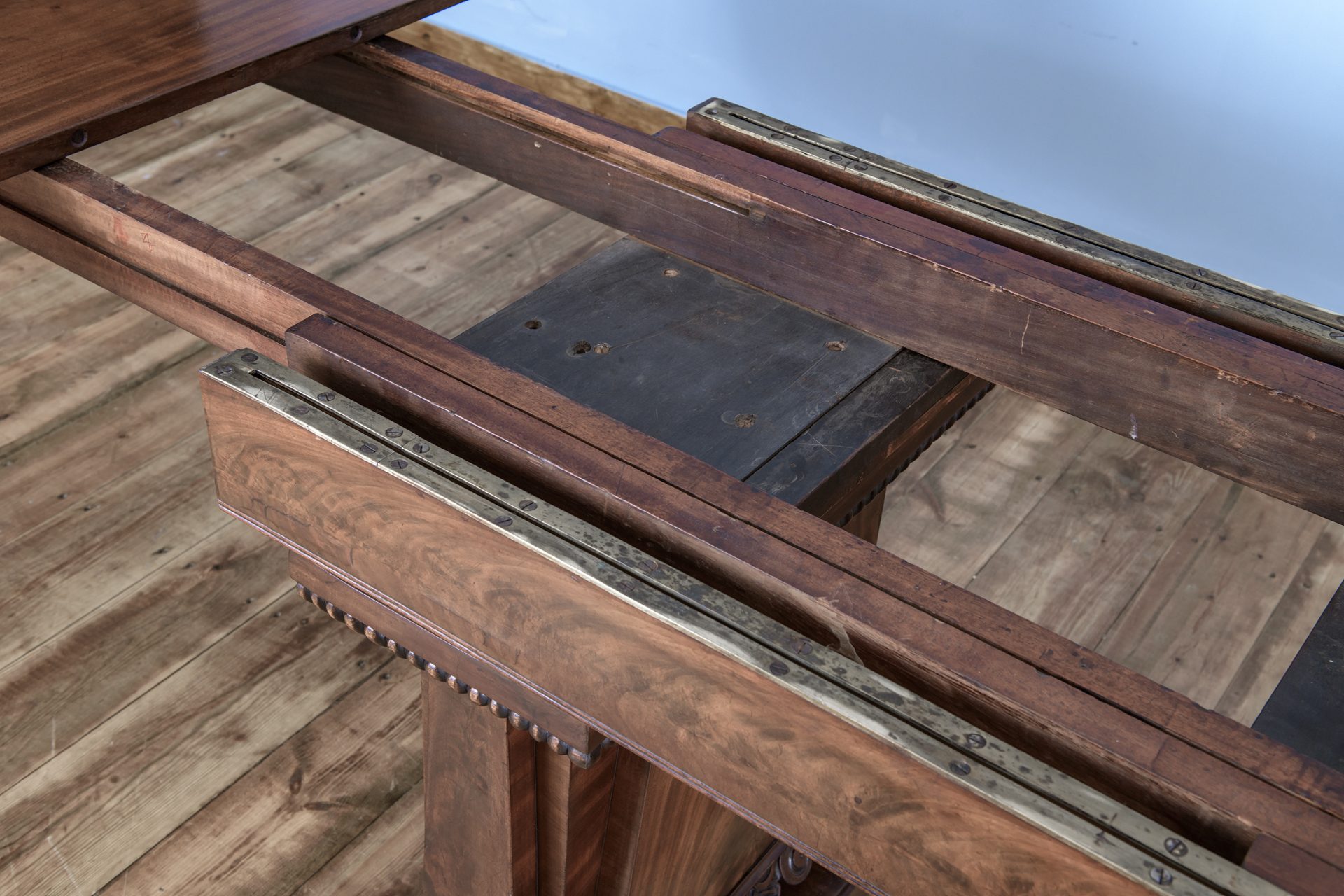
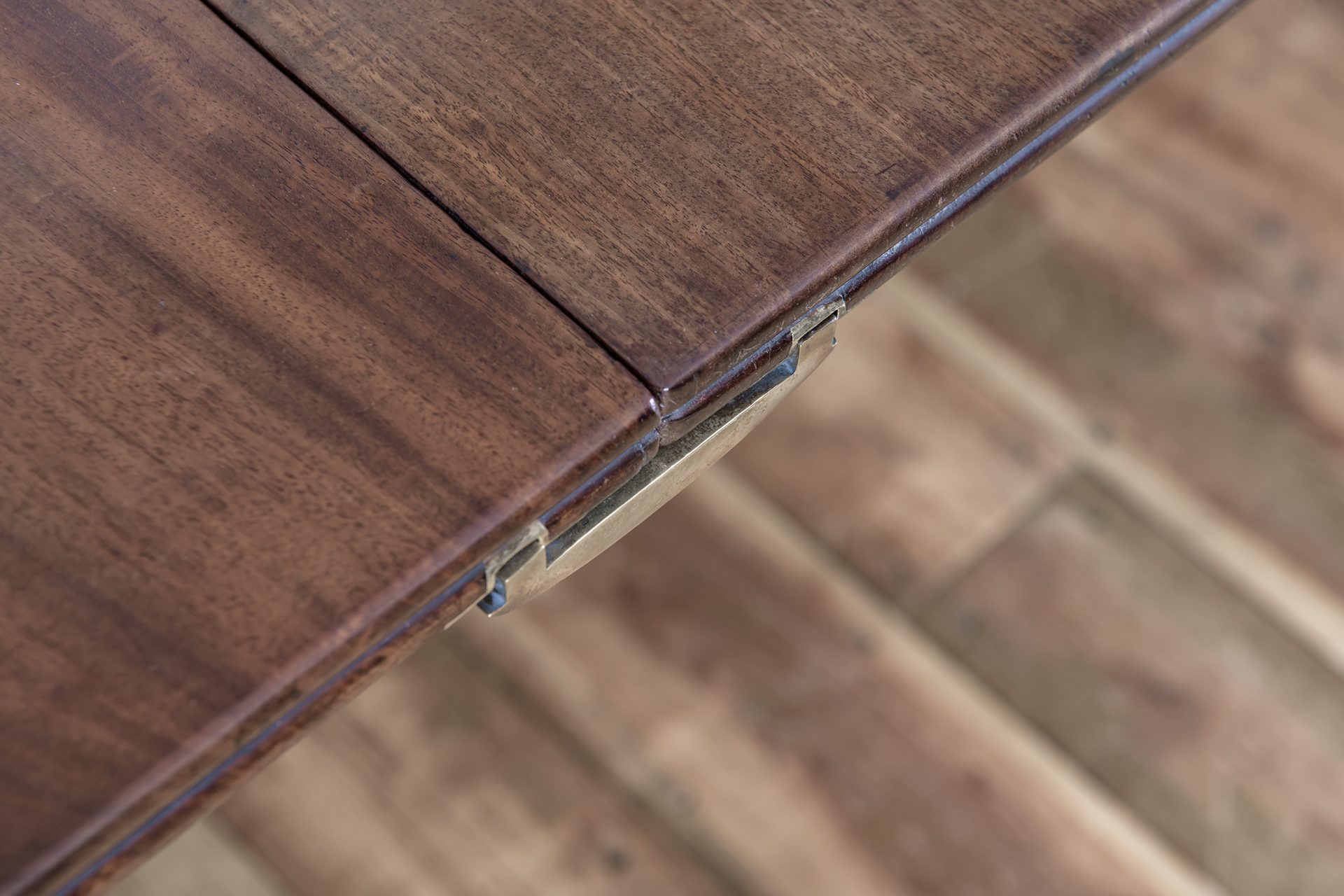
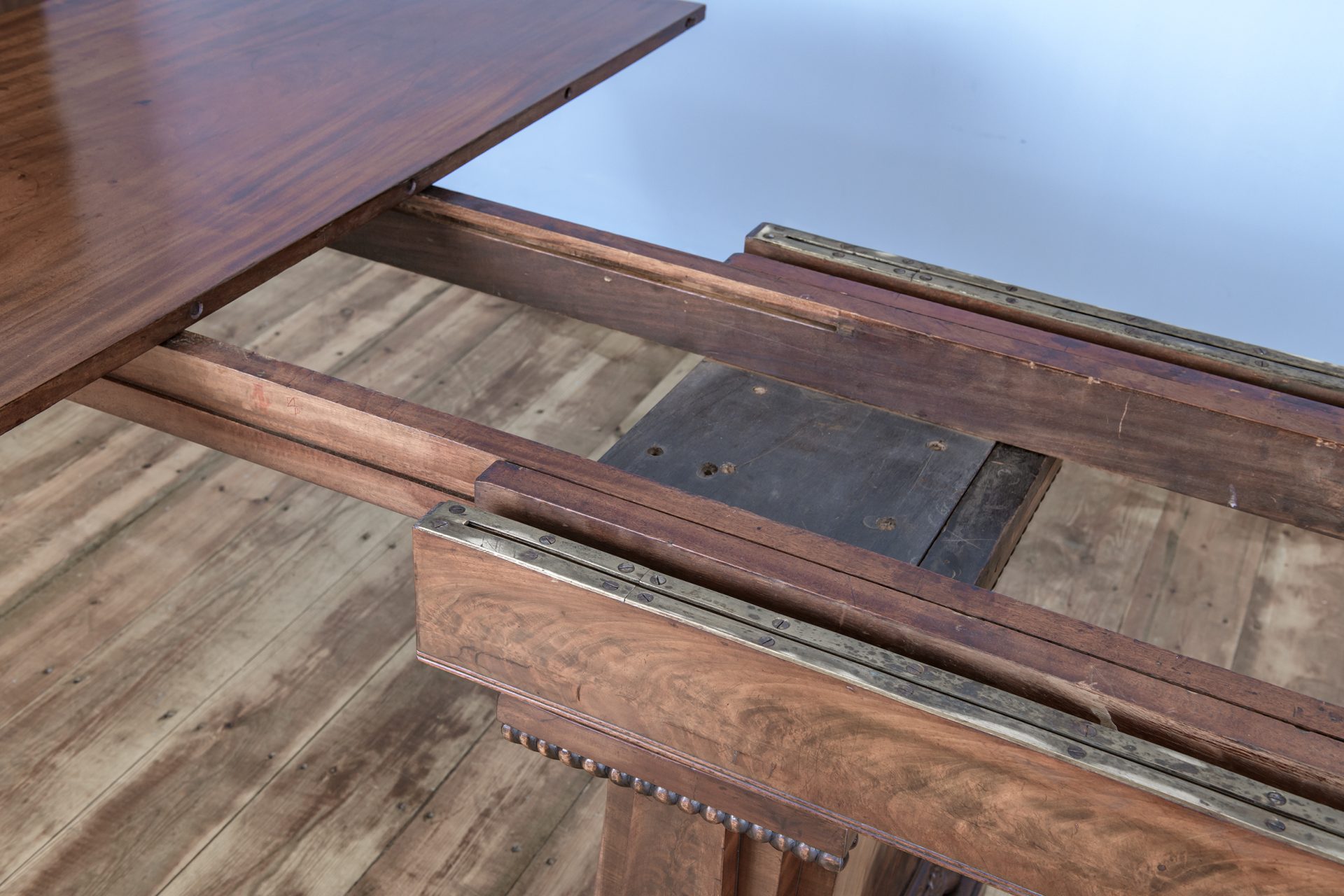
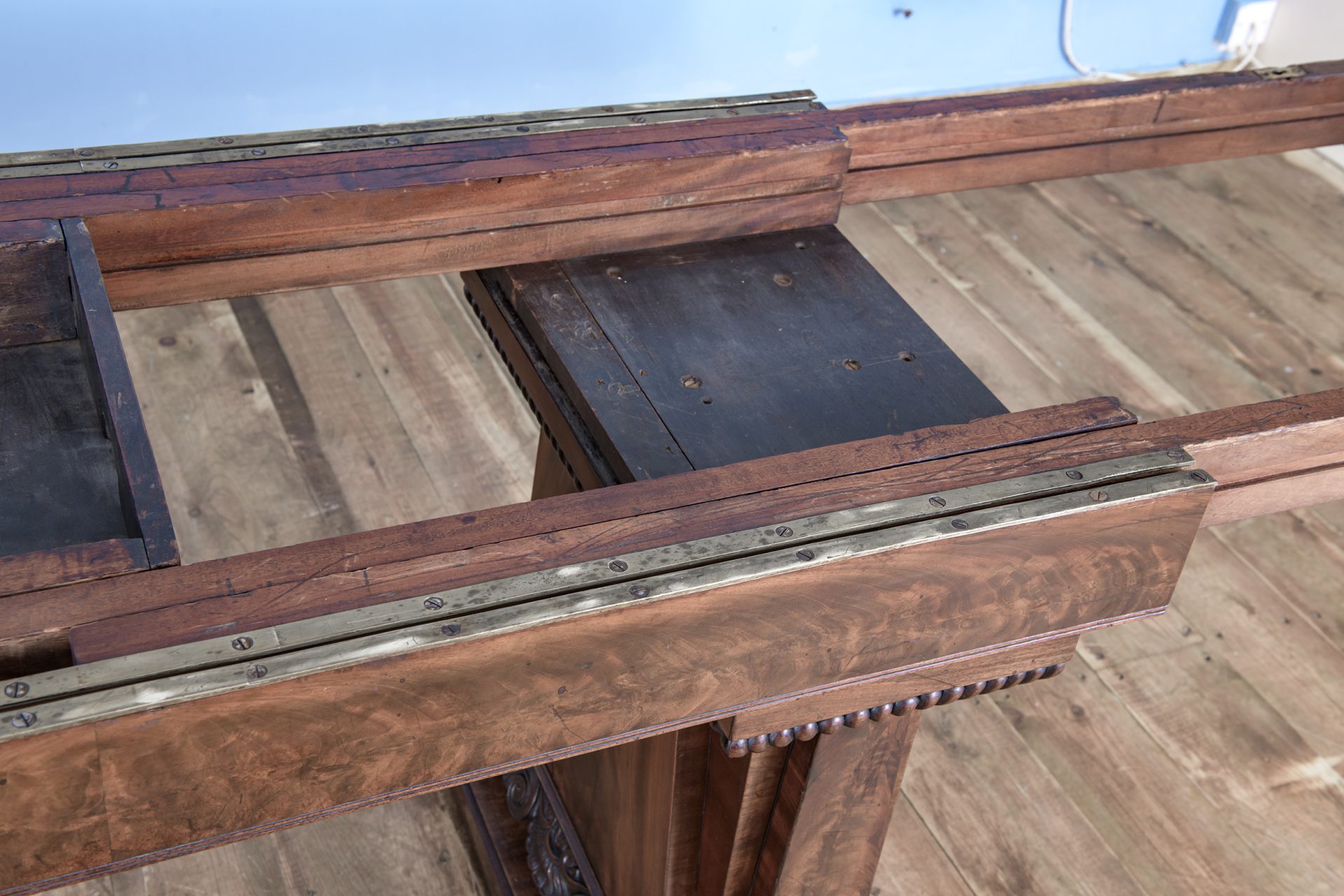
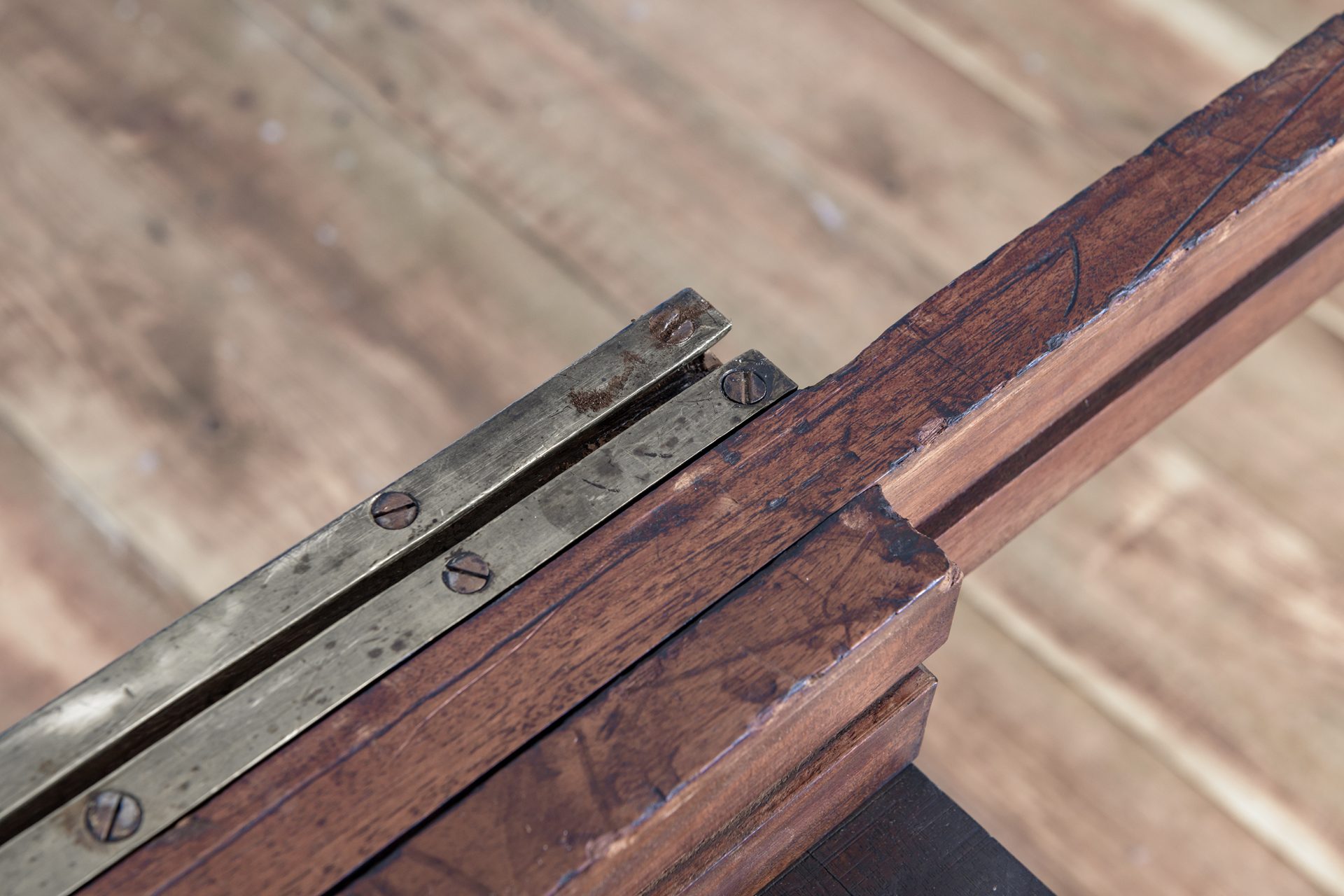
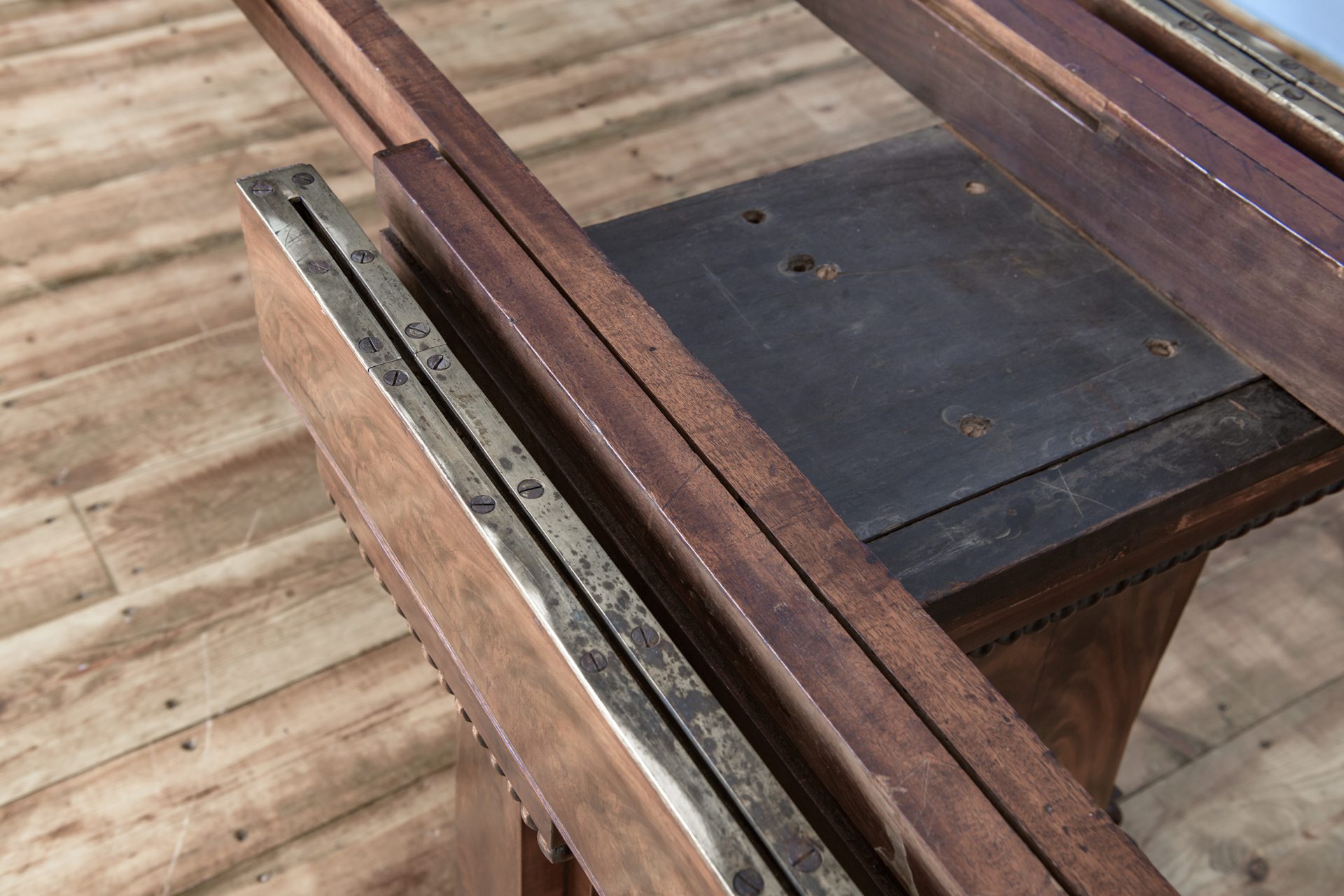
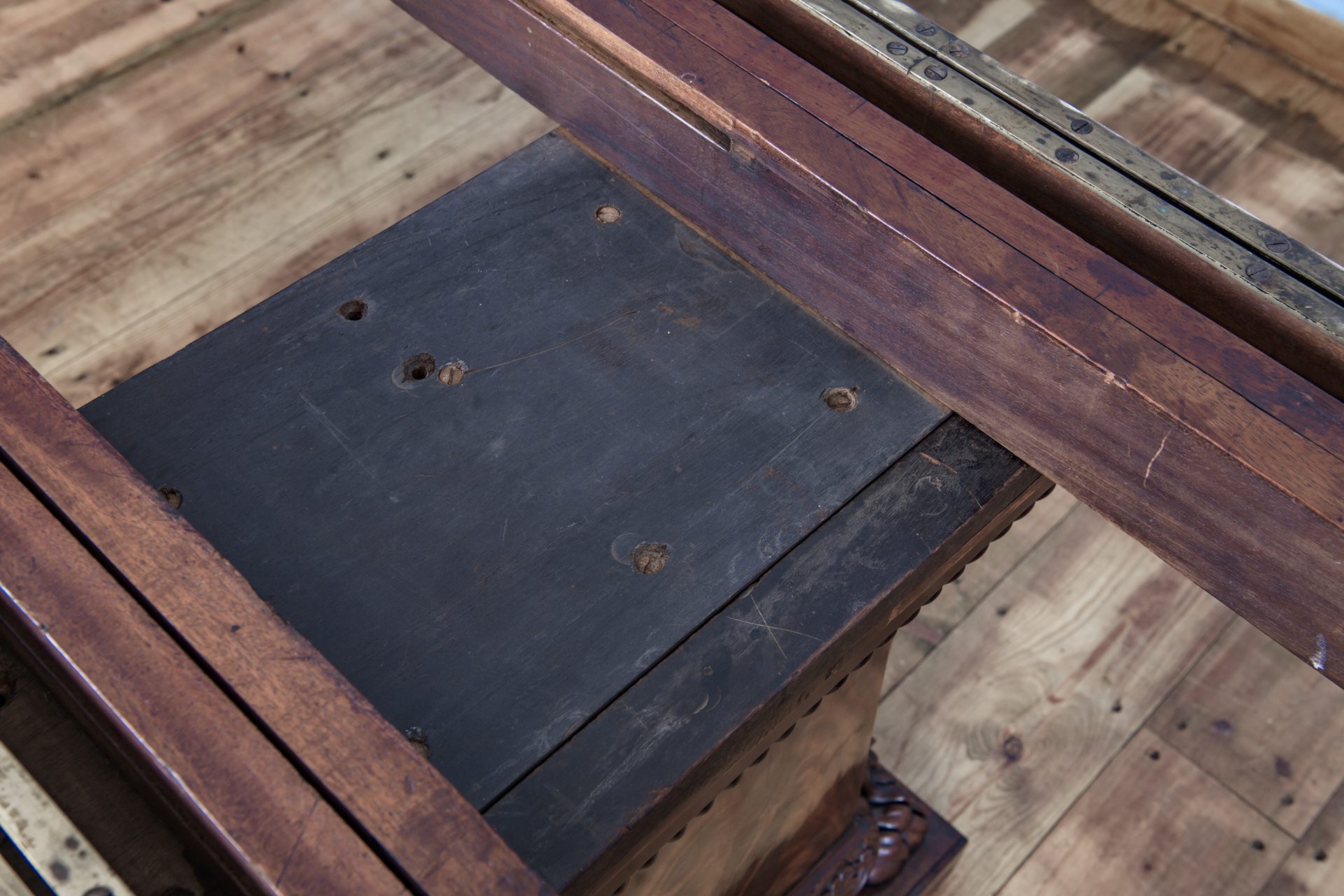
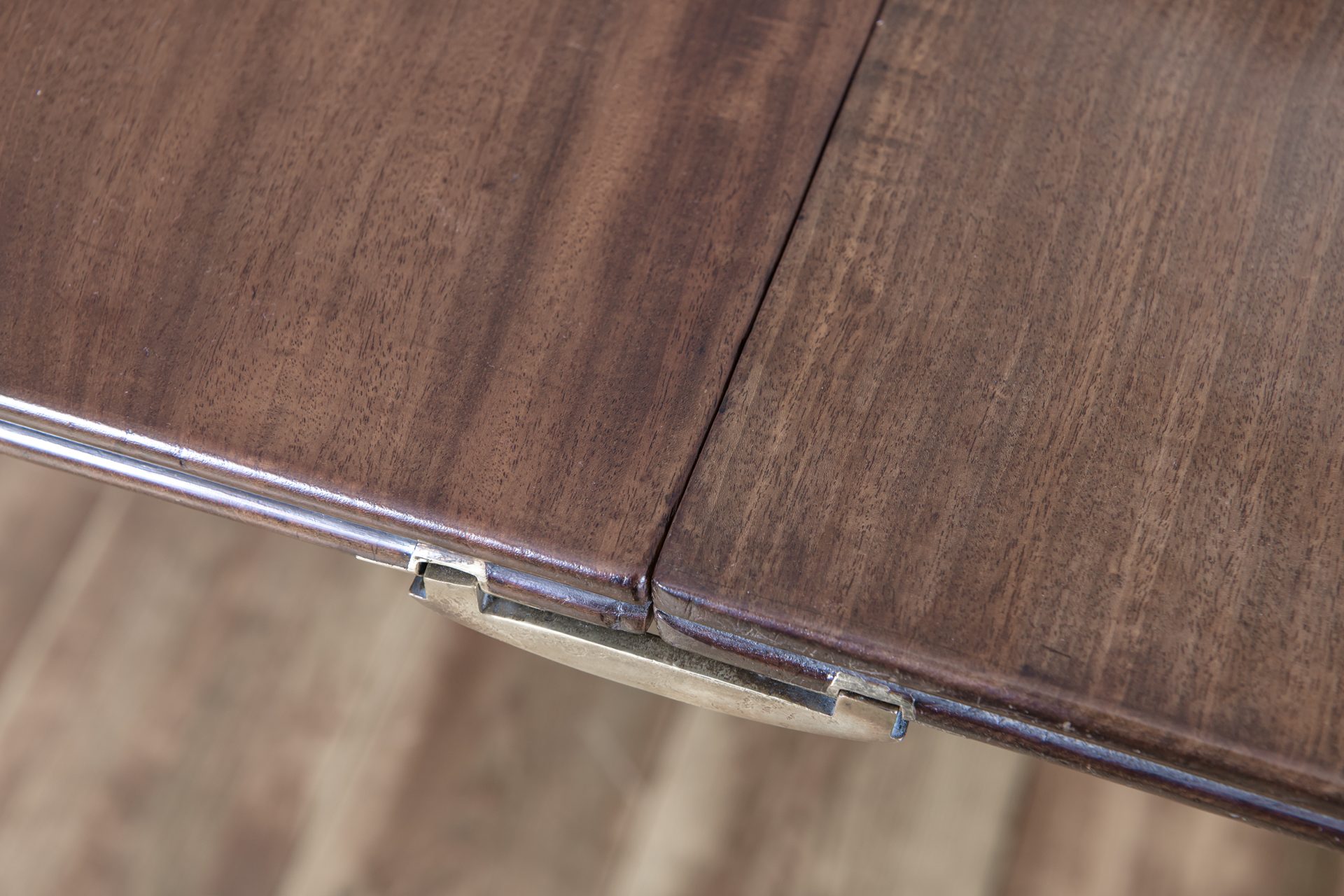
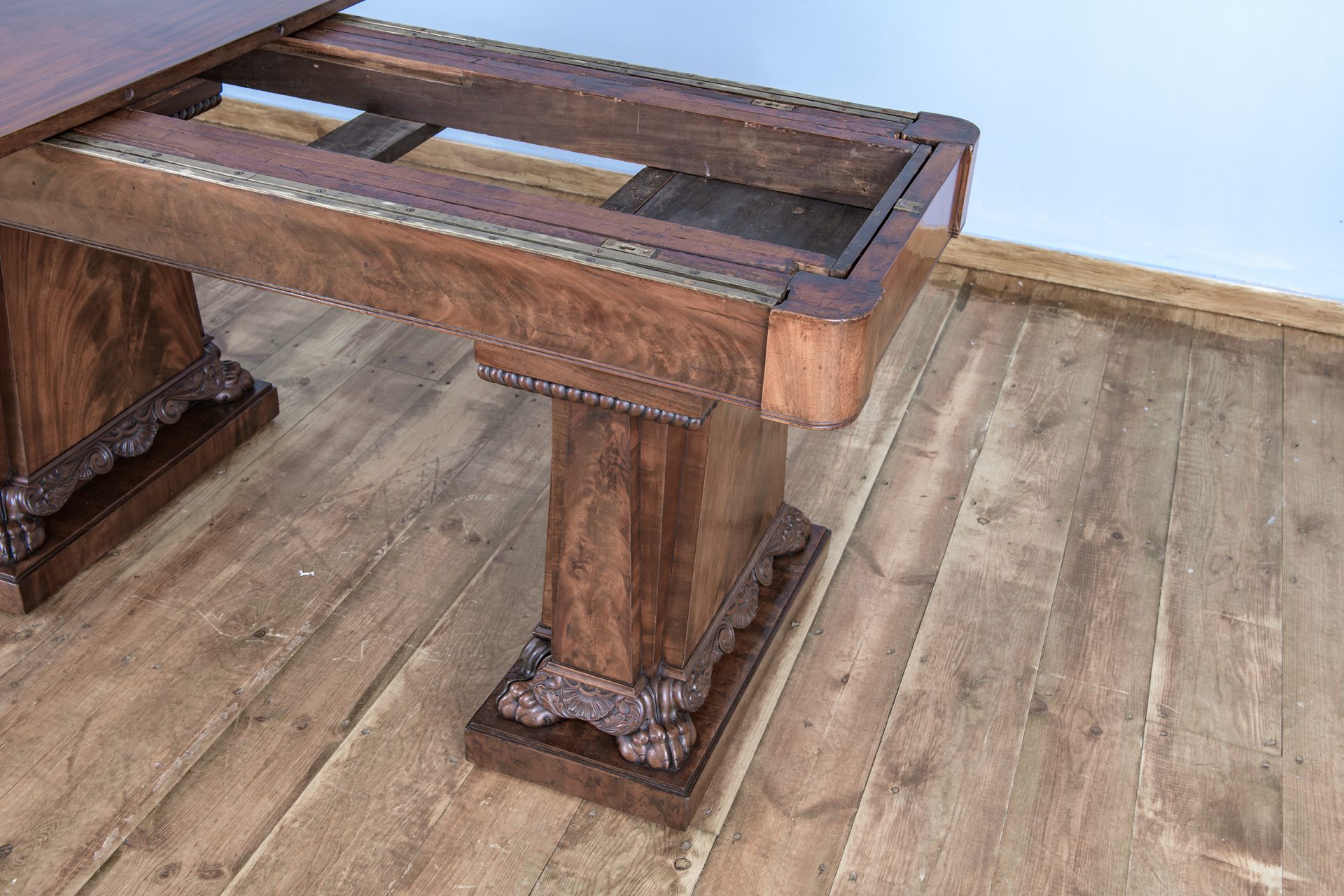
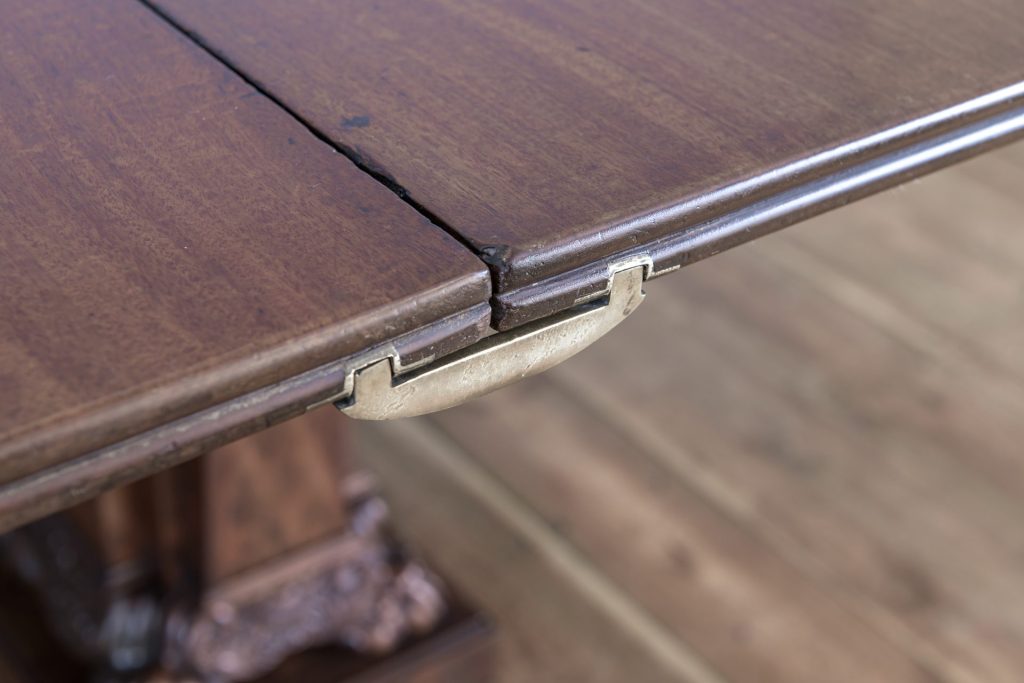
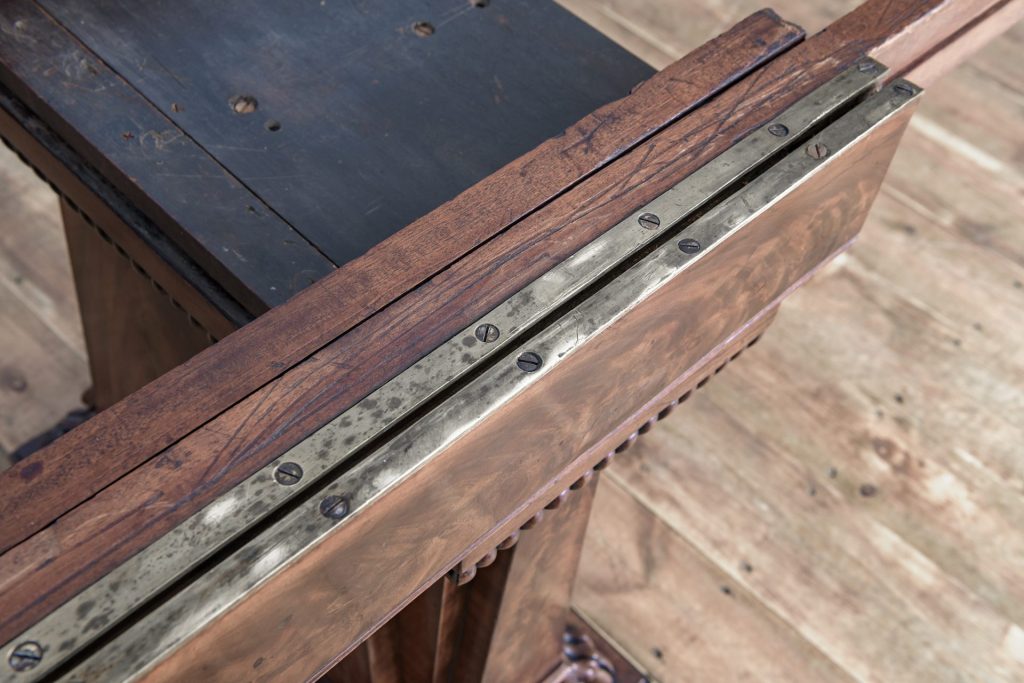
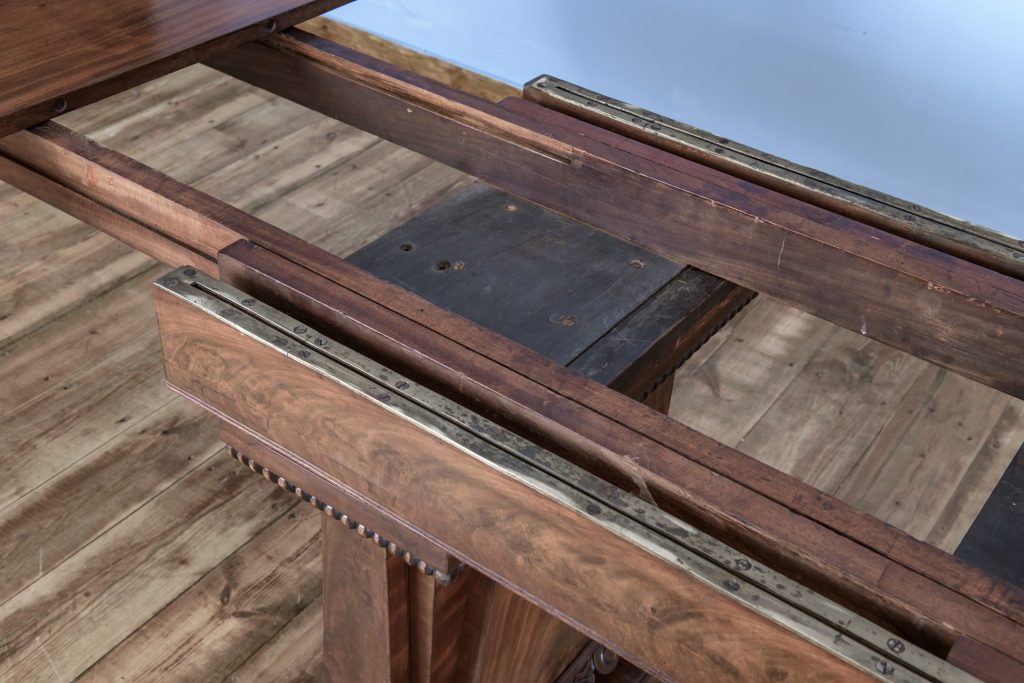
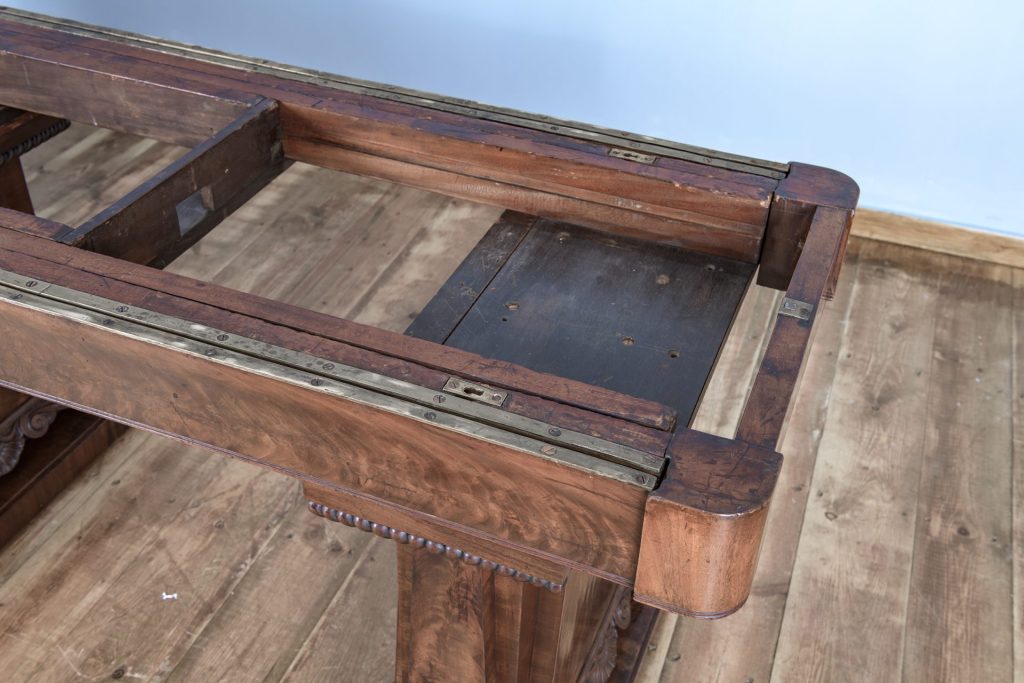
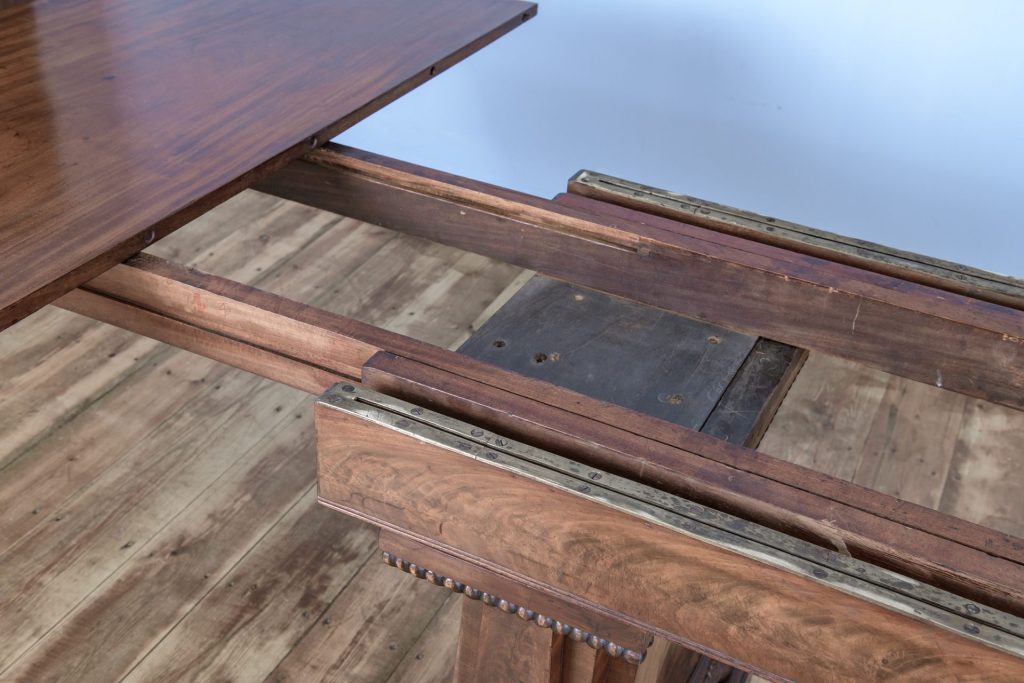
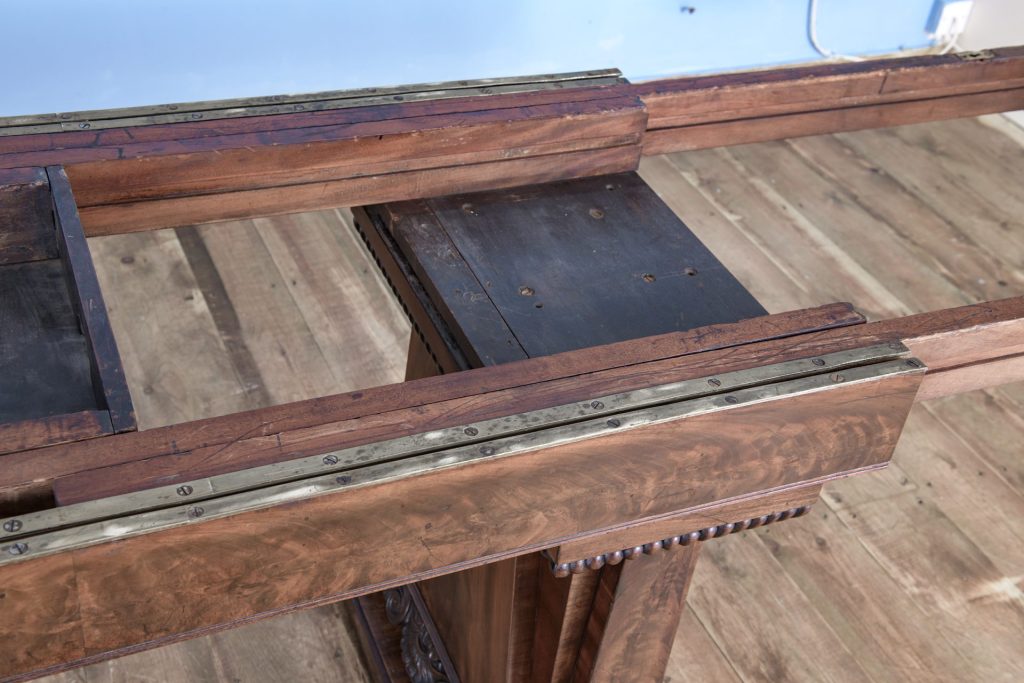
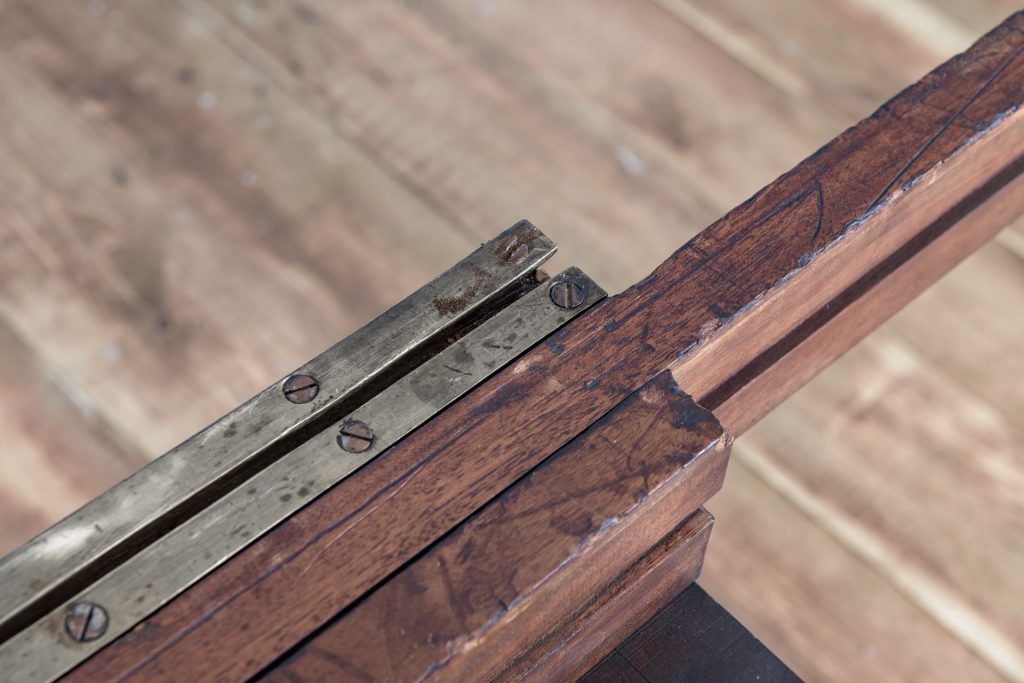
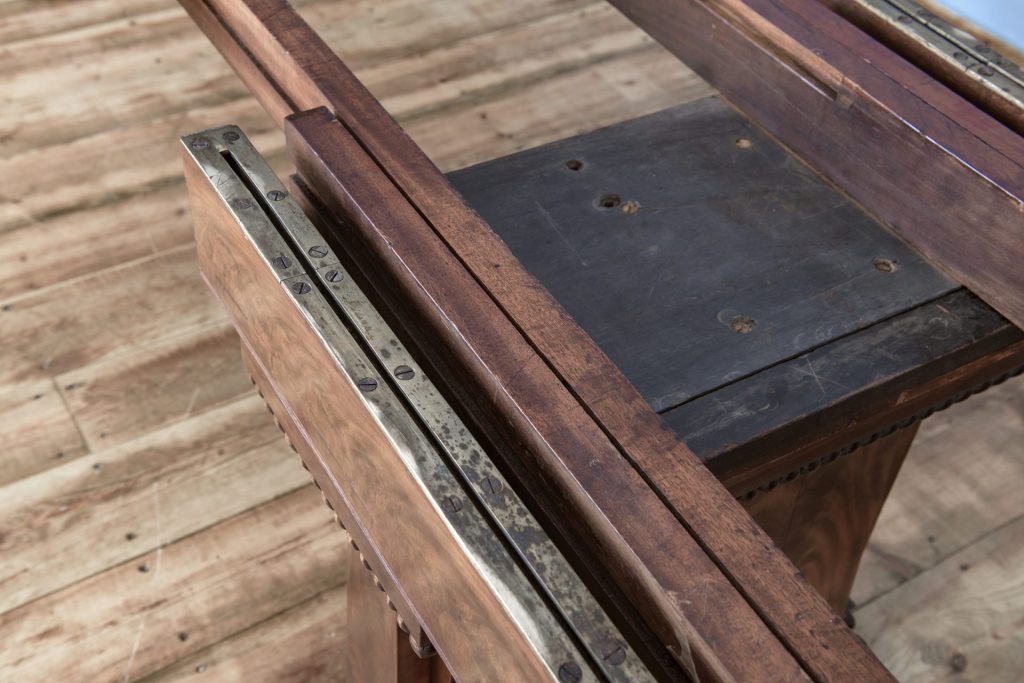
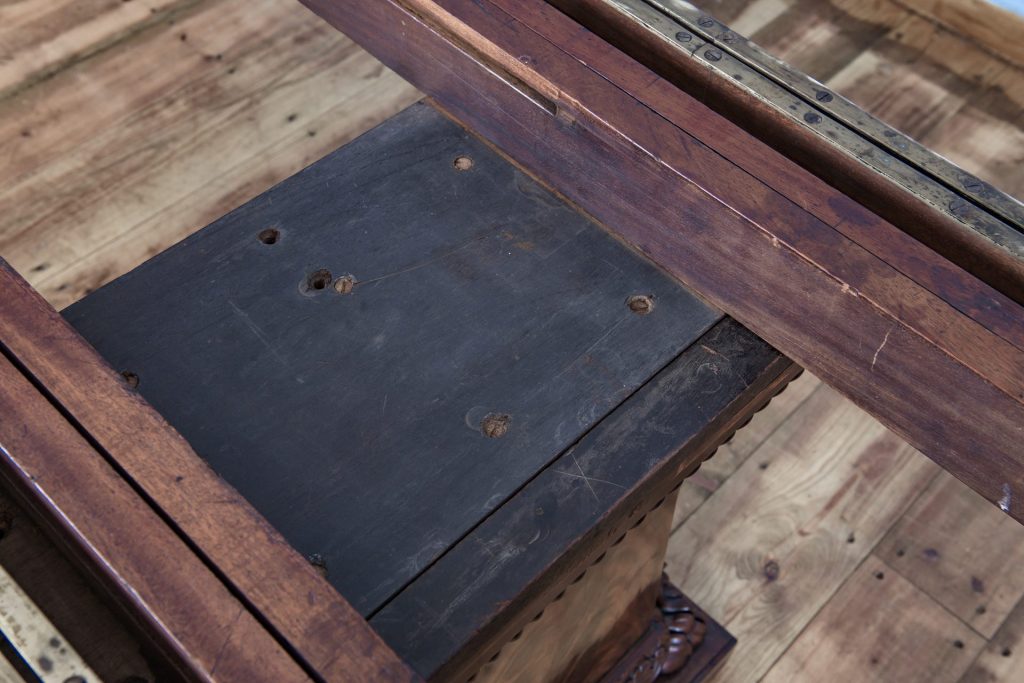
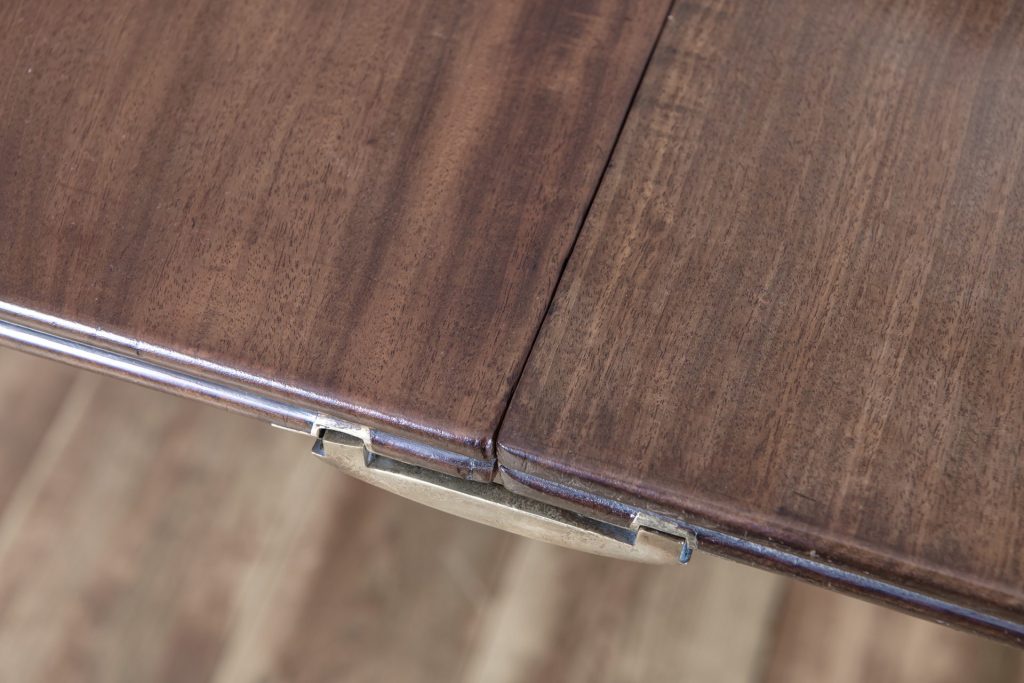
As seen in the images the table leaves are then inserted onto a brass rail system and slide into place and then fix with brass clips to the table edge.
The pedestals are fixed to a superstructure and metamorphosis into an extending dining table by allowing the side sections from the table frieze to pull outwards allowing support for the inserted leaves.
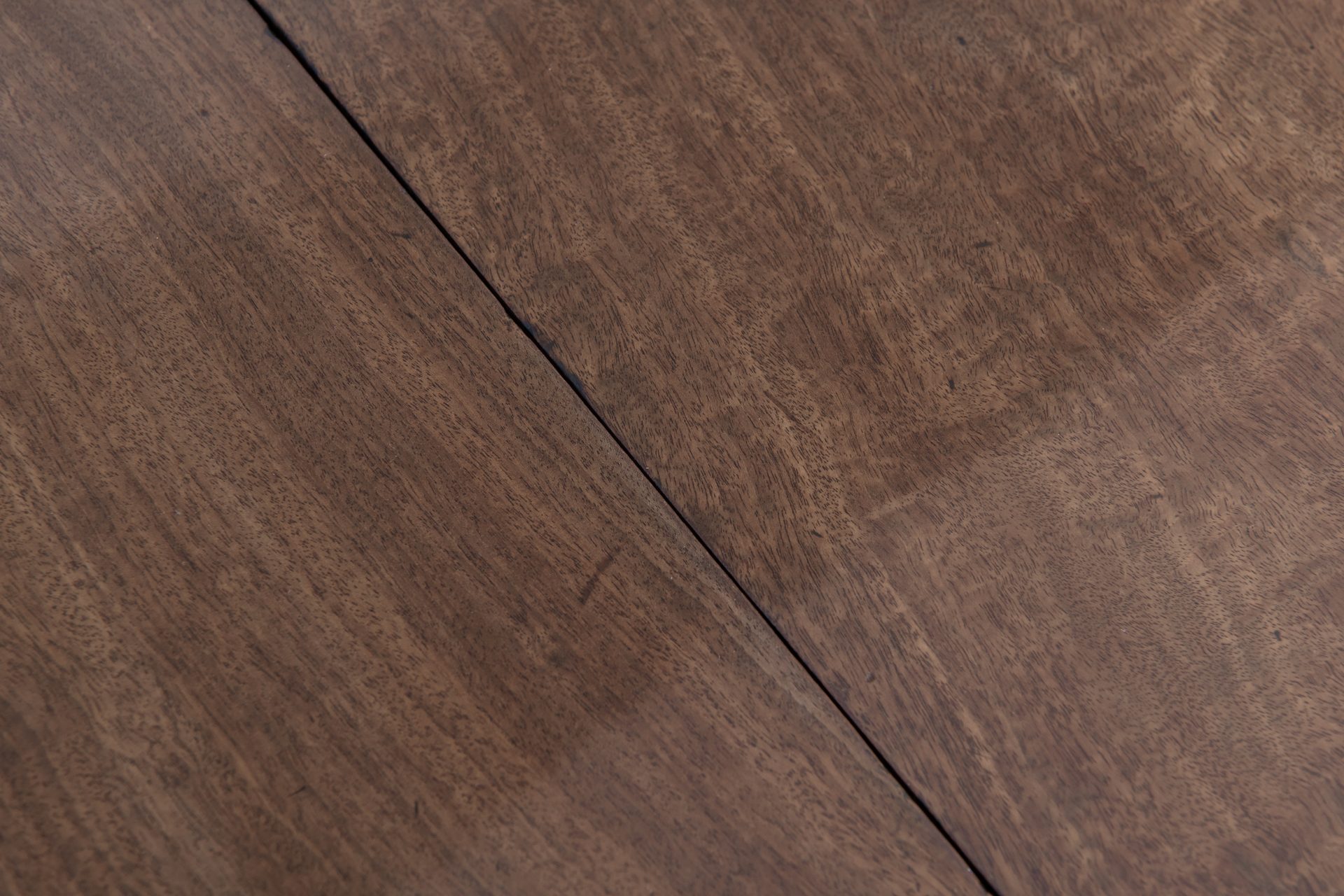
The highly flamed and figured mahogany pedestals are raised on concealed castors so the table is manoeuvrable and set to the desired space and location.
The pedestals are profusely carved and styled in 'Grecian' architecture with lions paw feet surmounted on figured plinth bases, flanked with carved 'S' scrolls above anthemion motifs and stiff leaf carvings above the highly figured and flamed panels that adorn the tapered pedestals.
Condition
Excellent, as a side table 152.40cm wide, 73.50cm high and 58.50cm deep
Literature
Thomas Hope (1769–1831)
Designer, patron, collector, and author Thomas Hope (1769–1831) is one of the major figures in the history of design. In addition to collecting antiquities, Hope designed his own furniture and decorative schemes, that were published in his book, Household Furniture and Interior Decoration, Executed from Designs by Thomas Hope (London: Longman, Hurst, Rees & Orme, 1807), which was influential in promoting Greek and Egyptian styles as the height of fashion in interior decoration and helped shape and define what became known as the British Regency style.
Hope belonged to a family of Amsterdam bankers who fled to England in 1794 when Holland was invaded by France. Breaking from family tradition, he pursued the study of art and architecture. He visited the traditional Grand Tour destinations in France and Italy between 1787 and 1798, and travelled even farther afield through North Africa, Greece, and the Ottoman Empire. This Grand Tour formed the basis of his collection as well as of his sense of aesthetics and his design vocabulary.
In 1799 Thomas Hope bought a residence on Duchess Street in London, which required some remodelling to accommodate his collection. Hope took great interest in the design and installation of the galleries, drawing inspiration from his travels and studies — perhaps using ideas suggested by the young architect Charles Heathcote Tatham. The work was finished by 1804, and a few years later Hope published a book on the design of Duchess street, complete with illustrations. This volume, Household Furniture and Interior Decoration (1807), is said to have introduced the phrase “interior decoration” to the English language; it also became the definitive guide to English Regency style.
While most of the artworks were collected by Hope during and after his extensive travels, he also designed a significant number of furniture and furnishings for his house and he commissioned contemporary artists and craftsmen such as Flaxman, Chantrey and Bogaert to create works that in various ways emulated the cultural and aesthetic ideals he greatly admired in the art and artefacts of antiquity.
The influences on Regency design and taste were legion; from Sheraton’s neoclassicism, Henry Holland’s Anglo-French taste, the Greek revival of Thomas Hope as we see here, and the Chinoiserie favoured by the Prince Regent, to an interest in the Gothic, Old English and rustic. The Regency attitude to interior decoration often involved treating each room as a unit with individual furnishings and wall decorations in harmony of theme or colour scheme.
Thomas Hope was a Dutch-British designer who proved to be incredibly influential in the early 19th century. In fact, this was the person who first coined the phrase ''interior decoration''. Through his collecting, designing, and decorating, Thomas Hope not only brought the room together, but helped bring all of England together as well. Hope was born in Holland, the son of a very wealthy banking family. His father was a collector of ancient art, and he picked up the hobby. In the 1790s, Hope went on one of the grandest grand tours of all, traveling across the entirety of the Mediterranean and visiting sites in France, Italy, Greece, and Turkey. Along the way he observed, studied, and collected as much of the ancient world as he could.
The 1790s were a big period of transition for Hope, since the French had invaded Holland and he was forced to flee. He moved to London, and saw an opportunity to reform English tastes and, in his mind, purify them with his knowledge of Classical art.
The Gilded Wooded Bench owned by the Met Museum in New York have known Thomas Hope piece as listed in the link below. (The foot is neatly carved and closely relates to the dining table.
https://www.metmuseum.org/art/collection/search/631133
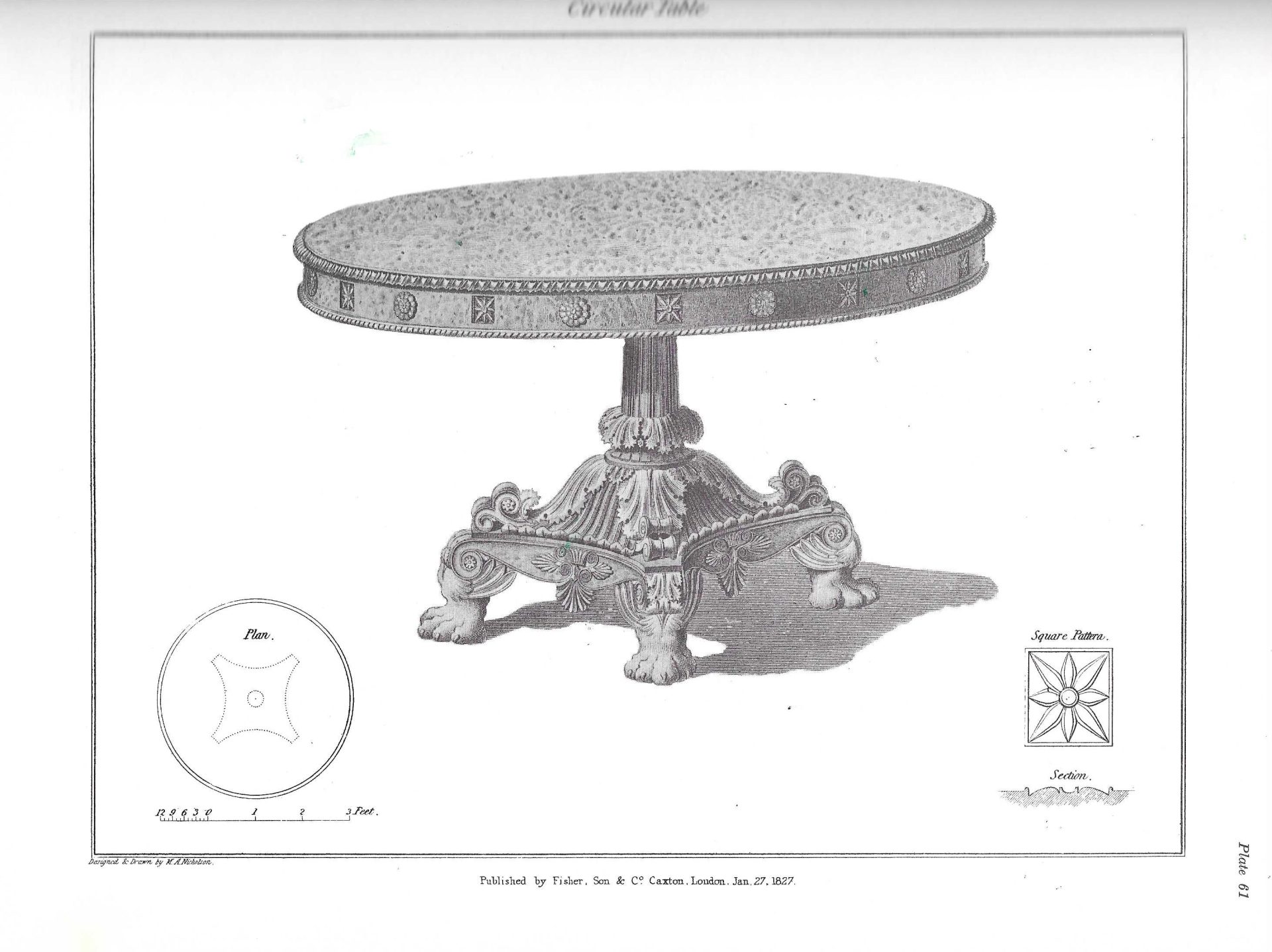
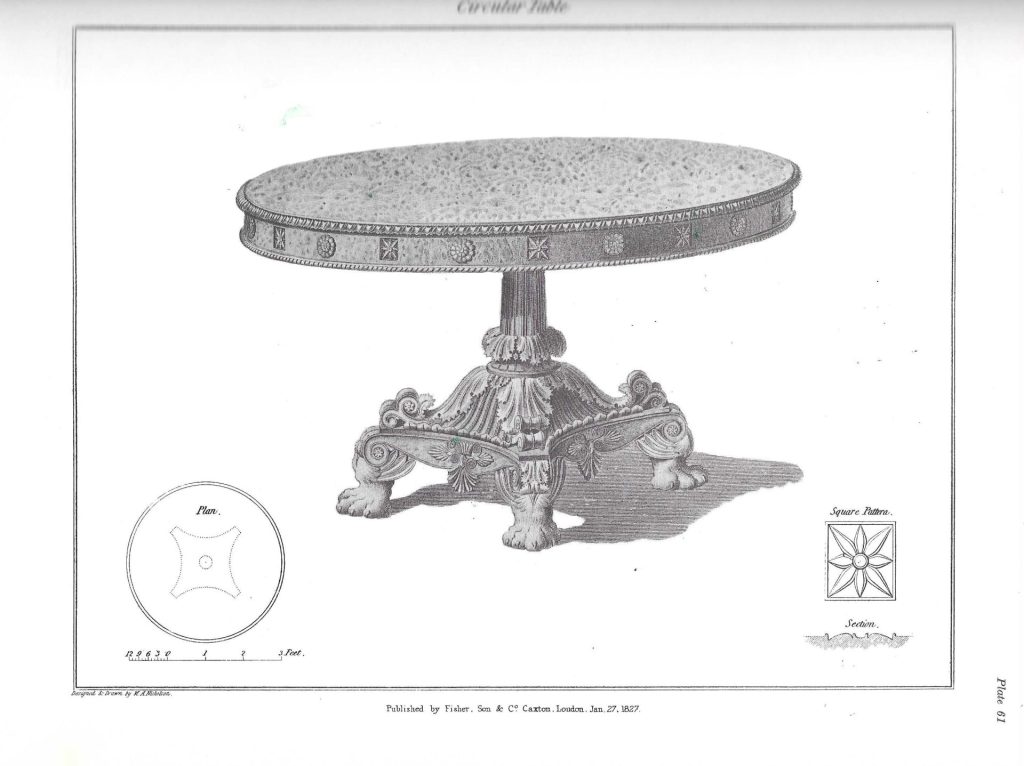
The Practical Cabinet Maker: P and M A Nicholson, first published 1826
Other Influences of Design, that followed on from Thomas Hope and George Smith's designs were;
Peter & Michael Angelo Nicholson furniture designed and produced by the Nicholsons. Peter Nicholson (1765-1844) trained as a cabinet maker in Edinburgh before moving to London at the age of twenty-three, later practising as an architect and writing many text books on carpentry, building, perspective and mathematics. His son Michael Angelo (c.1796-1842) worked with his father and in 1826 they collaborated to produce a much acclaimed book, ‘The Practical Cabinet Maker’, which illustrated the rich profusion of naturalistic leaf carving blended with classical motif, so typical of their work.
The illustrated sketch attached the dining table images is Nicholson design circa 1826
Dimensions
Height 73.50cm (28.94 inches)
Width 152.40cm (60 inches)
Length 294.00cm (115.75 inches)
Stock No: 11564
£29,500.00
In-stockMake an Enquiry
If you'd like to negotiate on this item, please make your offer below and we'll get back to you.
Reserve Item
Request more images
© 2026 Freshfords Fine Antiques