

Regency George IV Pollard & Burr Oak Table
Regency George IV Pollard & Burr Oak Table
English
circa 1820 - 1830
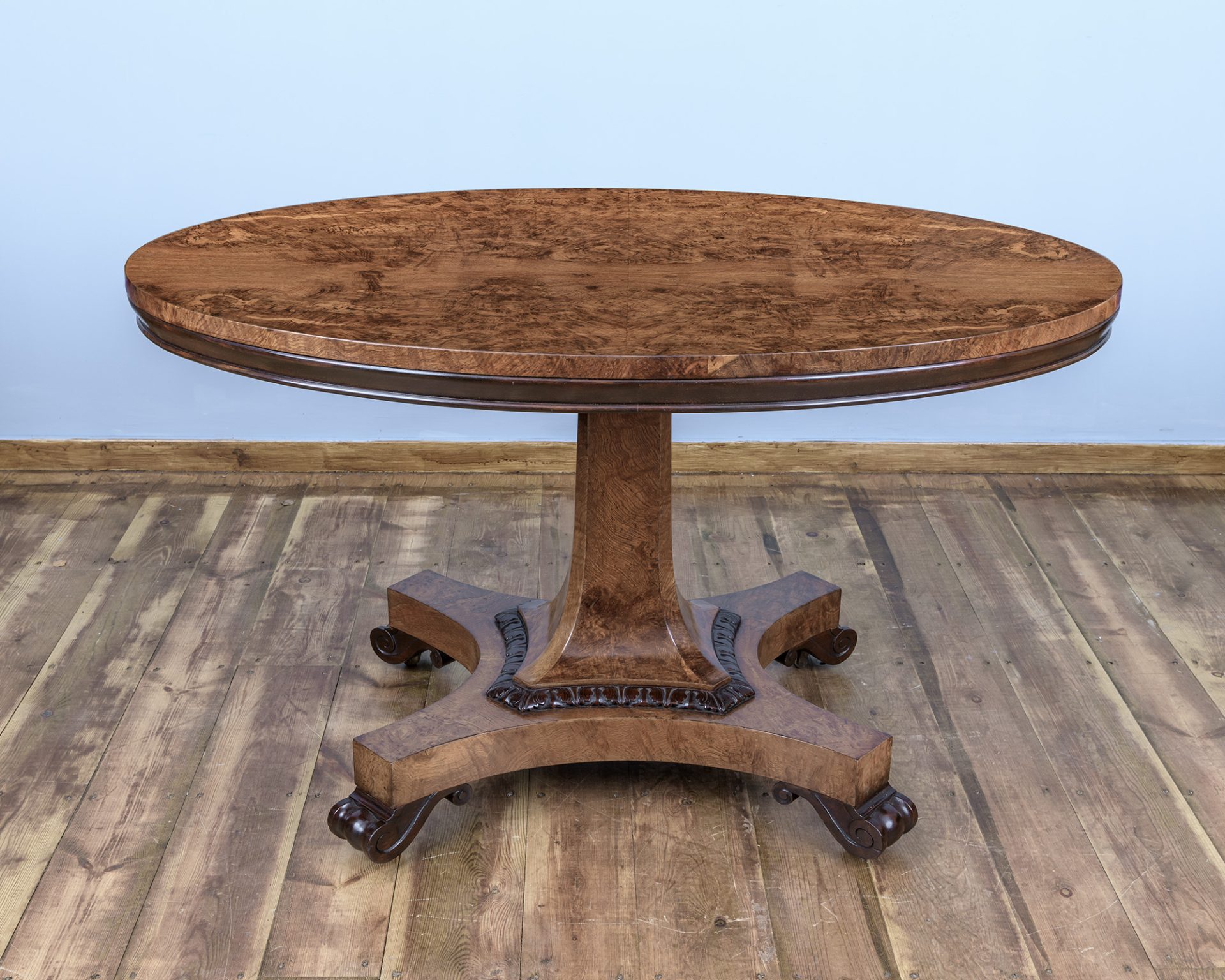
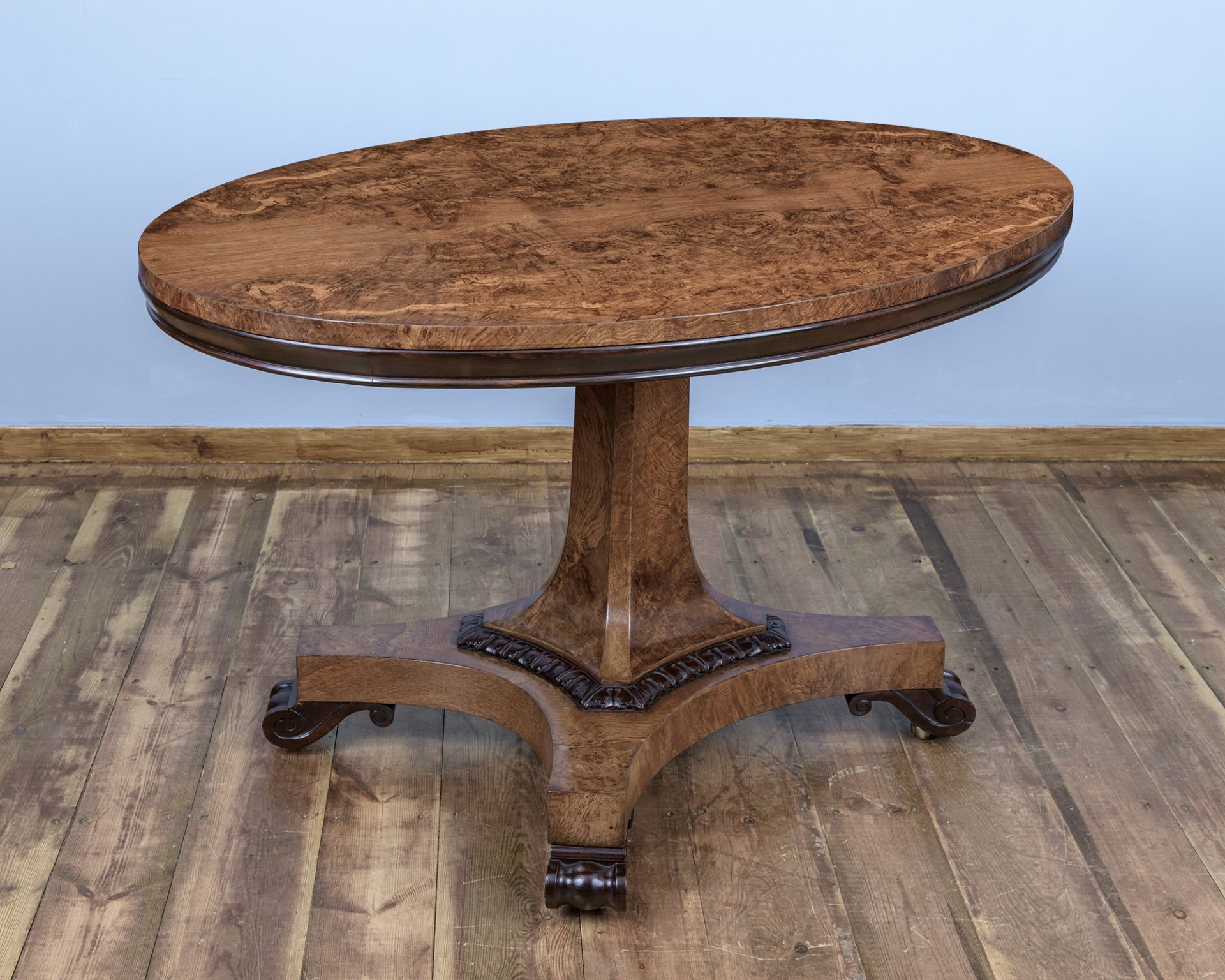
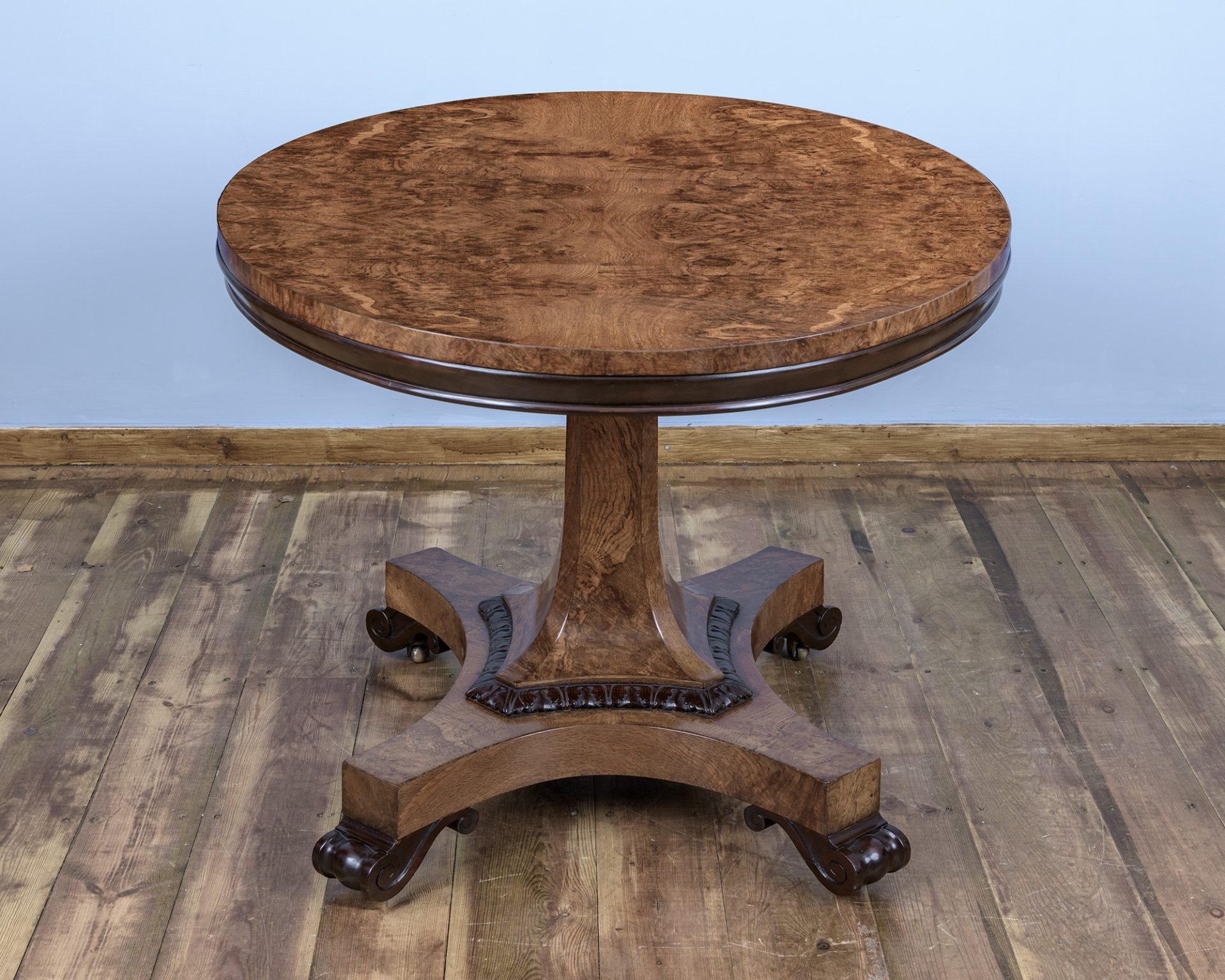
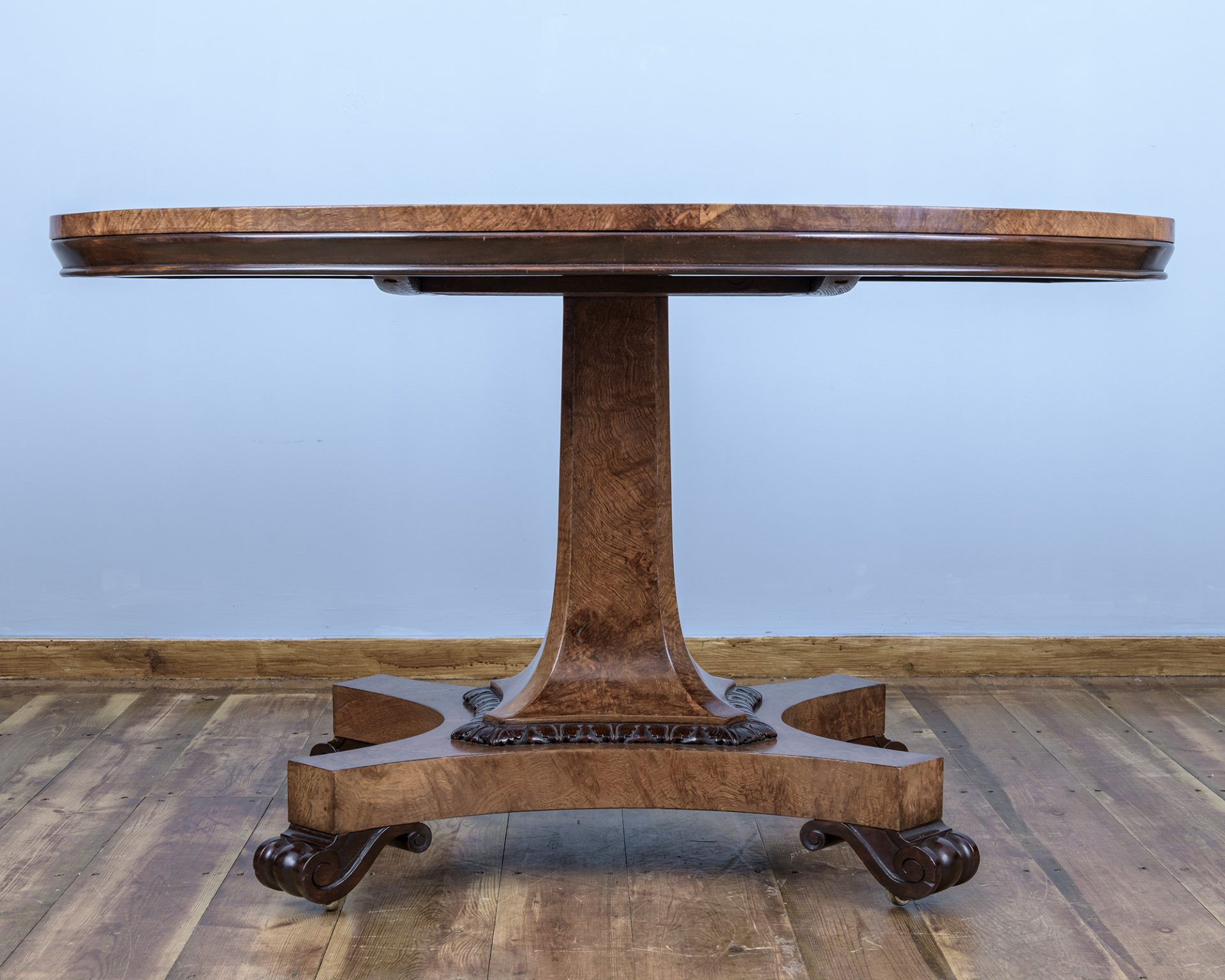
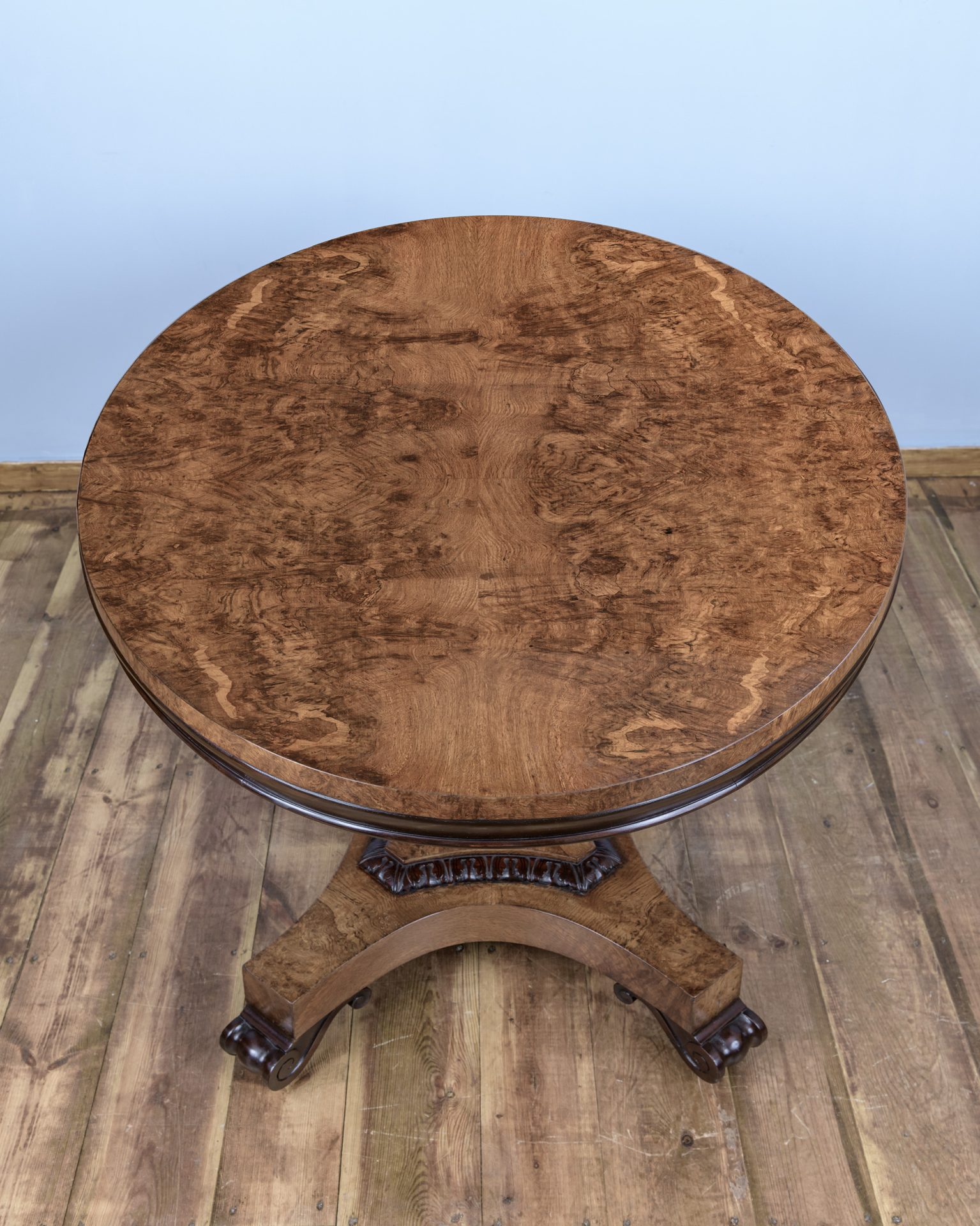
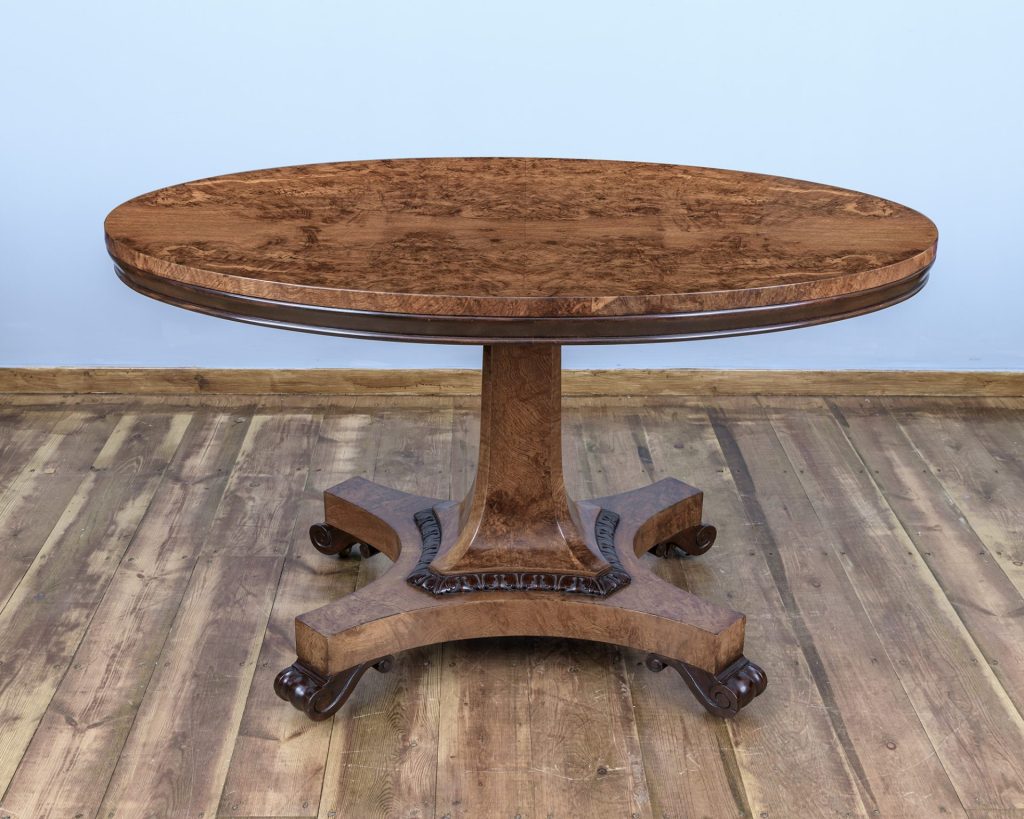
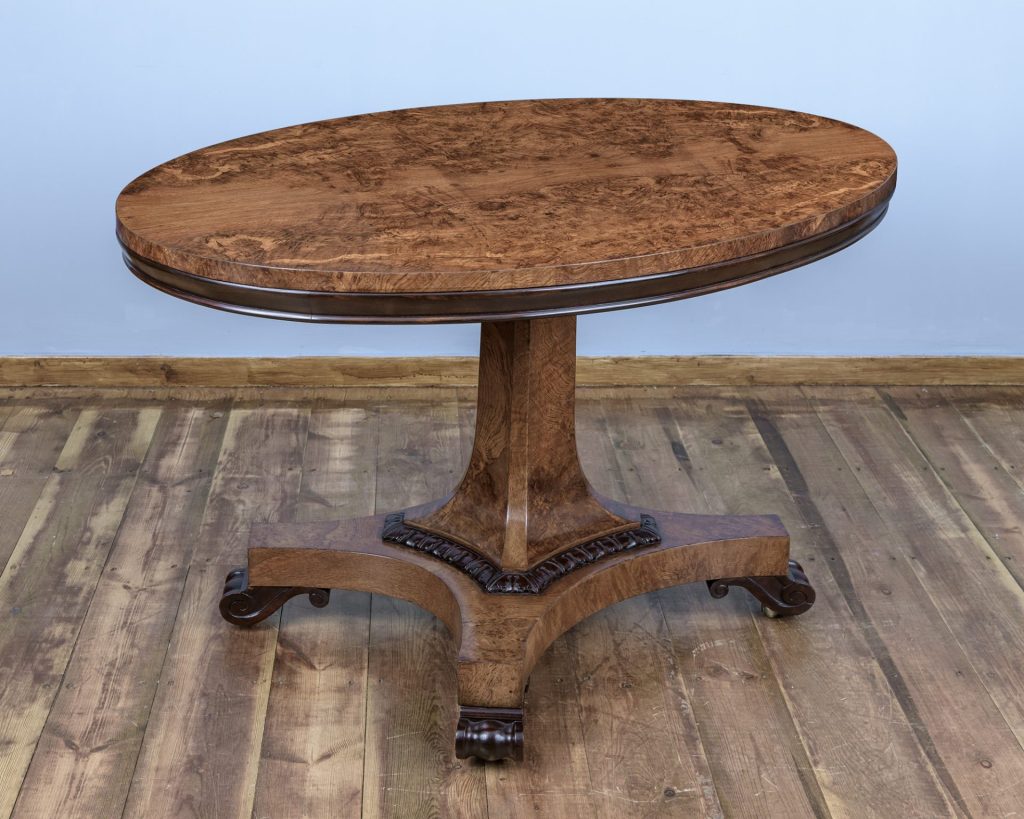
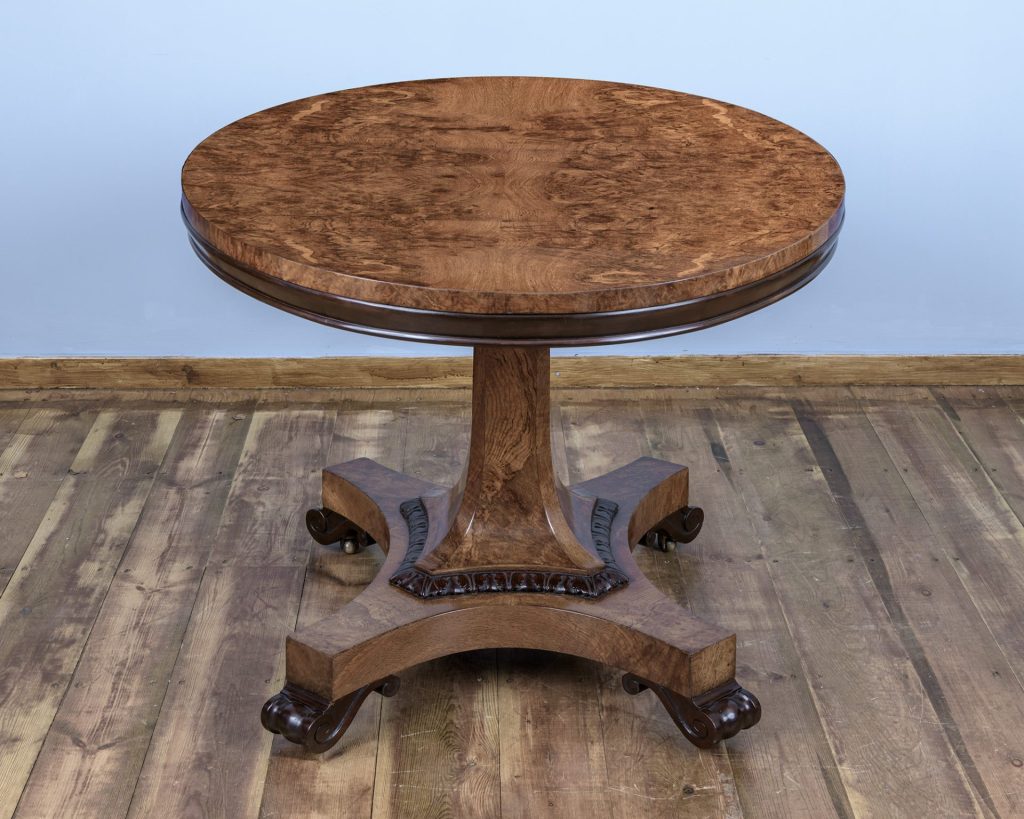
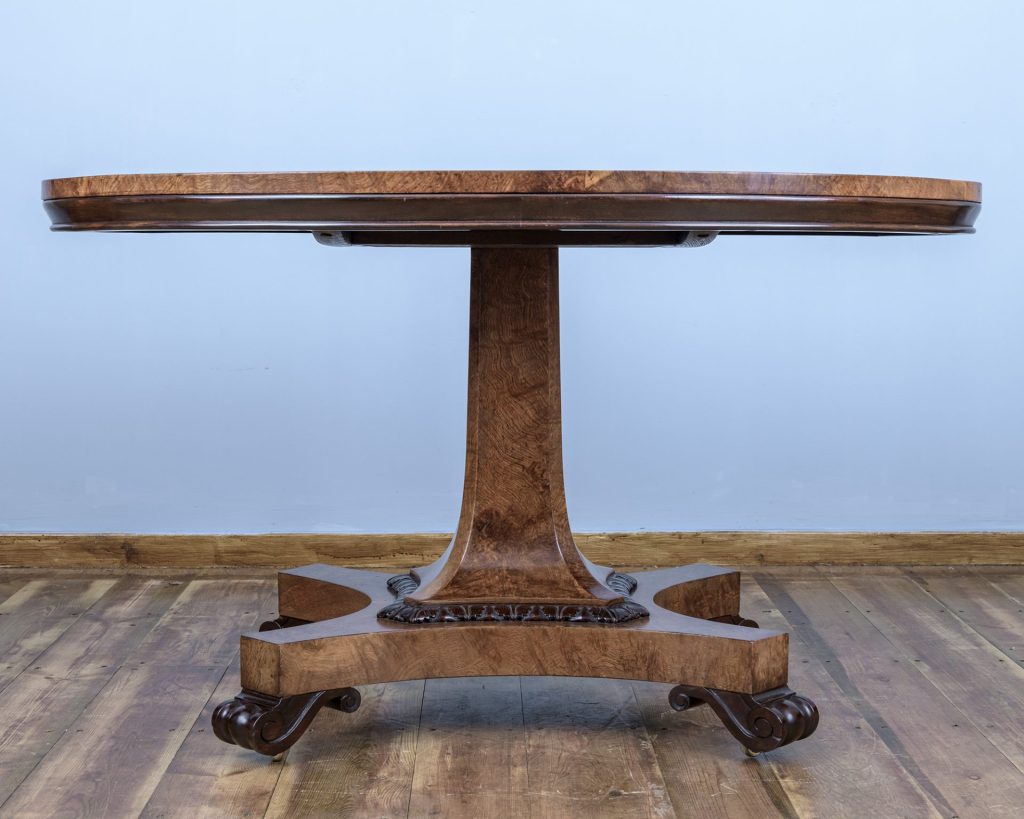
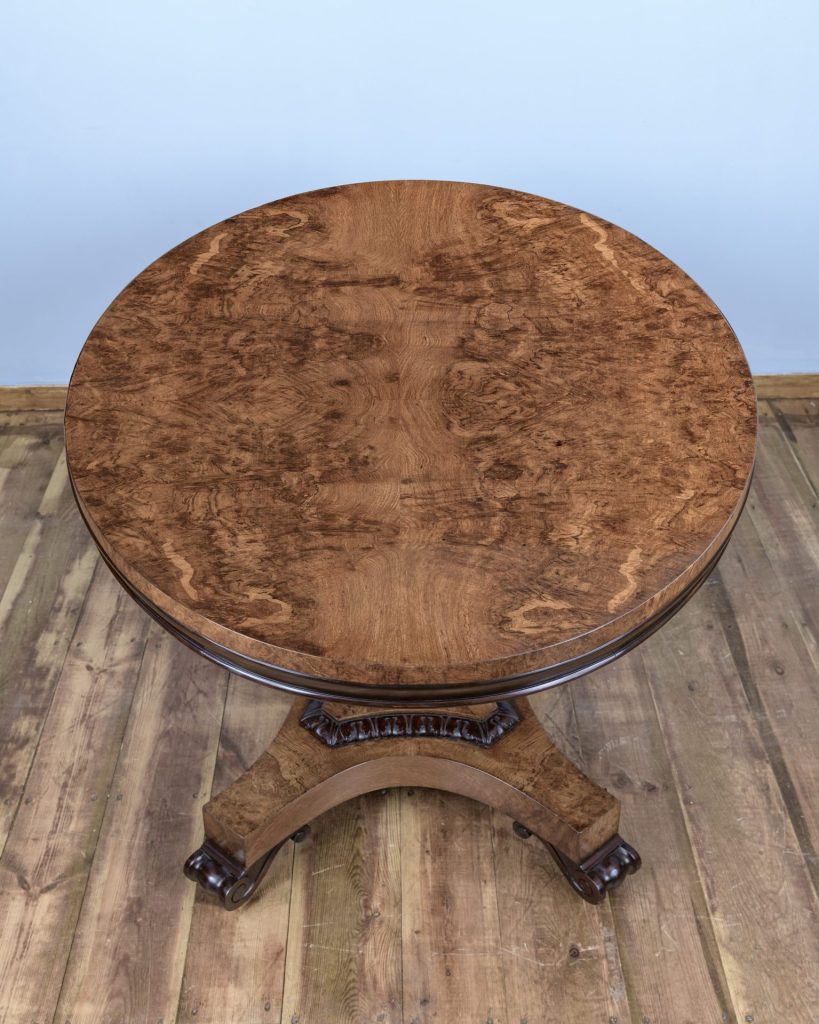
Regency Period Early 19th Century English Pollard & Burr Oak Oval-Shaped Centre Table
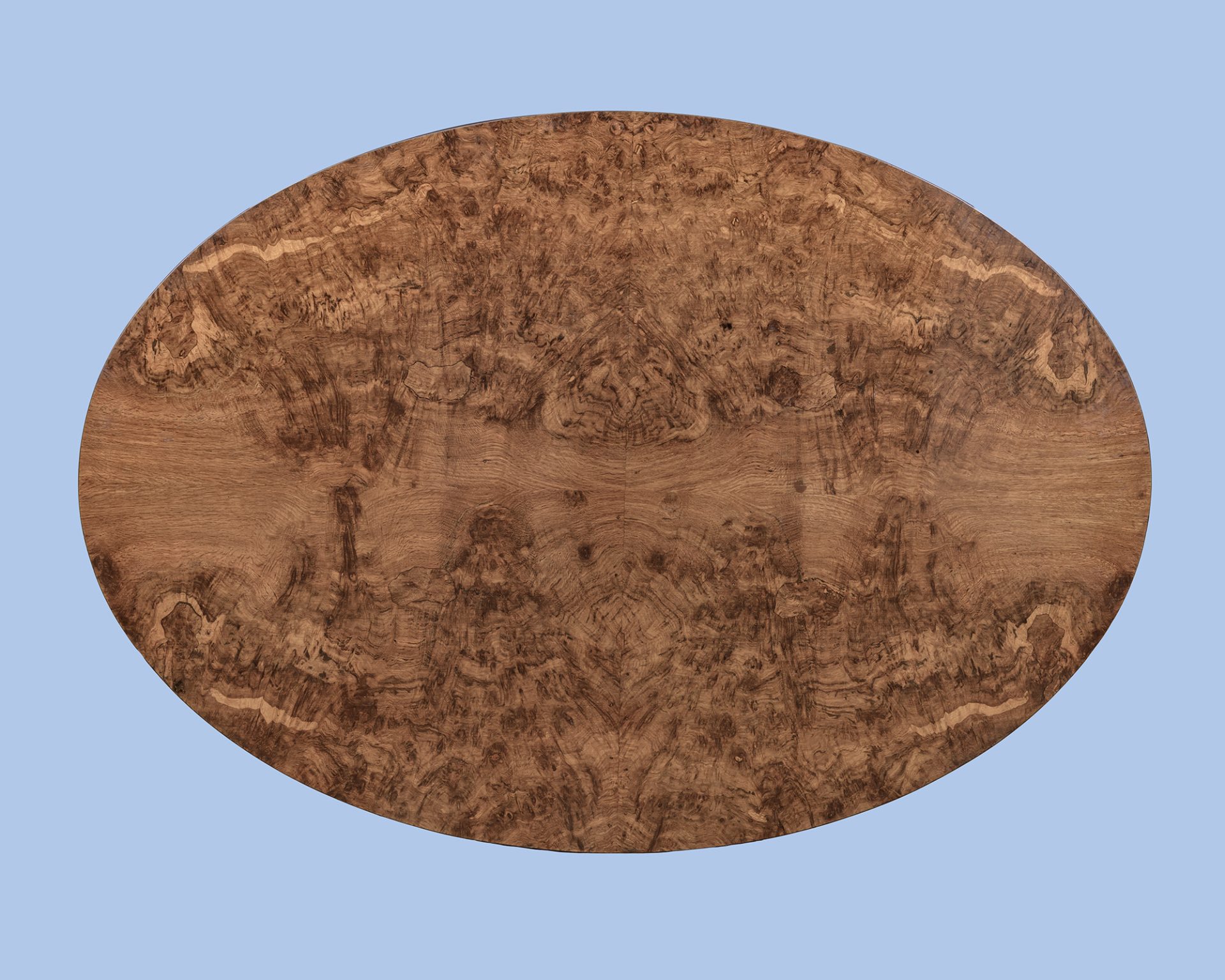
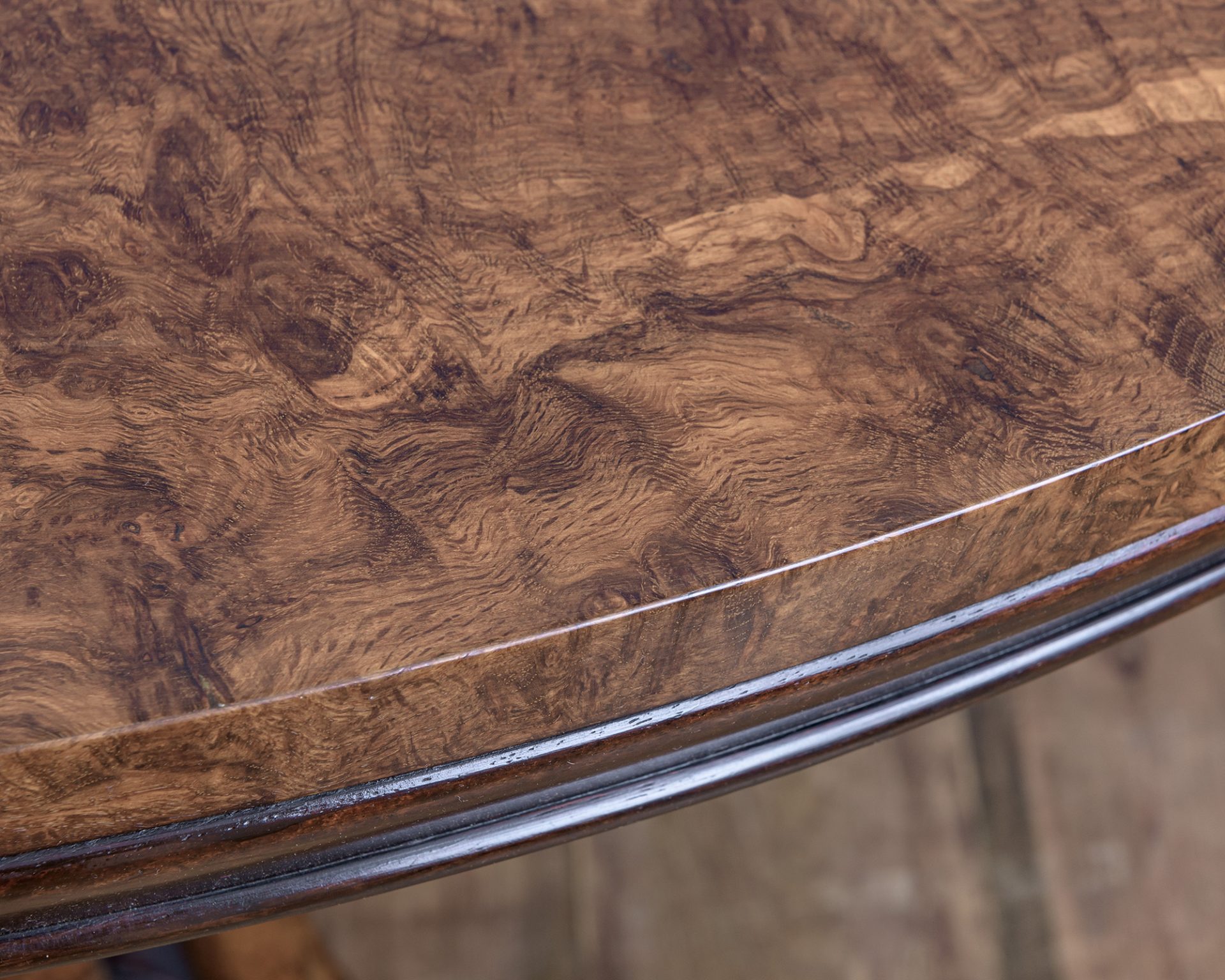
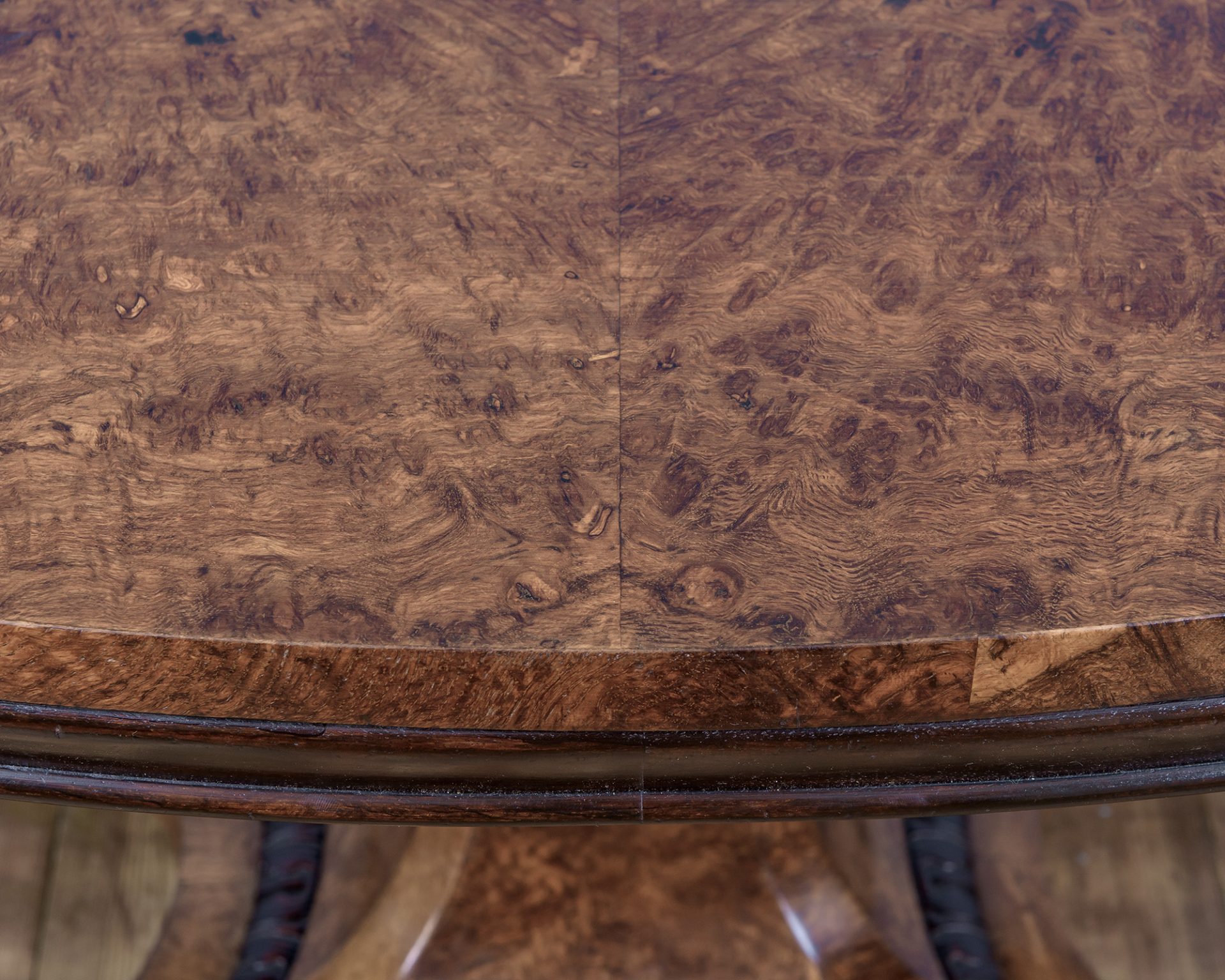
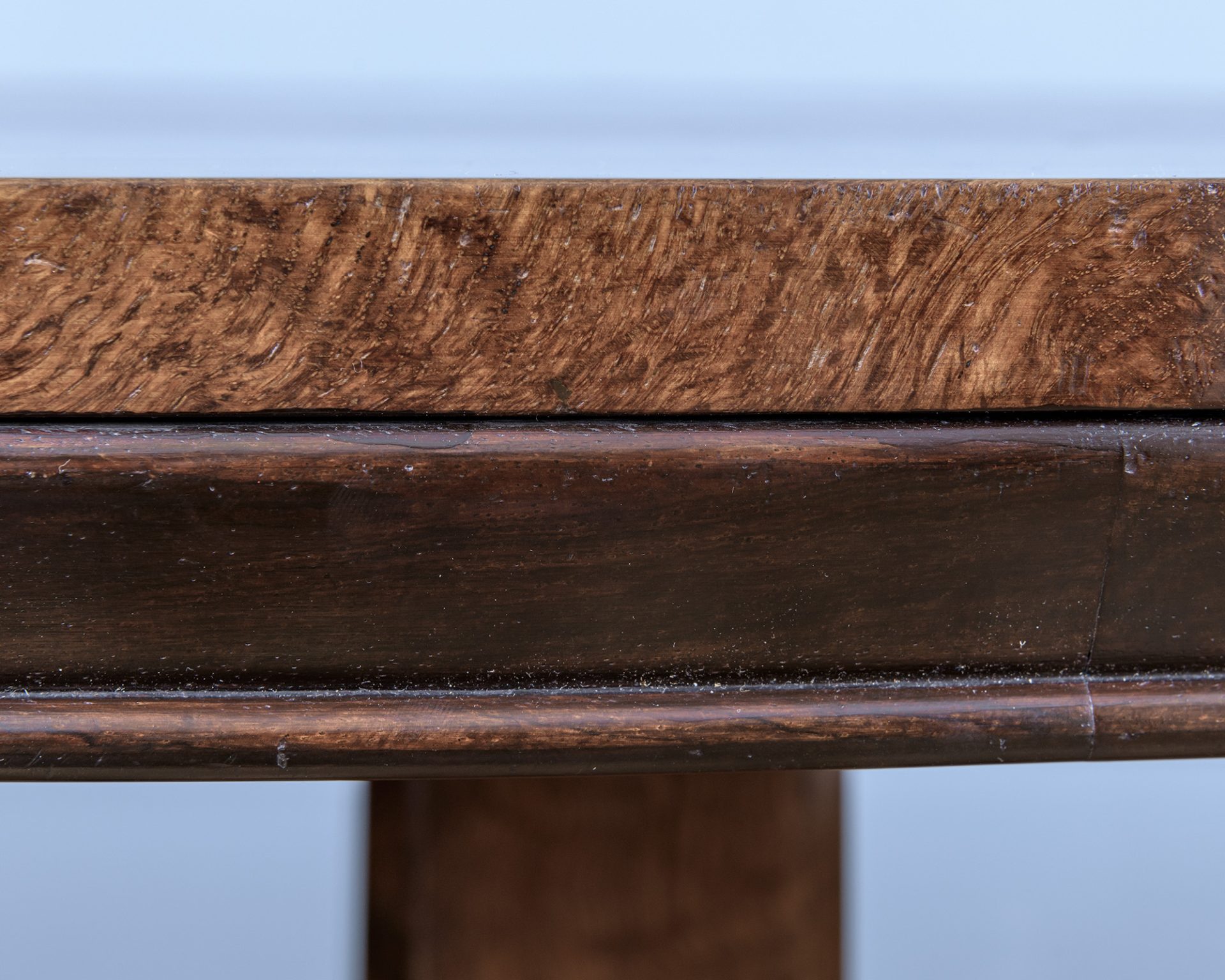
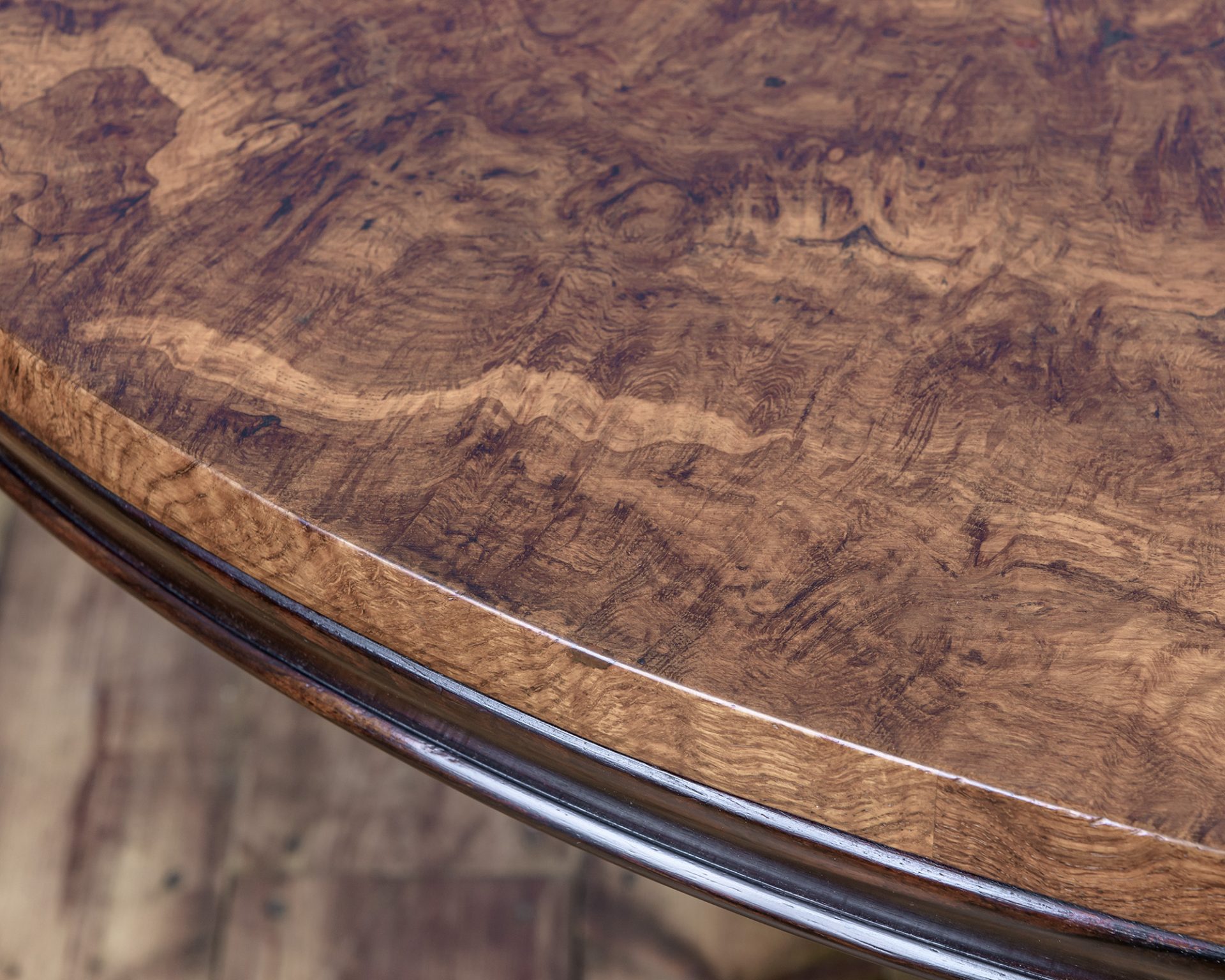
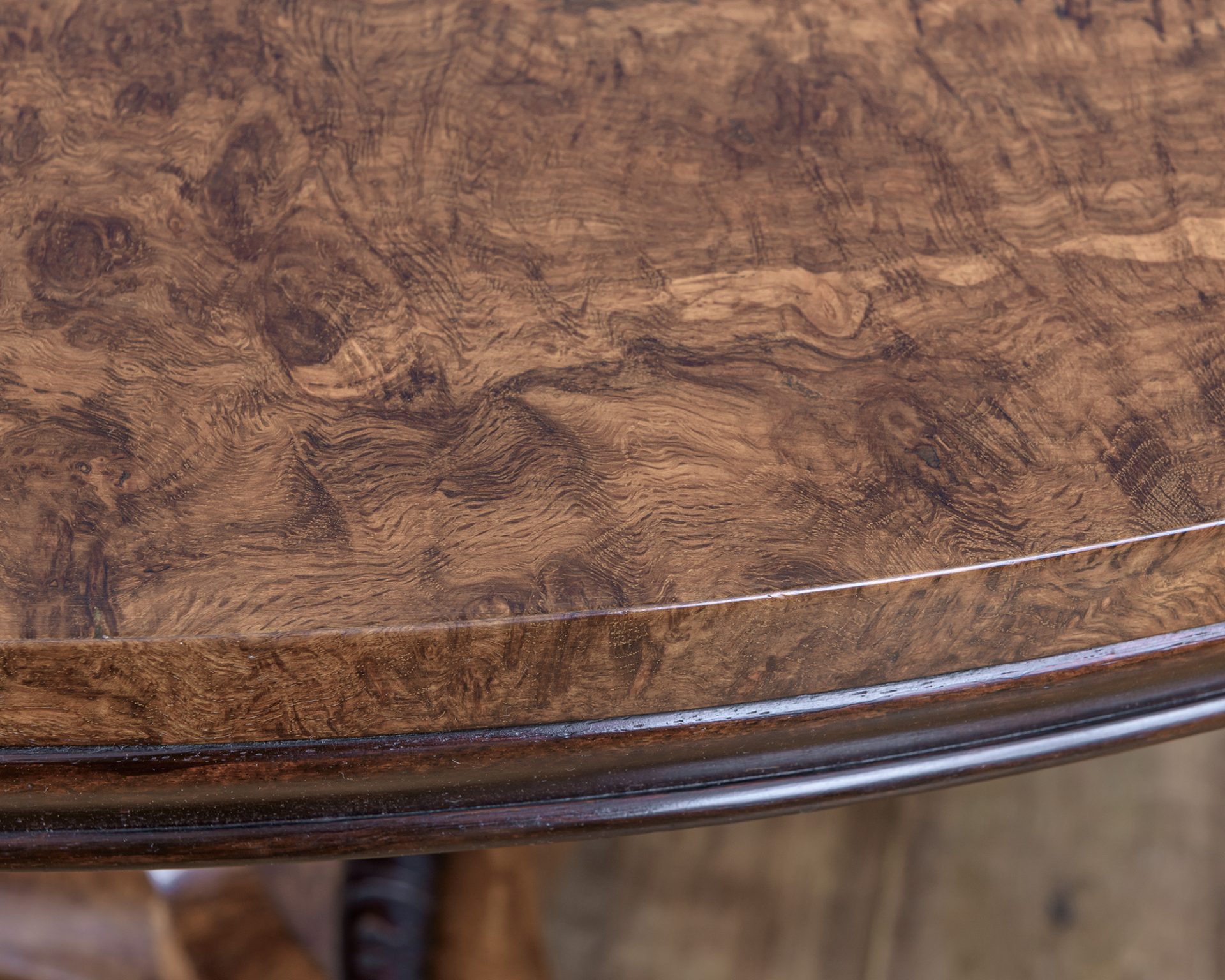
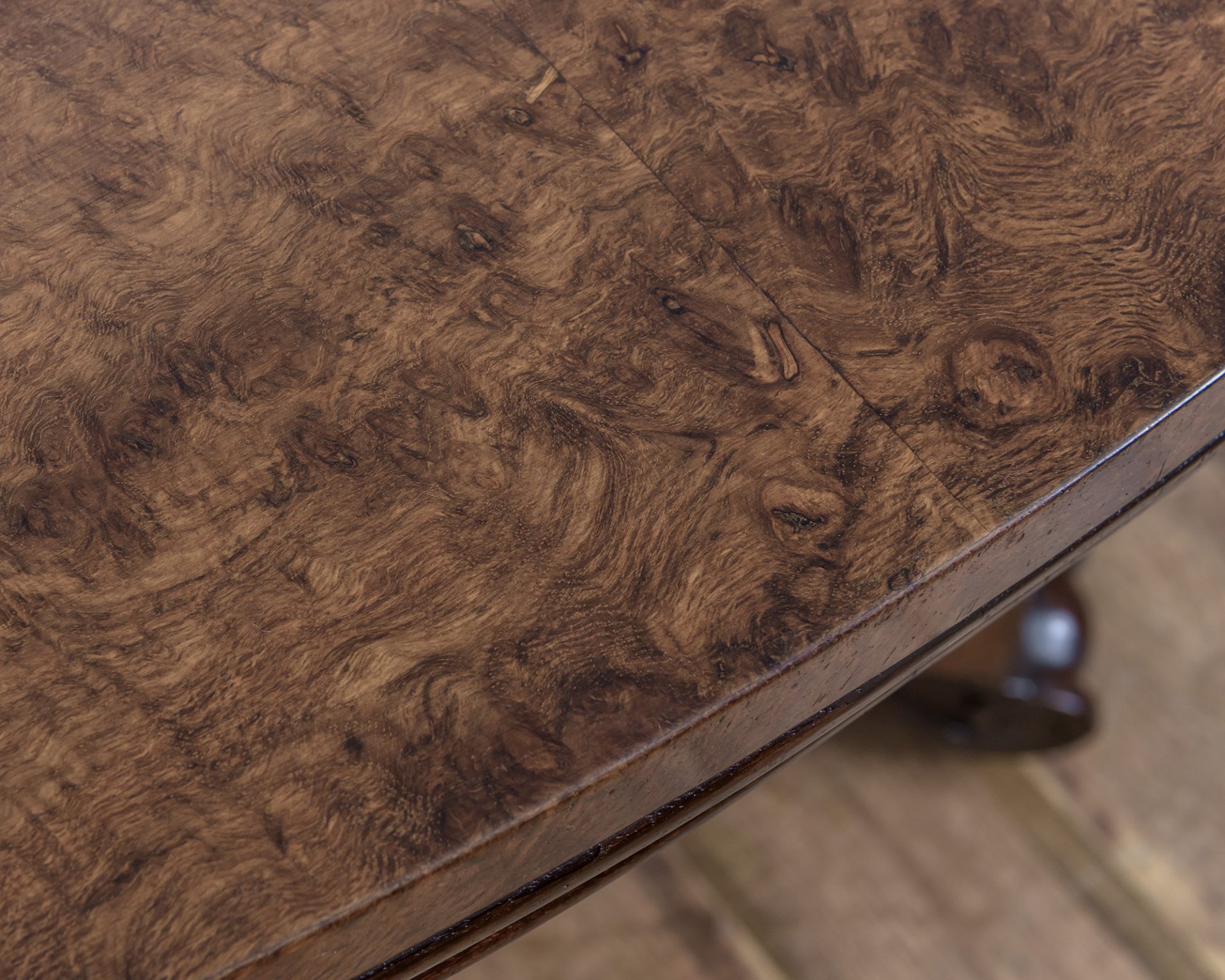
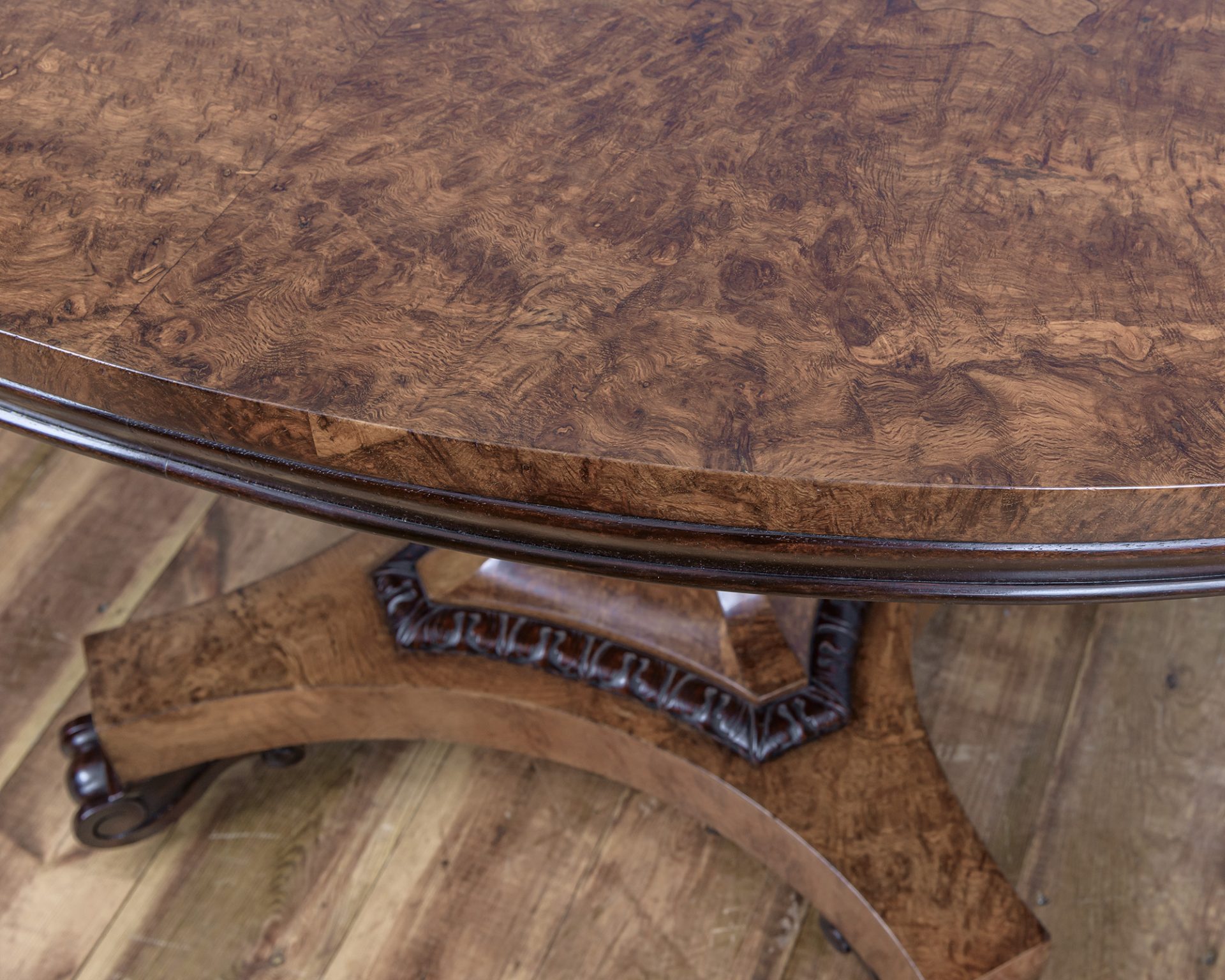
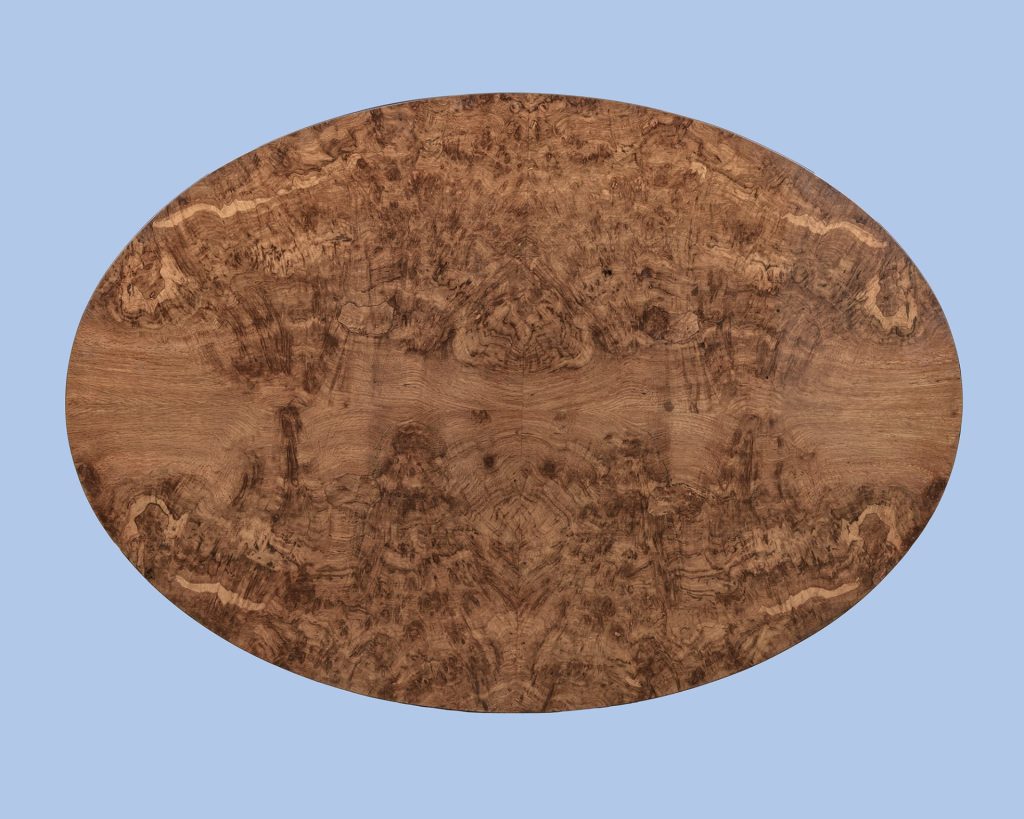
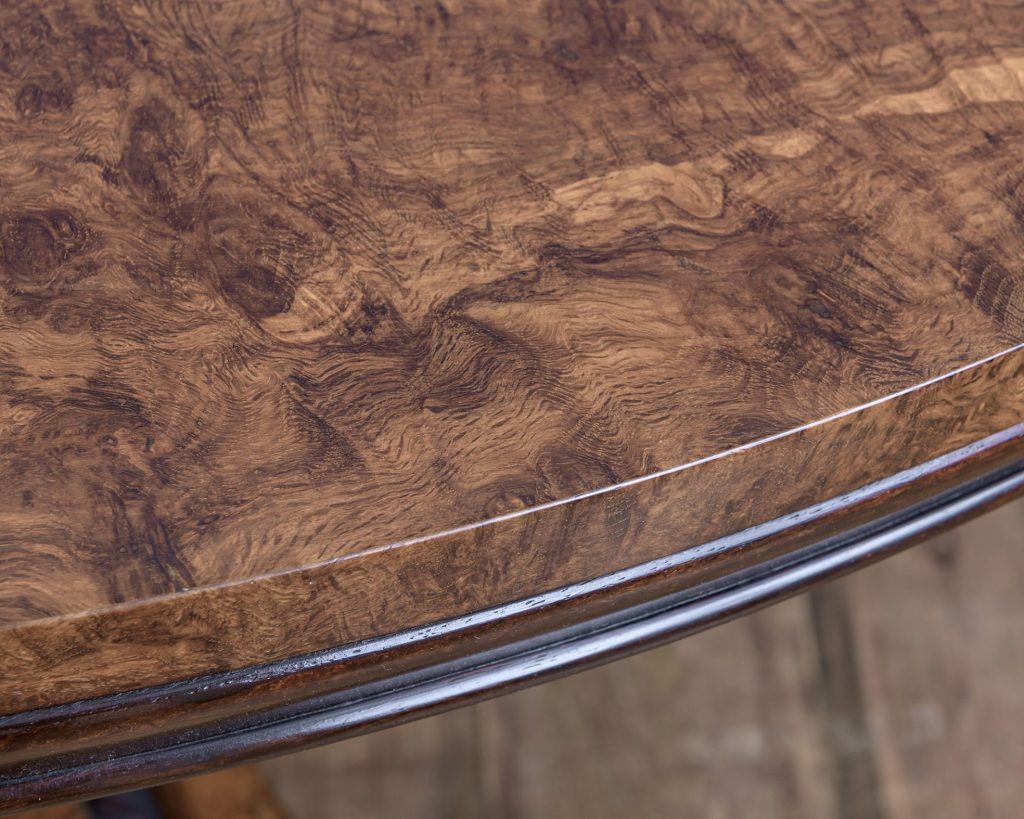
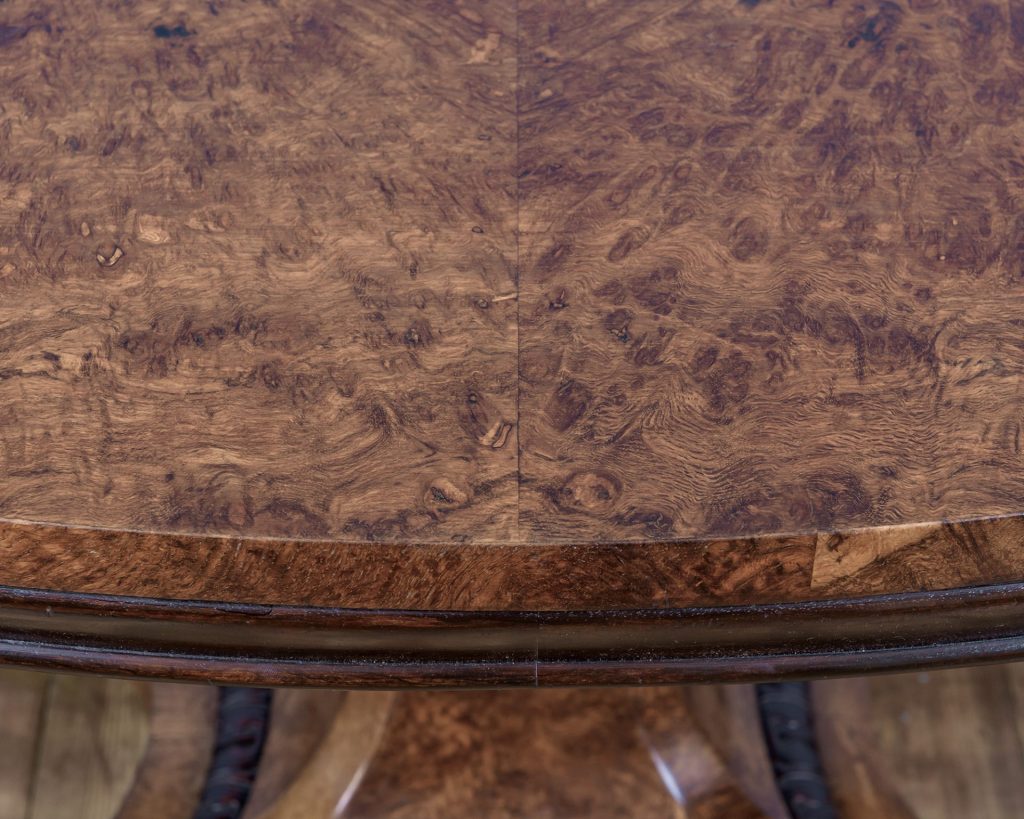
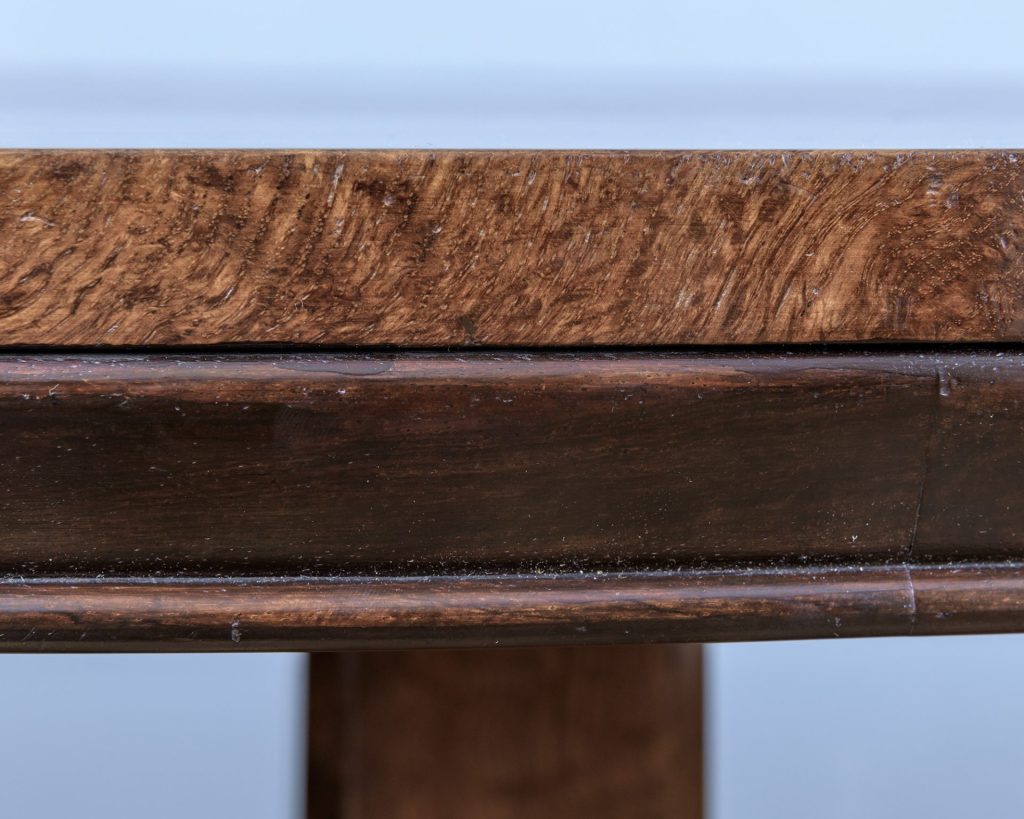
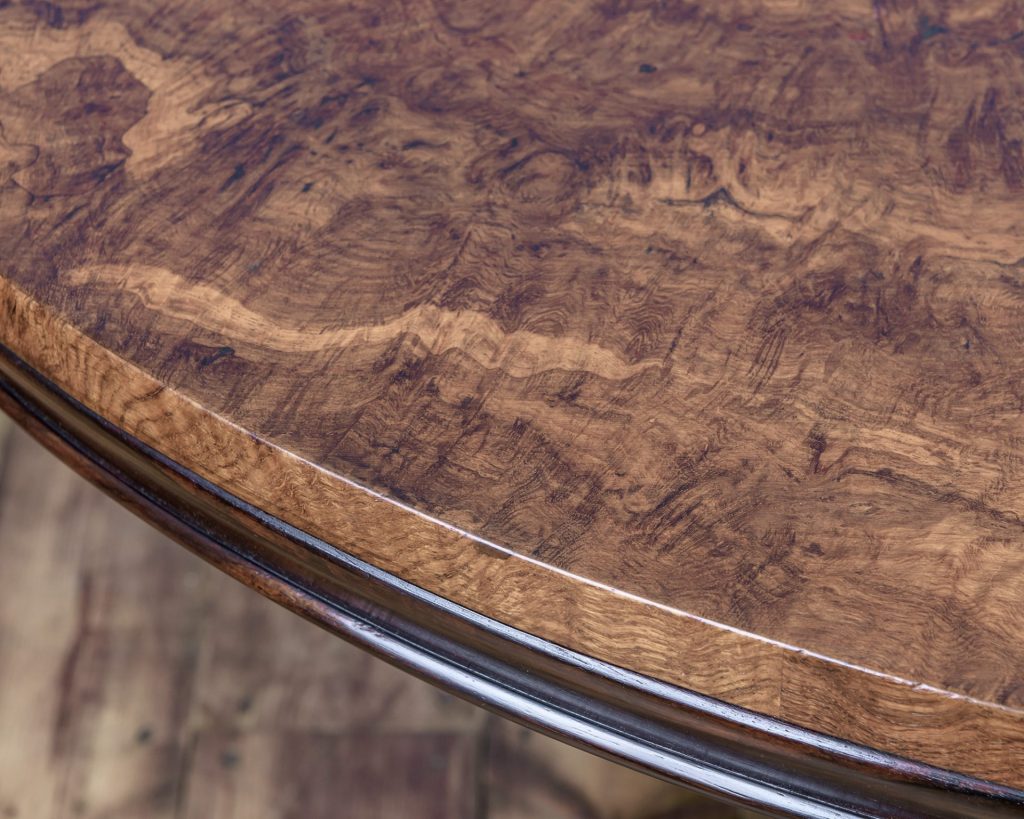
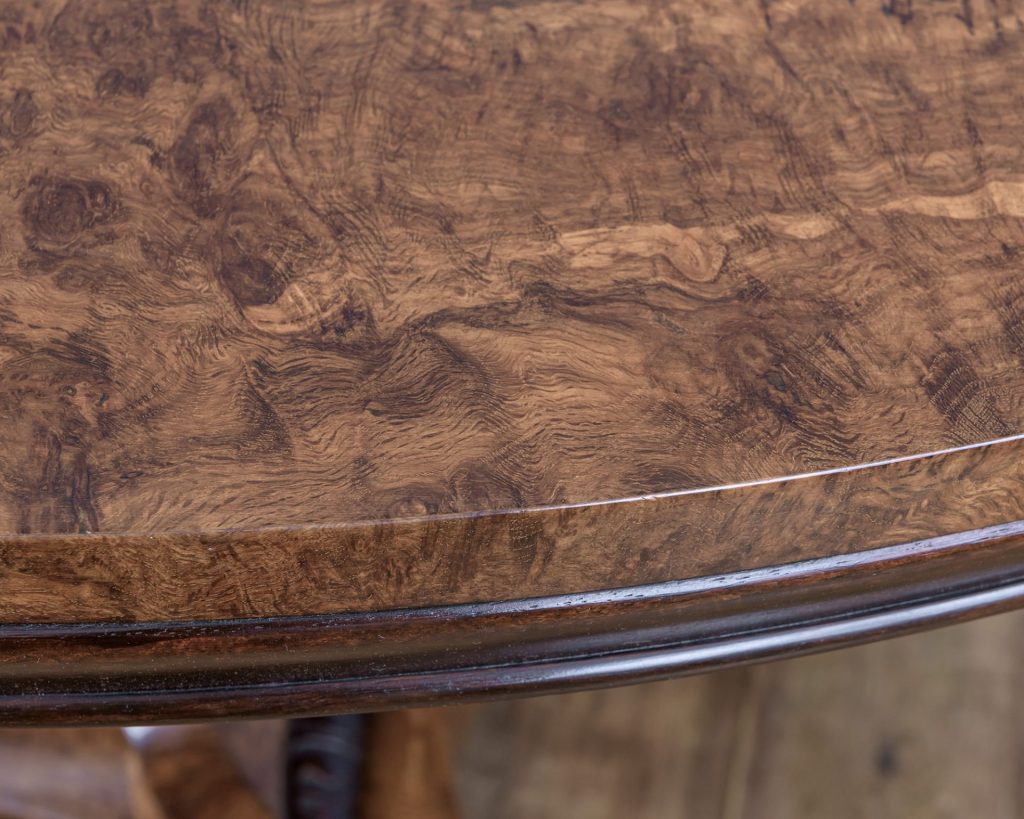
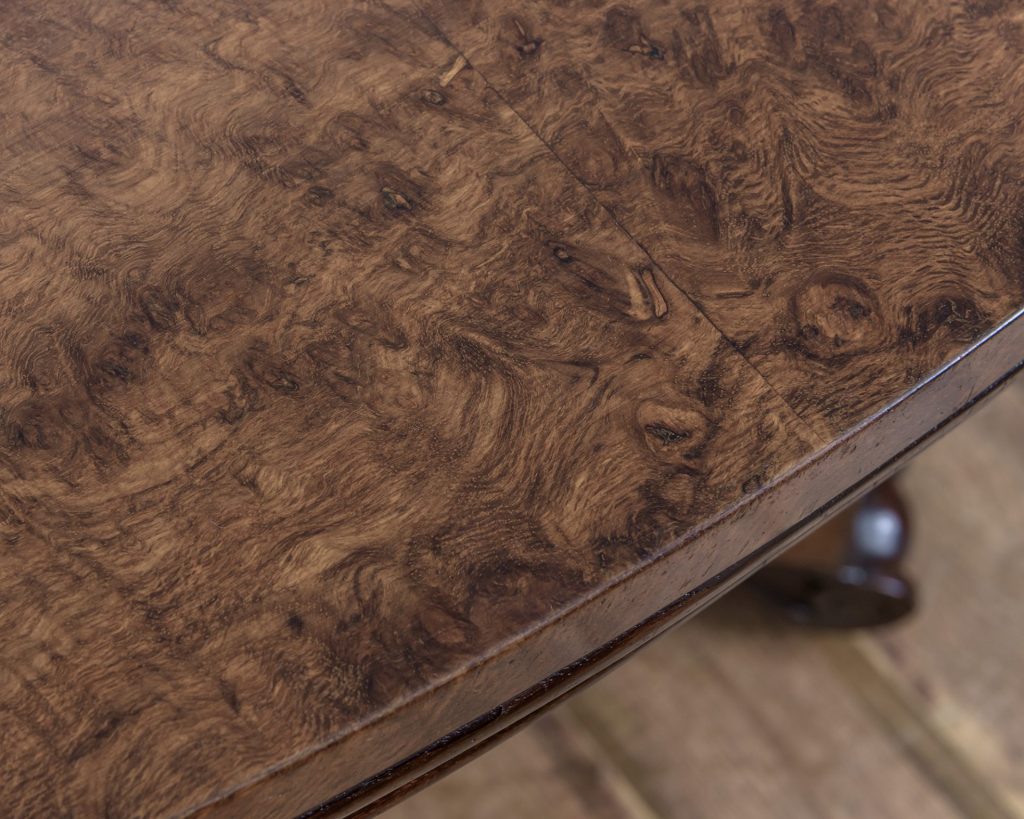
The burr oak quarter cut veneered top is well figured and of high quality with a lively grain with a natural high lustre to the timber, with vertical cut end grain veneers to the oval top edge above a solid rosewood moulded edging with solid rosewood beading.
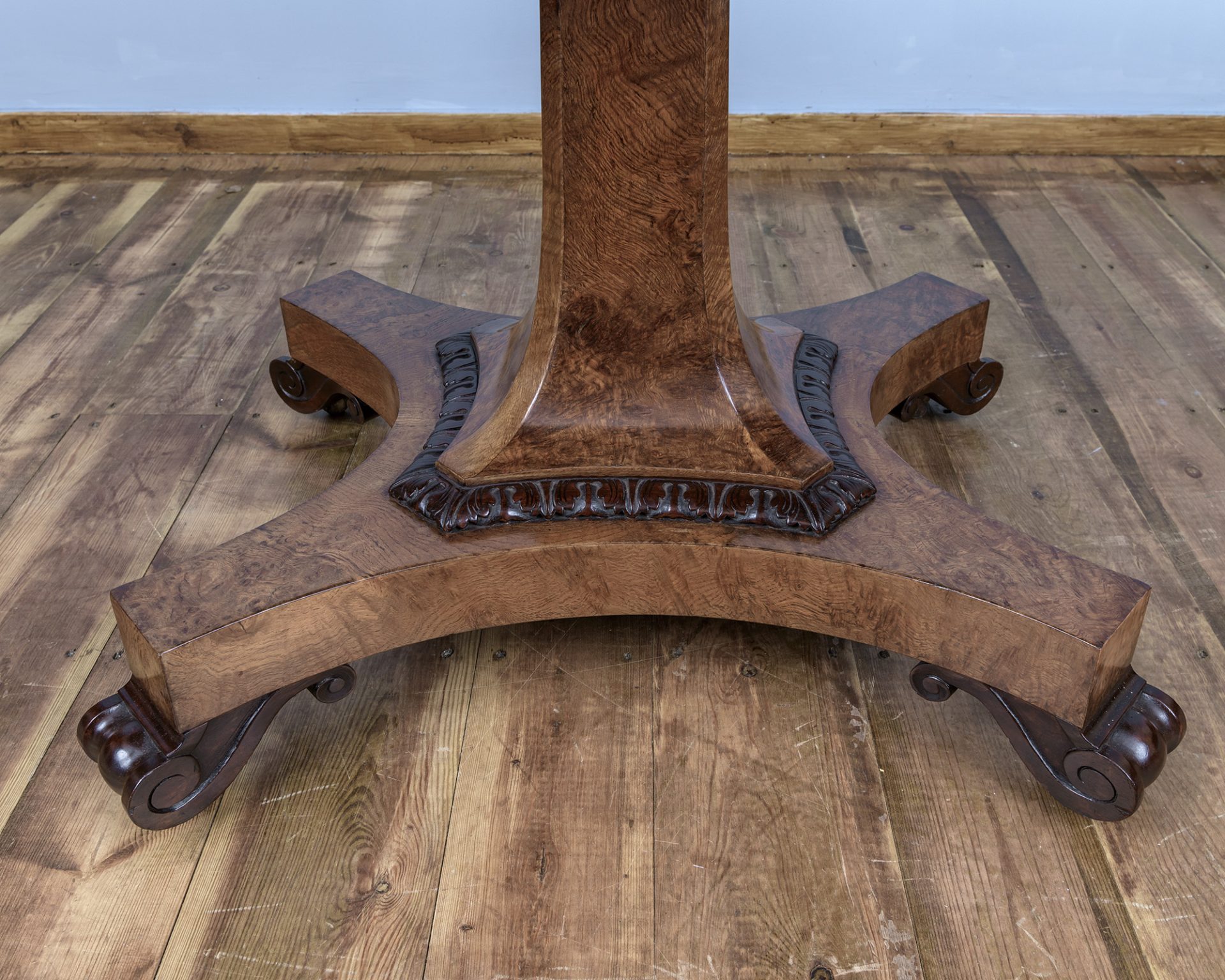
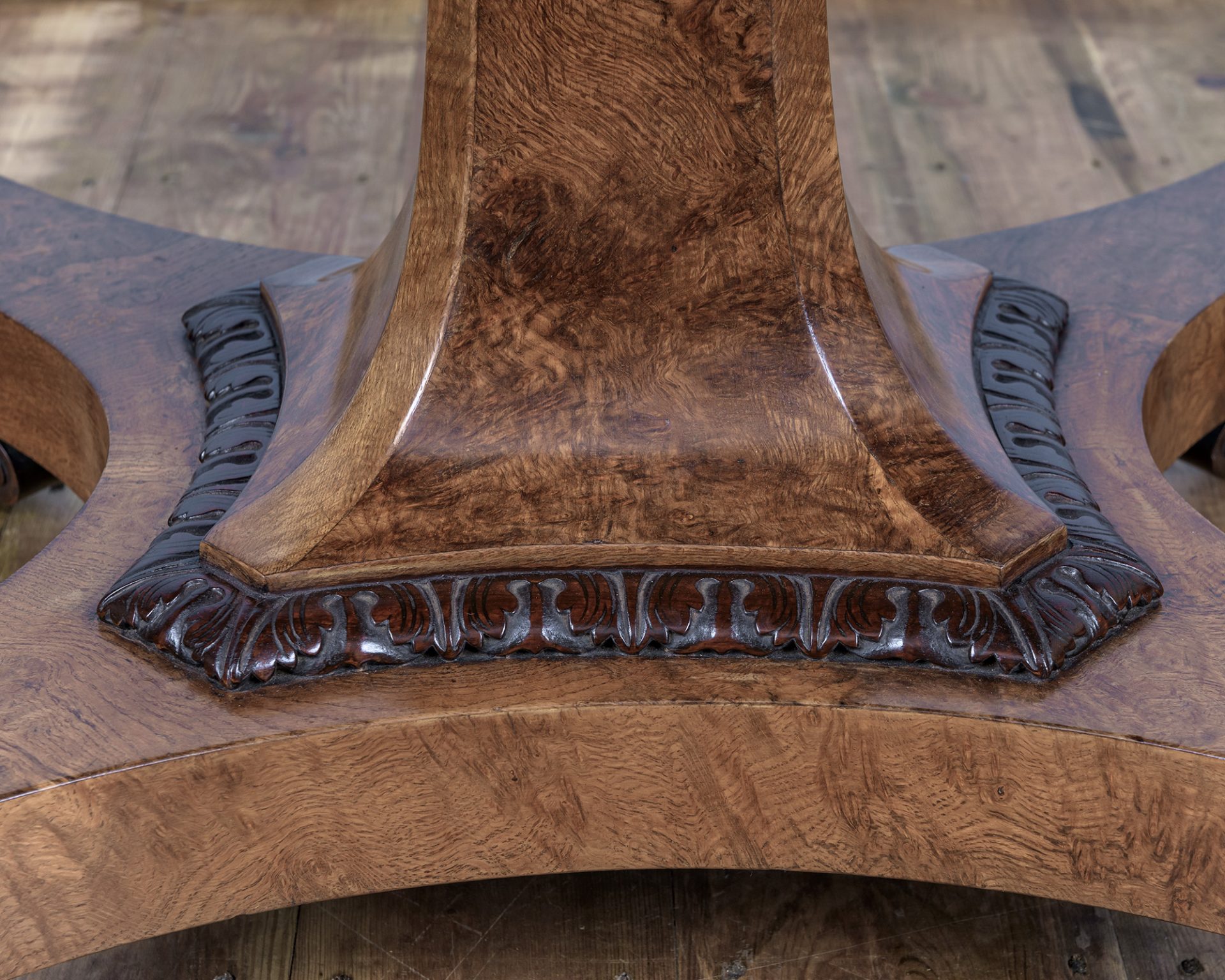
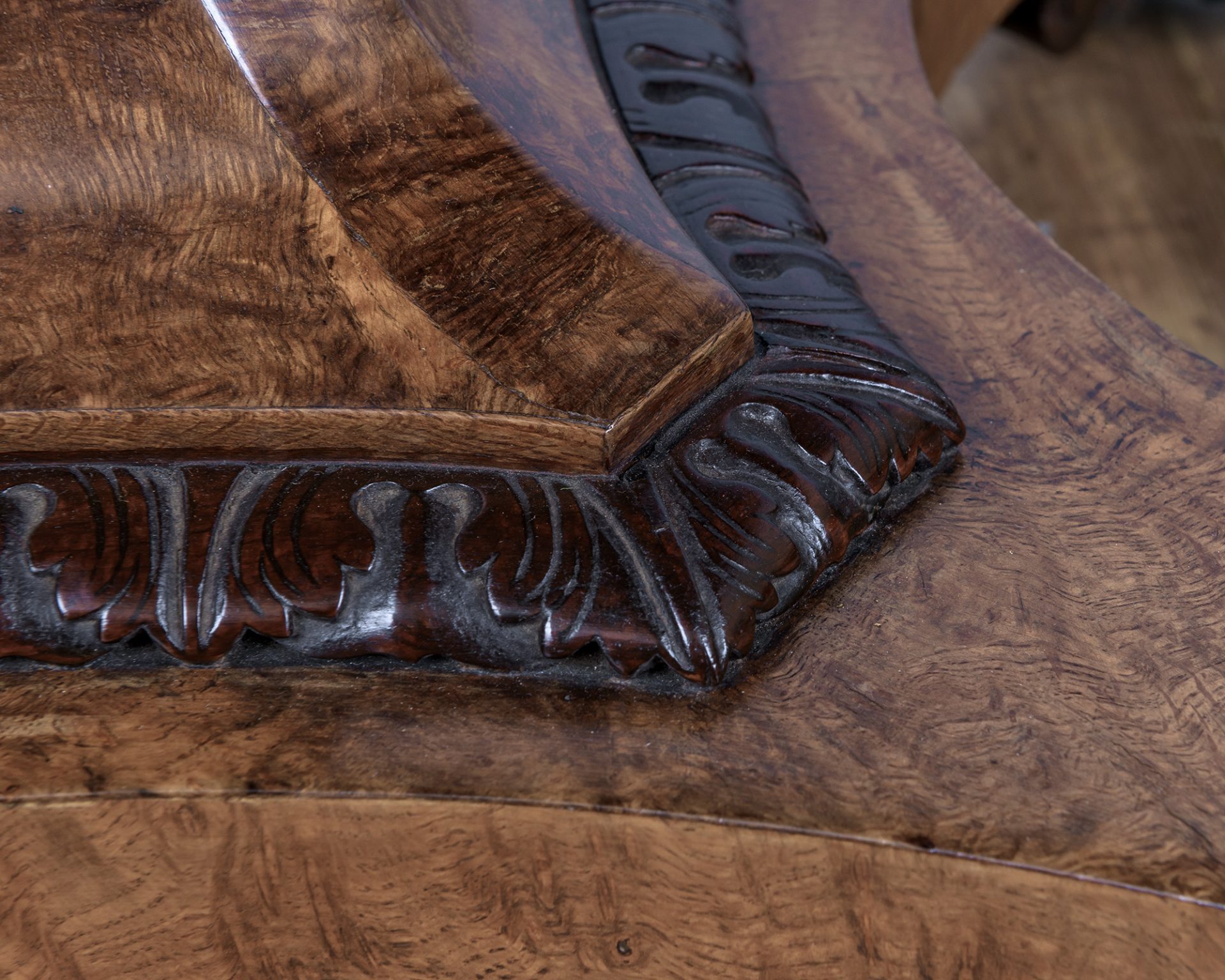
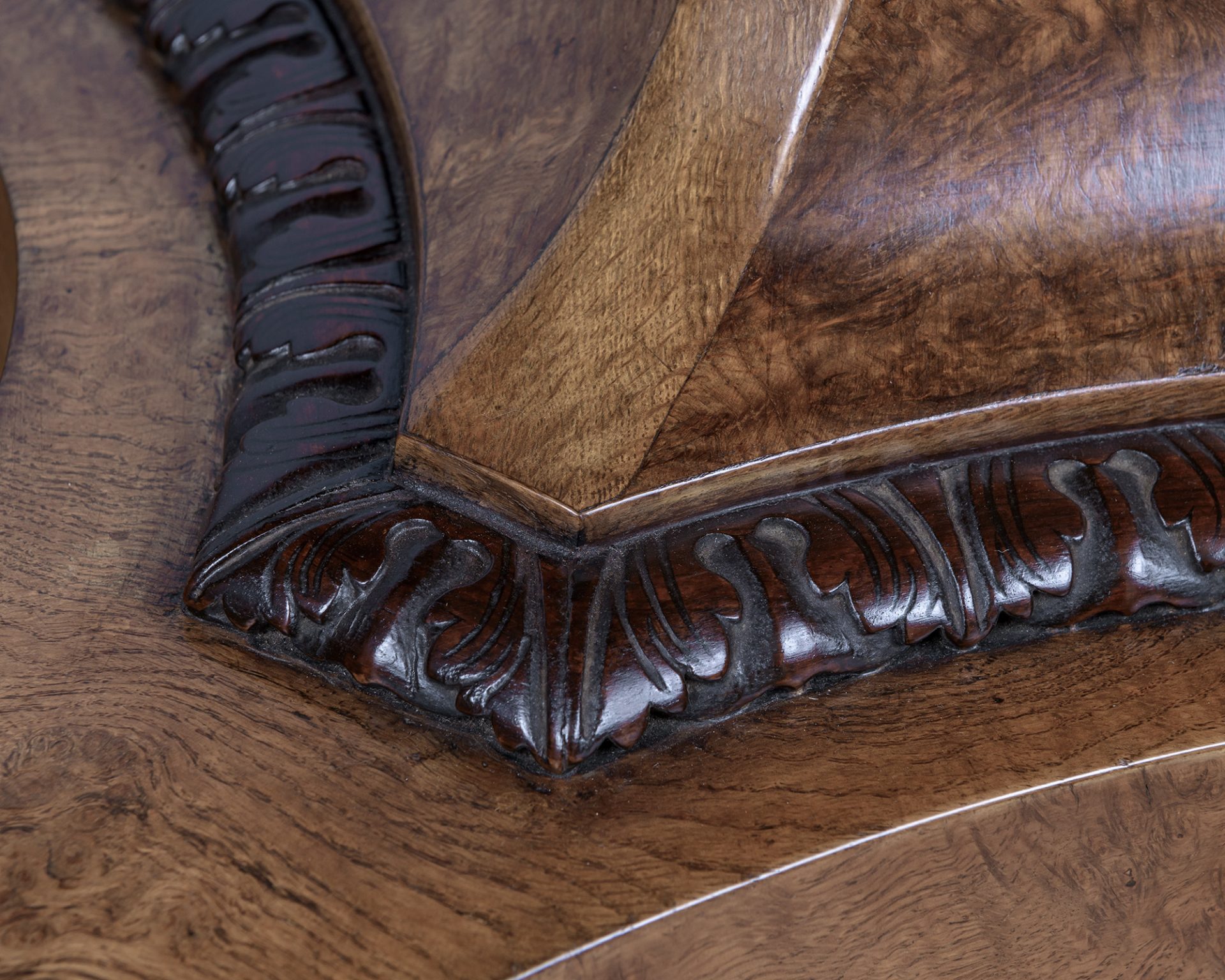
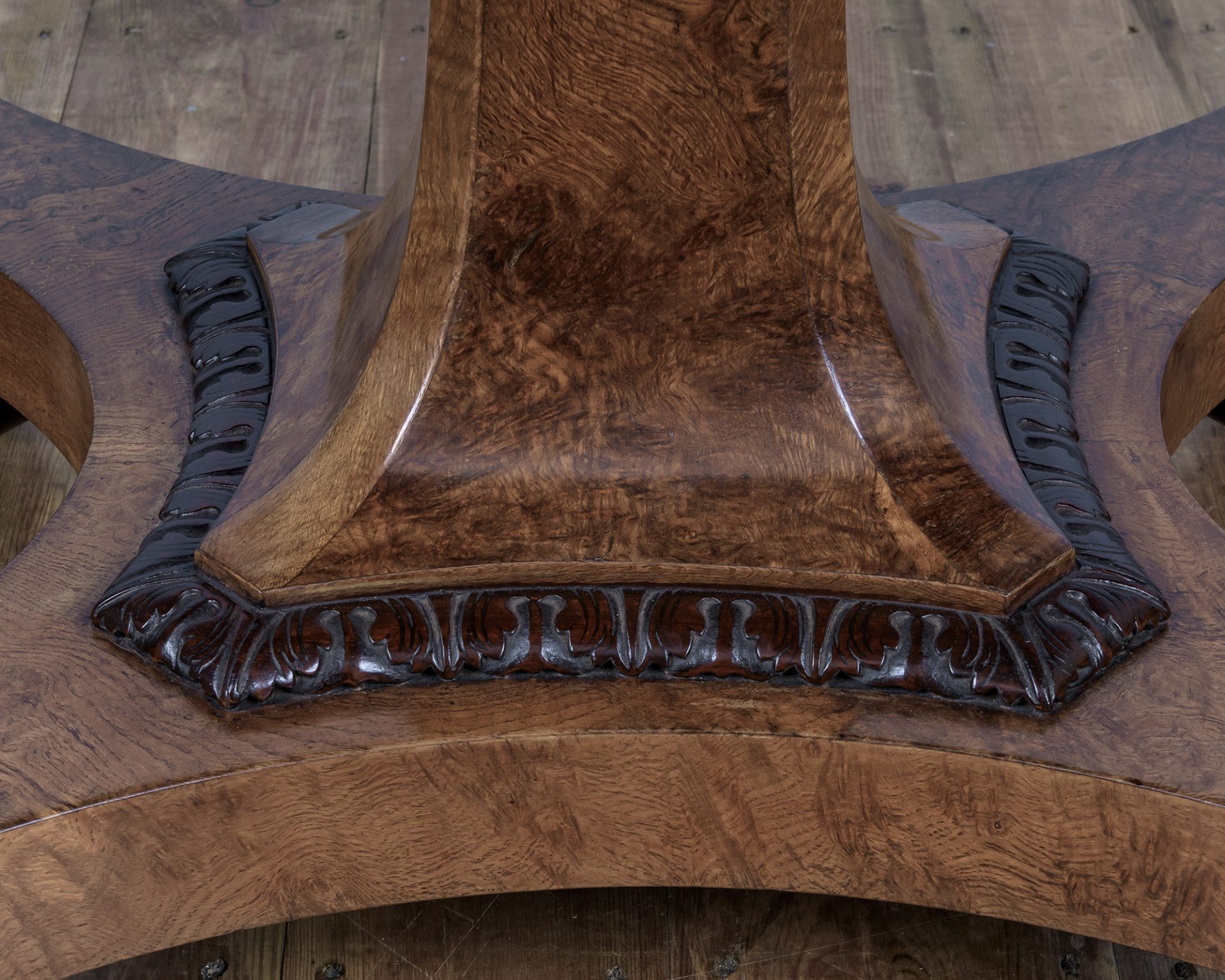
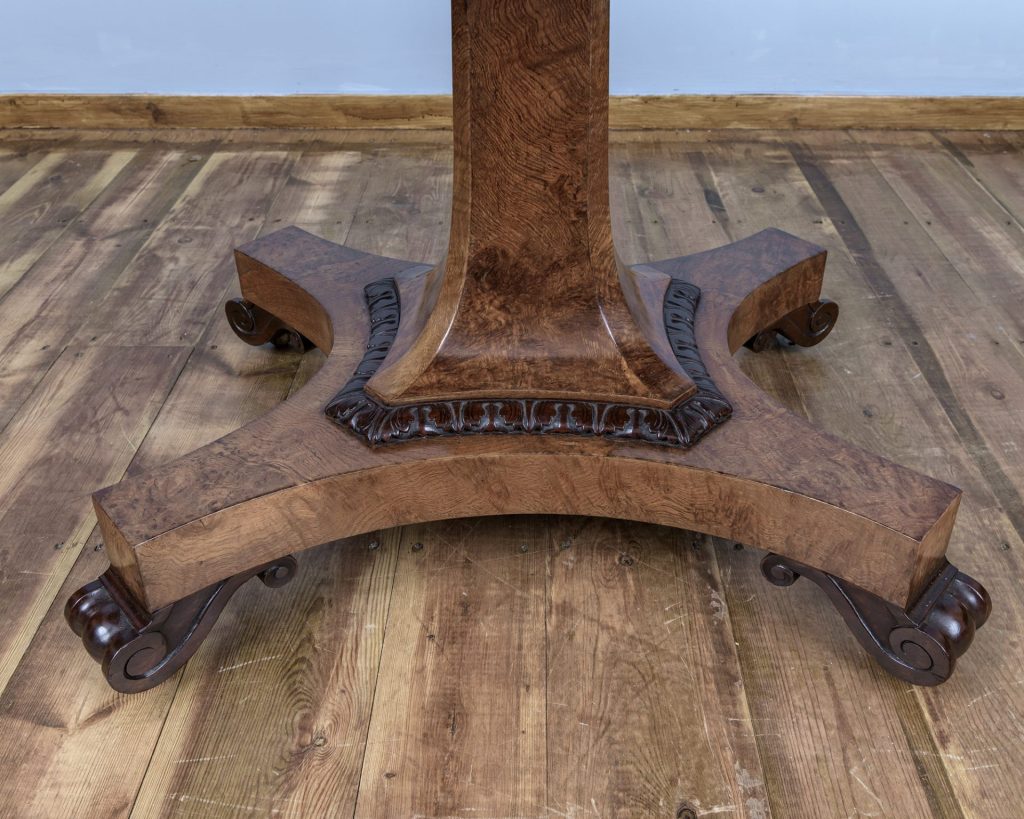
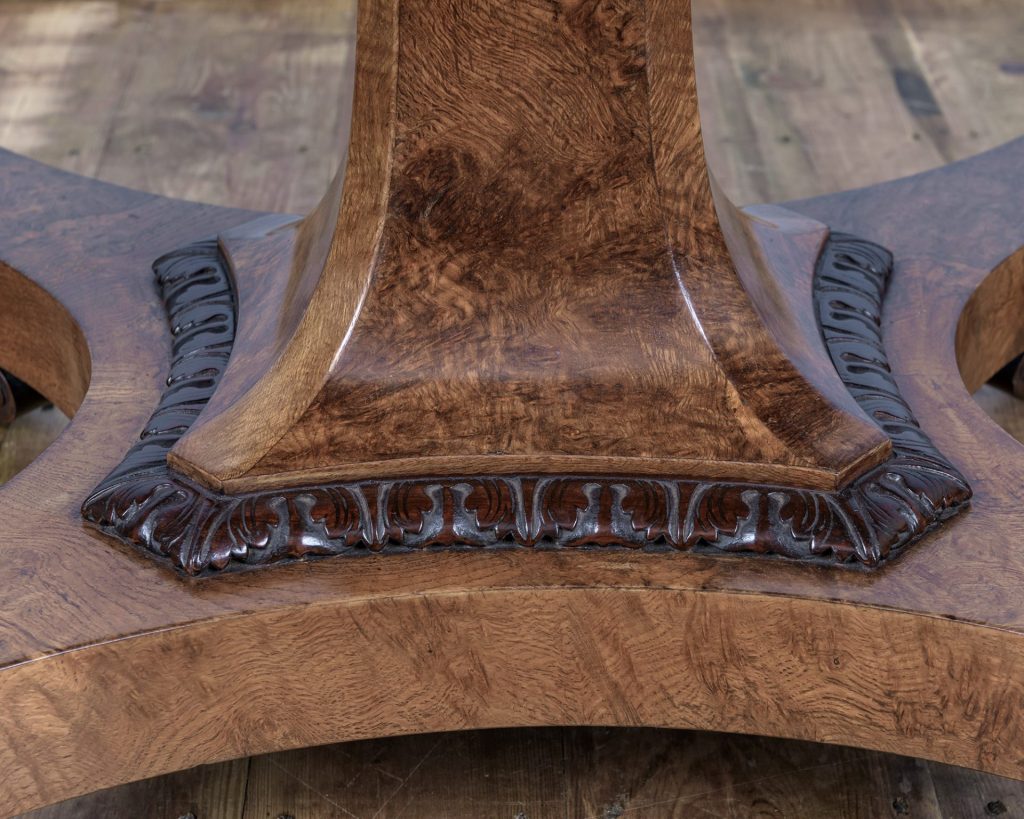
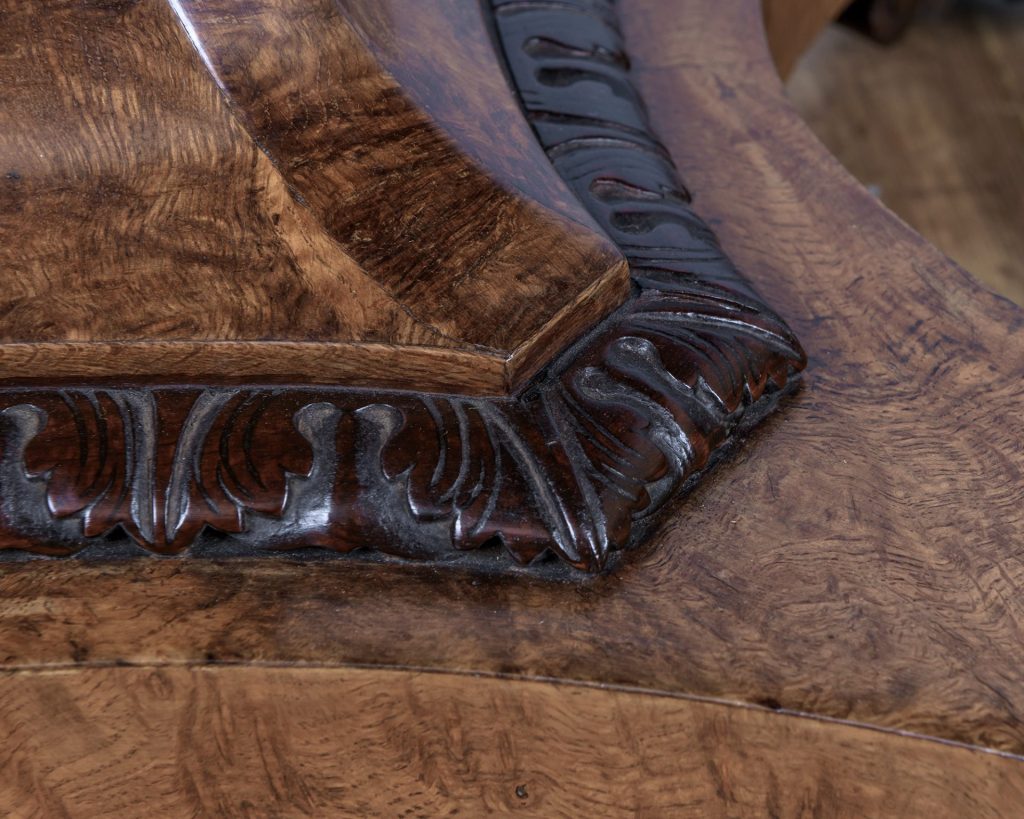
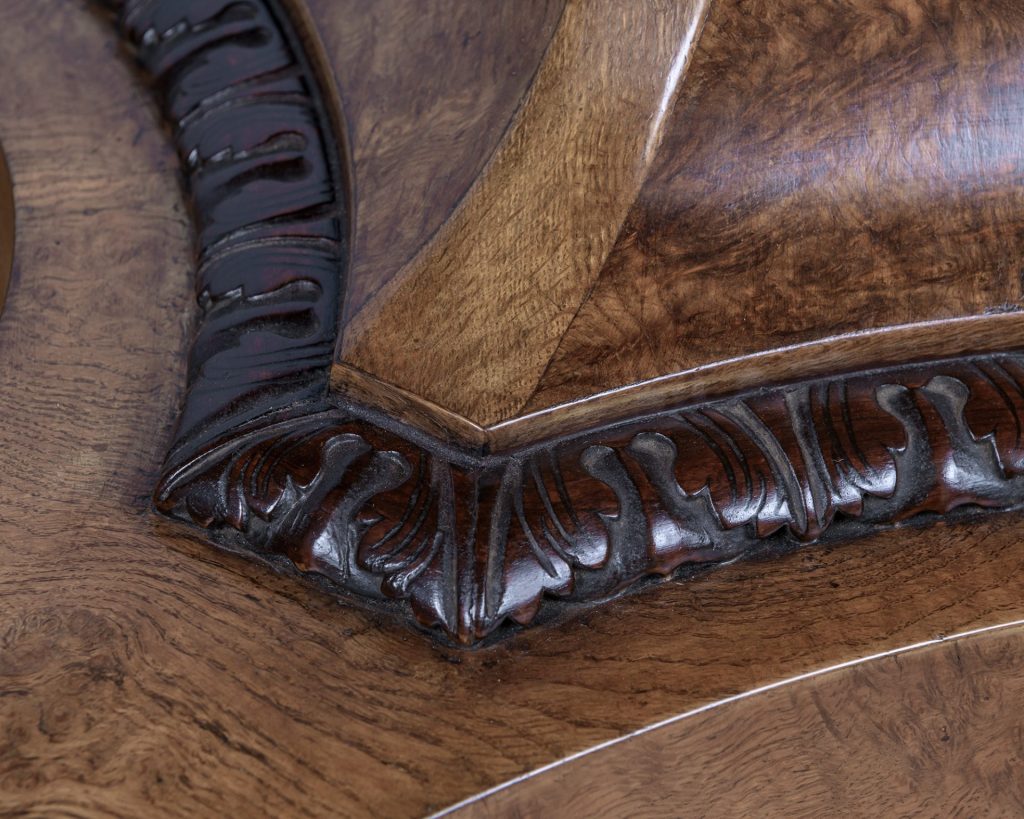
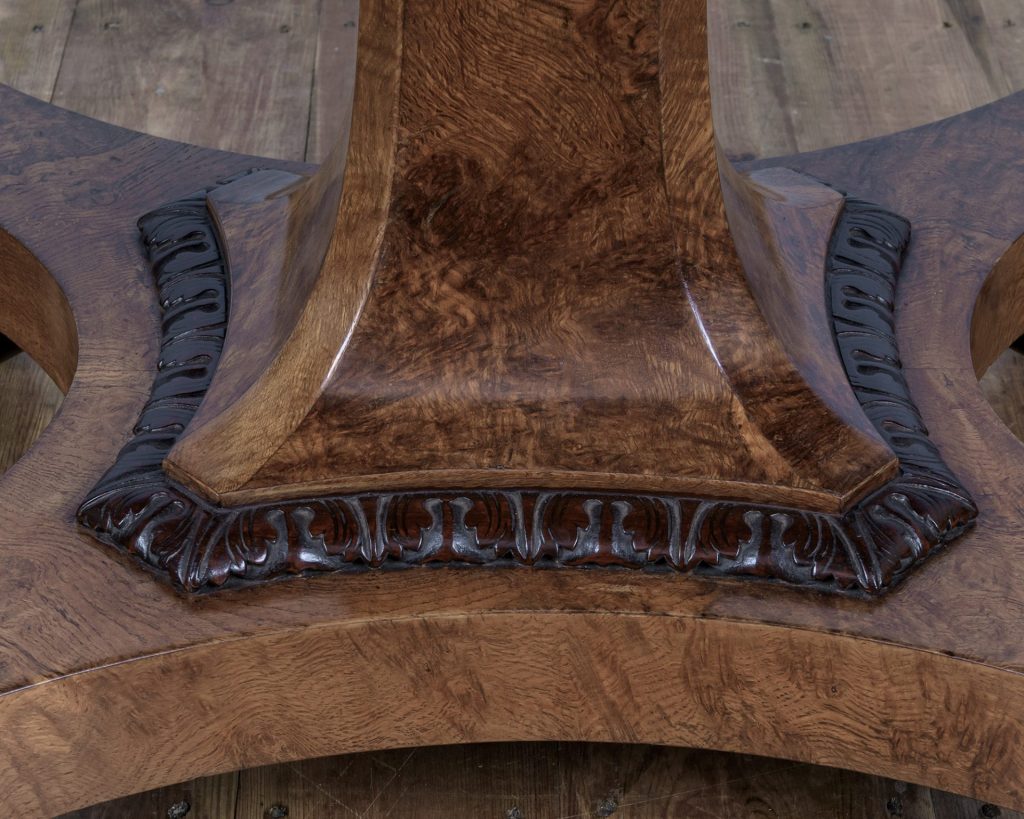
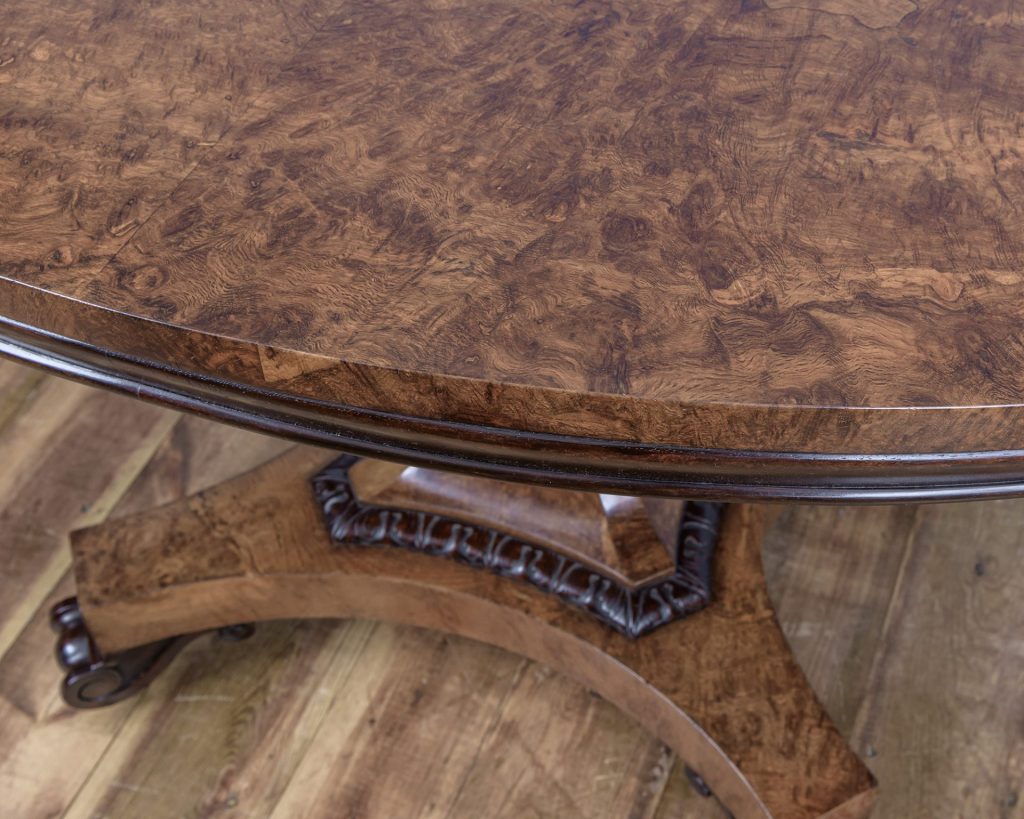
The table top is detachable and not a tilt top and is only removed by unscrewing the four original brass bolts that fix the table top to the pedestal. The top sits on a mahogany saddle above a pollard oak veneered pedestal column with the extra feature of four facetted sides and a concave base above a carved solid rosewood collar.
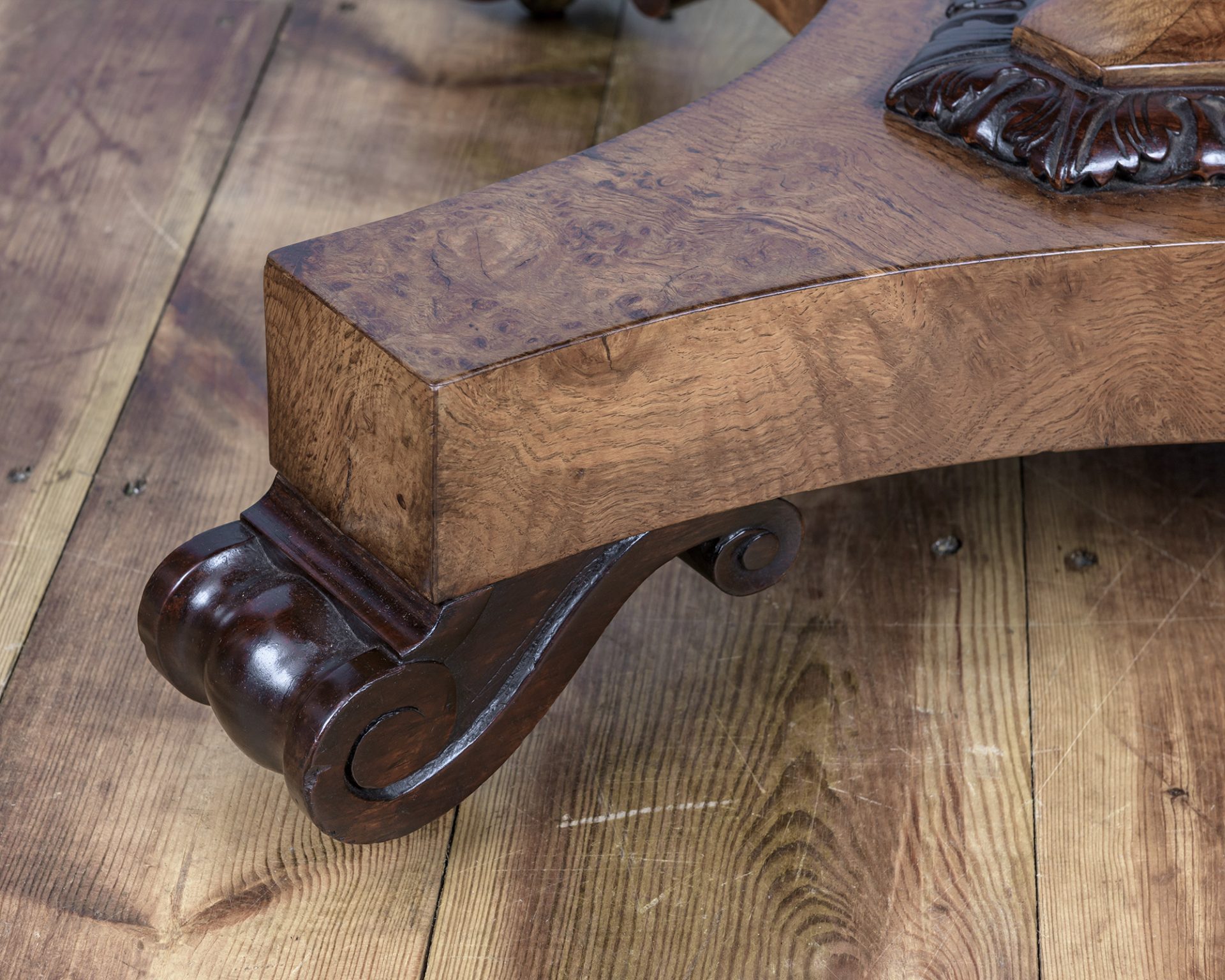
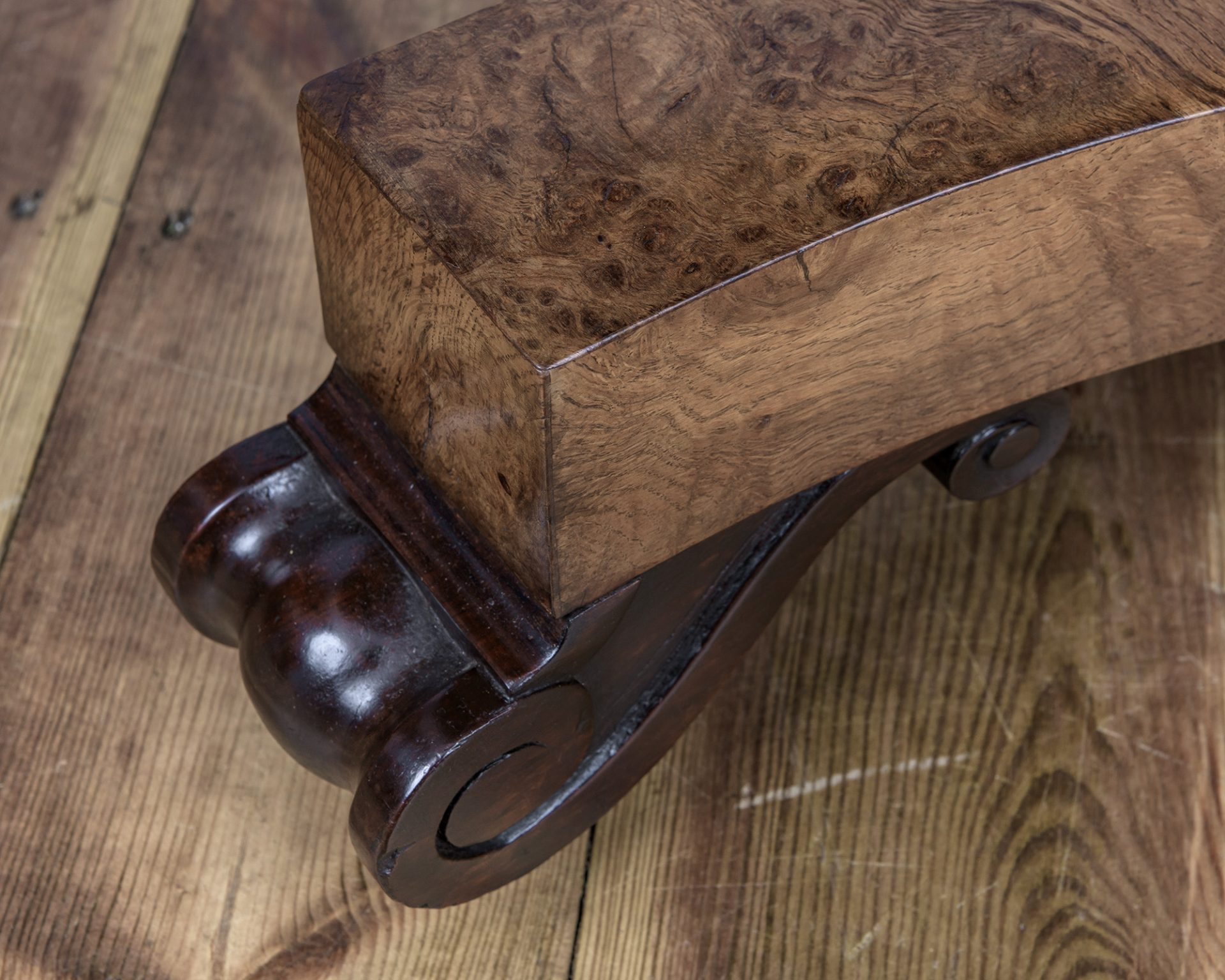
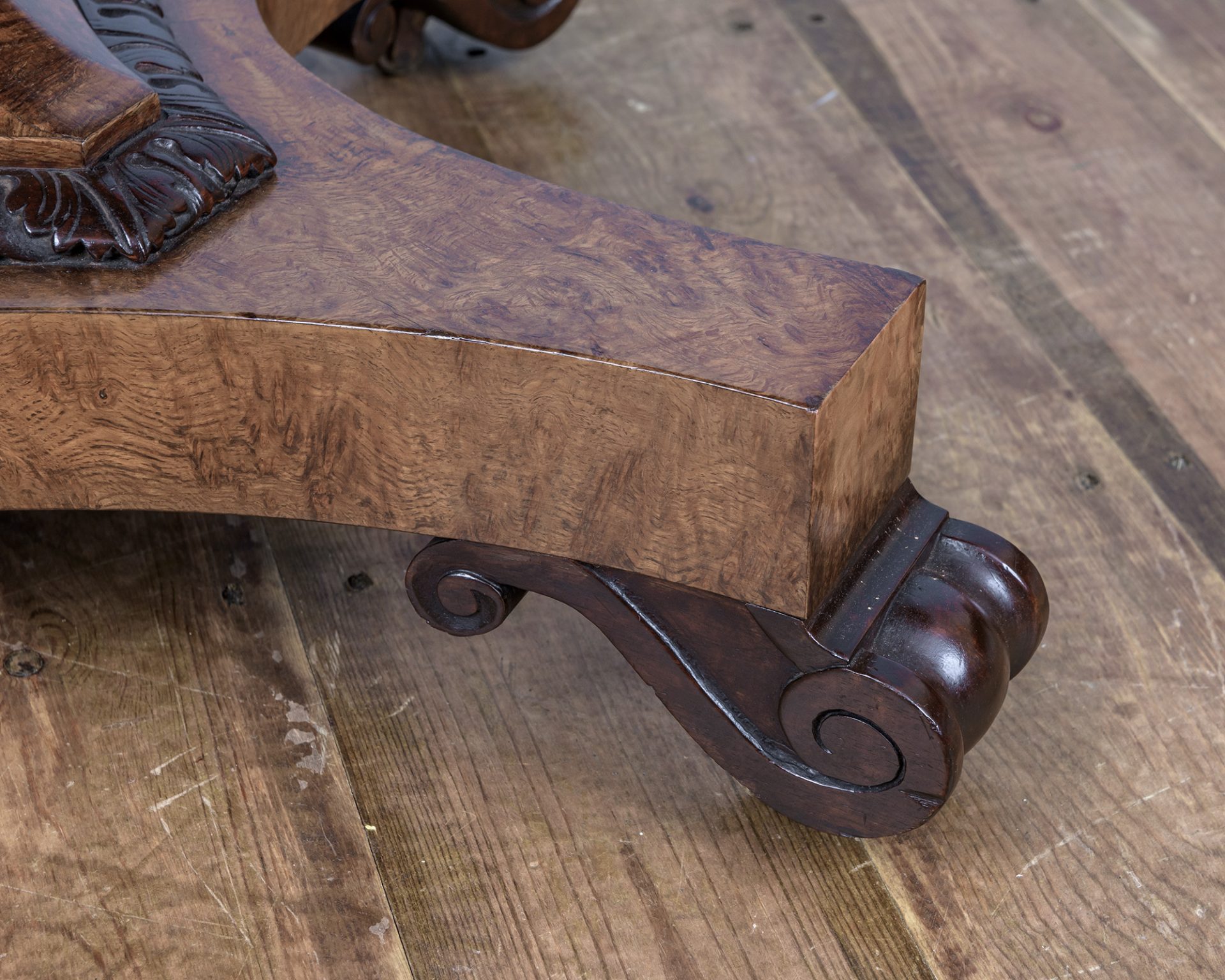
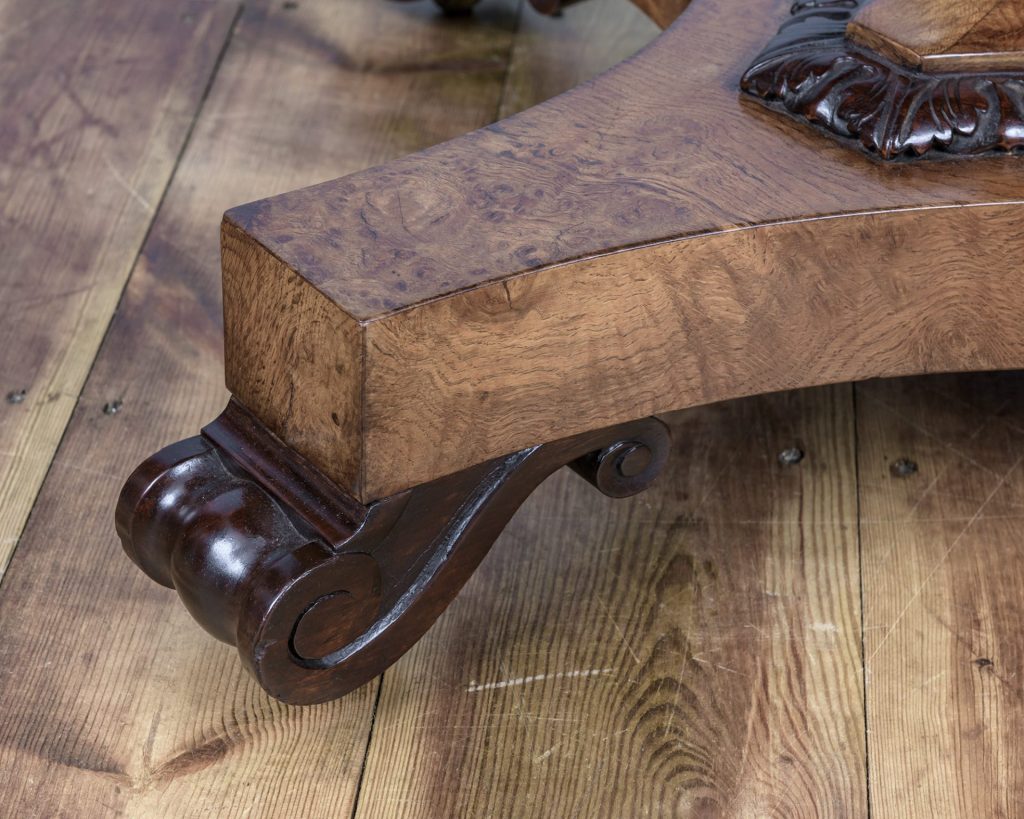
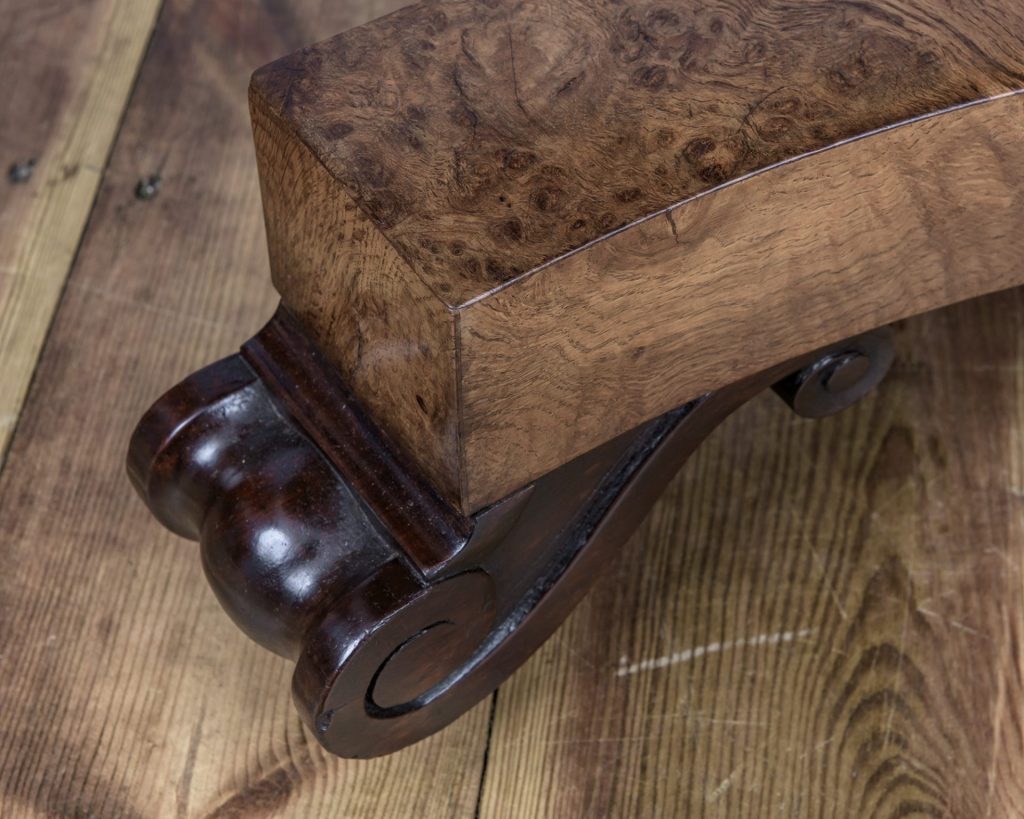
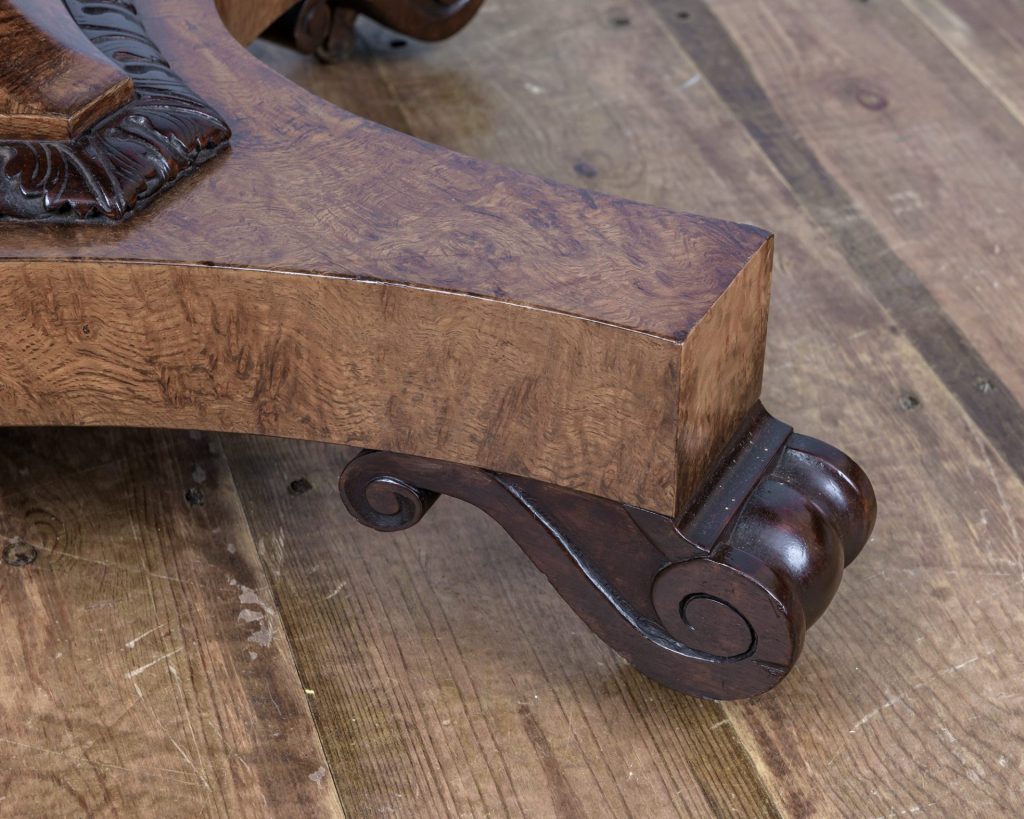
The collar is decorated with a stiff leaf pattern and sits on a quadraform concave plinth base. The base is veneered in figured English oak and raised on carved solid rosewood 'S' scrolled feet that terminate on concealed gilt brass castors.
Condition
Excellent and the table carcase will be oak or mahogany so that the burr veneers have solid foundation when they are laid down.
Literature
Pollarding is a pruning system in which the upper branches of a tree are removed, promoting a dense head of foliage and branches. It has been common in Europe since medieval times and is practised today in urban areas worldwide, primarily to maintain trees at a predetermined height. The bole of the tree, constantly cut back over a period of years, will eventually form a lump, or ‘burr’, which when sawn for veneer, gives a lovely grained, swirling figure.
The effect is similar to that of burr walnut with its distinctive speckled grain. Burrs, or ‘burls’, are growths which appear on the side of tree trunks, resulting from a tree undergoing some form of stress.
During the 19th century great strides were made in the mechanisation of cabinet making. Marc Isambard Brunel revolutionized timber processing by designing an advanced steam-powered sawmill and was used in processing timber in large volumes, that was primarily to speed up the production of ship building for the British Royal Navy.
Brunel Senior opened a mill in Battersea in London in 1814 that specialised in cutting veneers and invented a circular saw that could be used to cut veneers thinly and evenly for the first time. This steam driven saw was the first of its type and was invented by Marc Isambard Brunel [Isambard Kingdom’s father]
He also developed the first hydraulic veneer press. The figured wood cut from burrs and pollards is notoriously difficult to cut and lay: the wild grain which makes it so attractive results in a very delicate, brittle veneer. The new machines enabled the Georgian and Victorian craftsmen to make the most of those timbers.
Dimensions
Height 76.00cm (29.92 inches)
Width 129.50cm (50.98 inches)
Depth 91.50cm (36.02 inches)
Stock No: 11835
£5,800.00
In-stockMake an Enquiry
If you'd like to negotiate on this item, please make your offer below and we'll get back to you.
Reserve Item
Request more images
© 2026 Freshfords Fine Antiques