

George II Century Clothes Press attributed to Giles Grendey
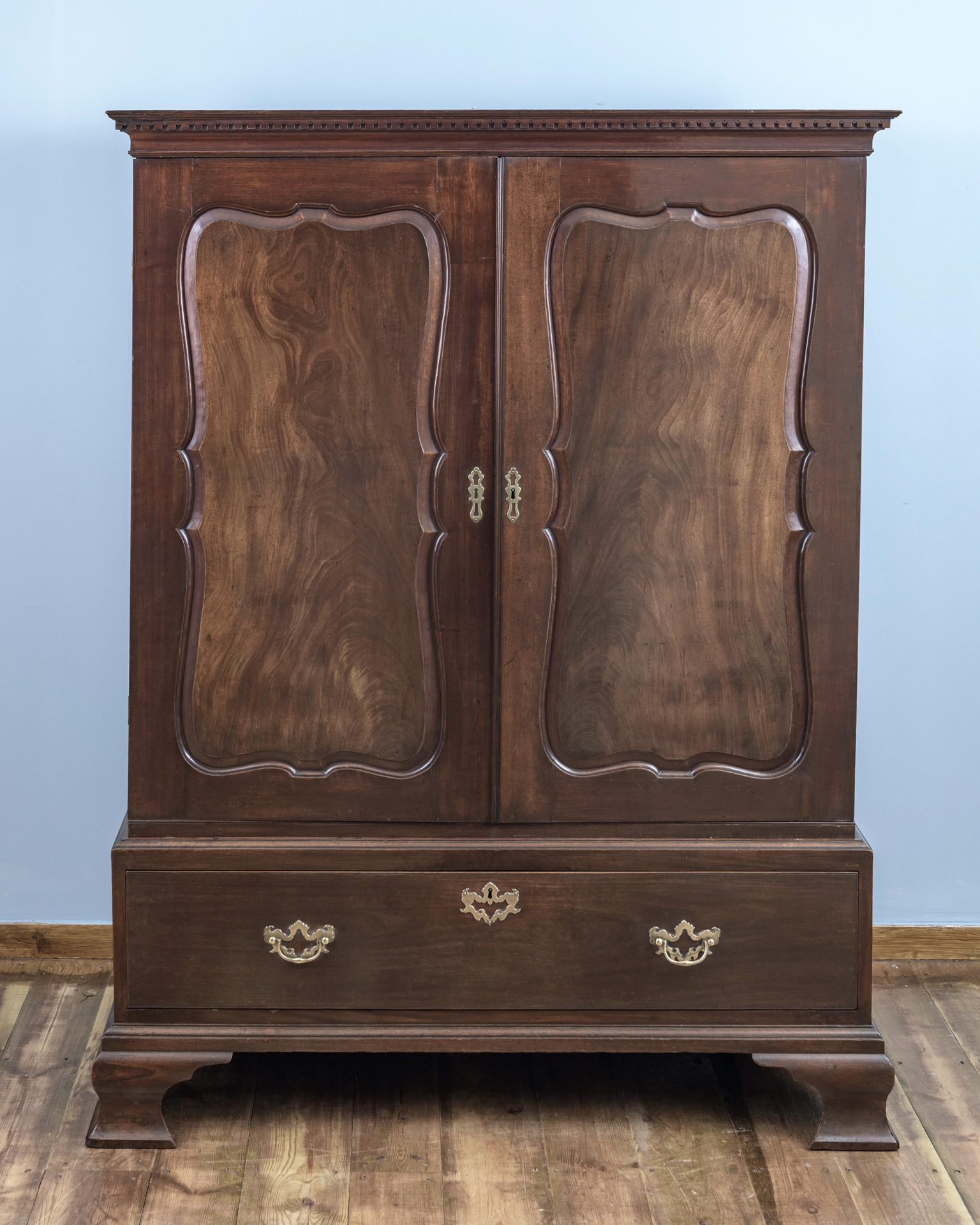
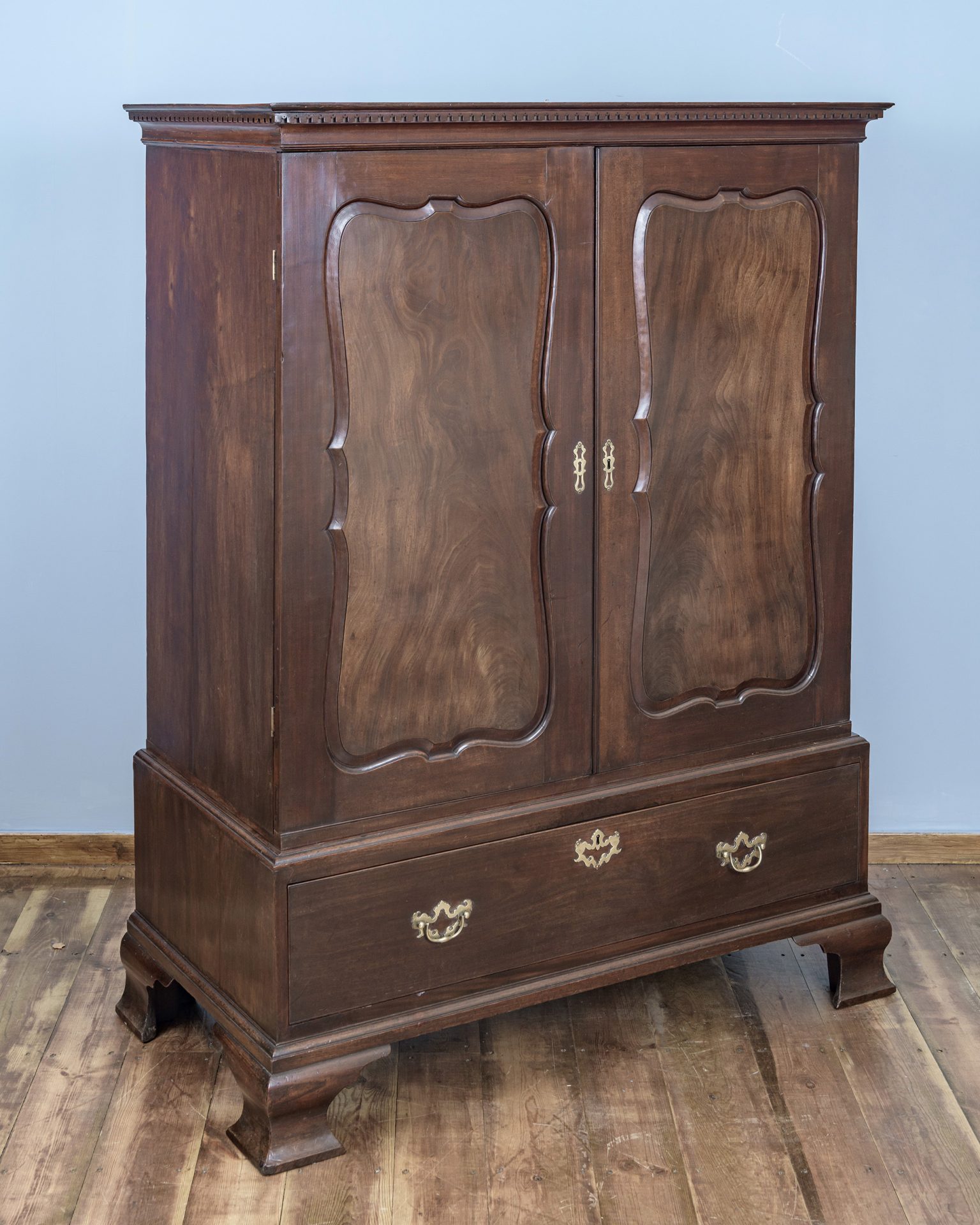
George II Century Clothes Press attributed to Giles Grendey
English
circa 1740 - 1750
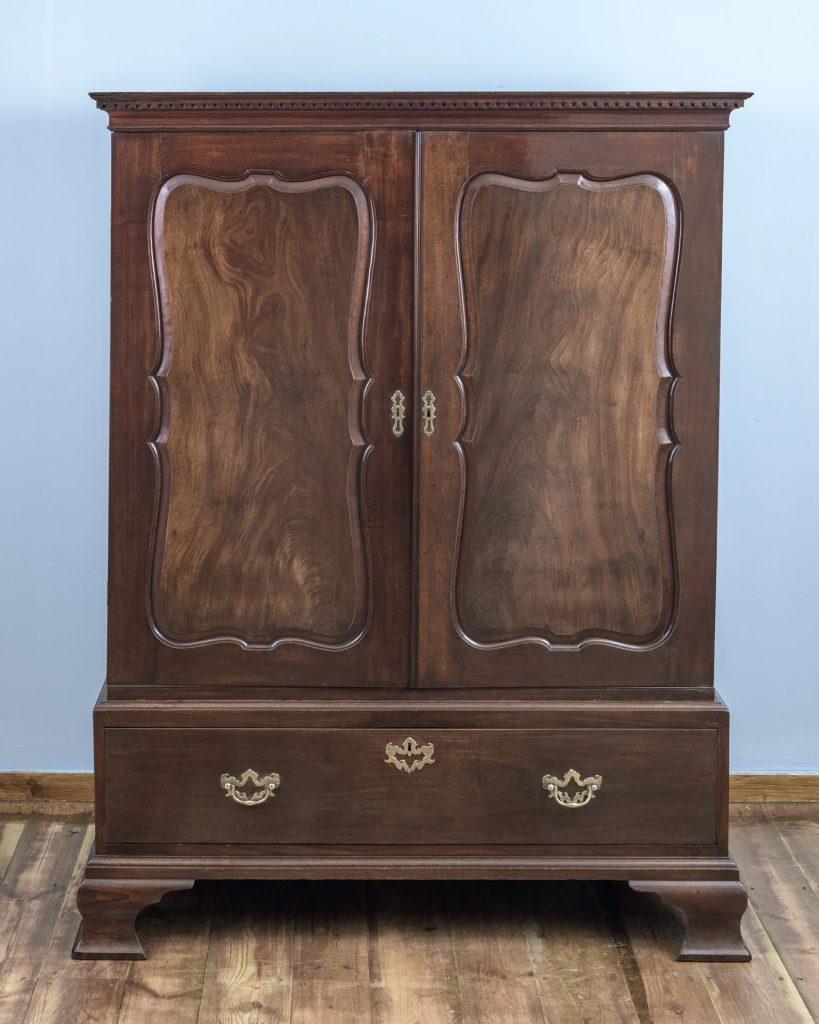
Rare George II 18th Century Period 'Cuban' Mahogany Clothes Press attributed to Giles Grendey
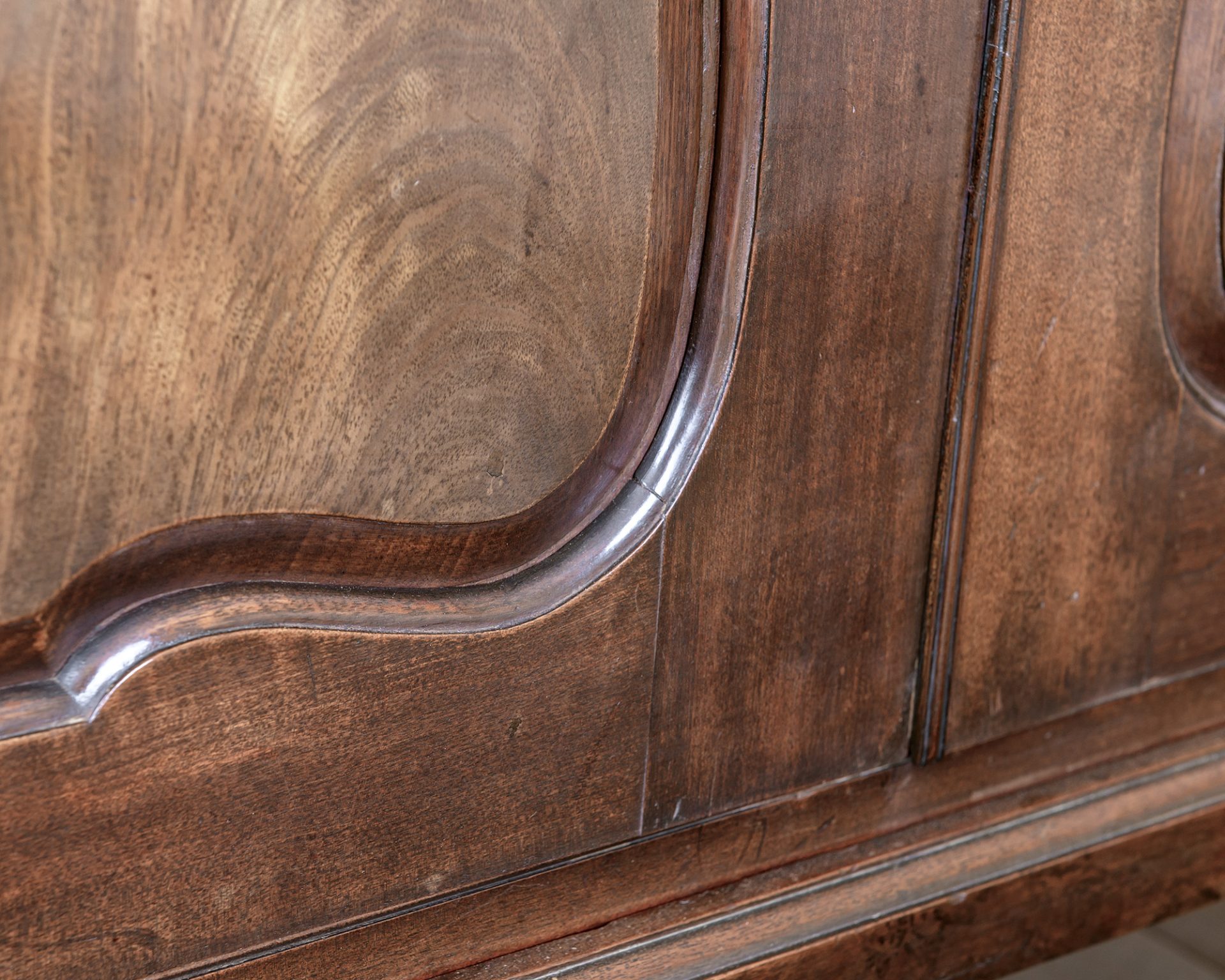
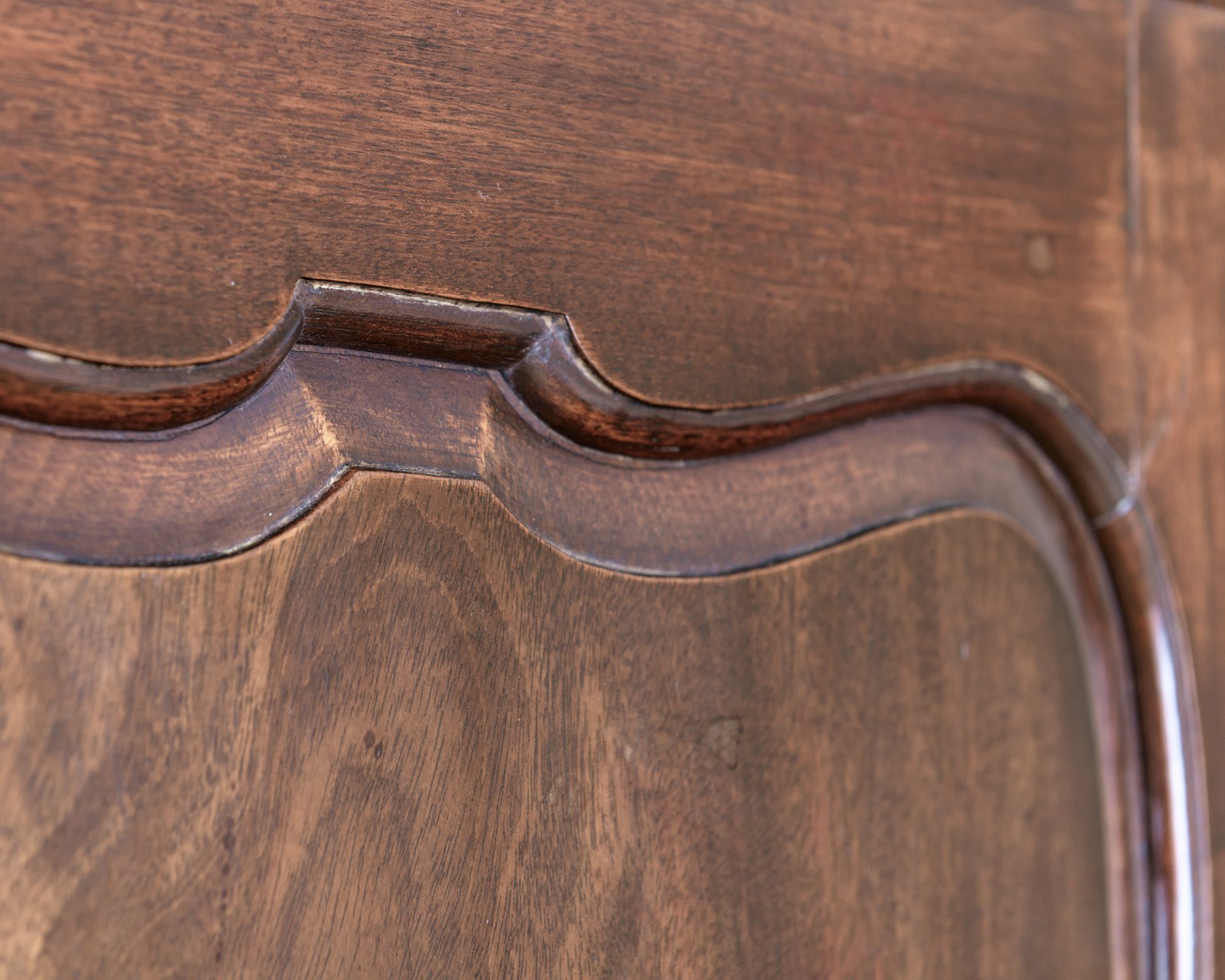
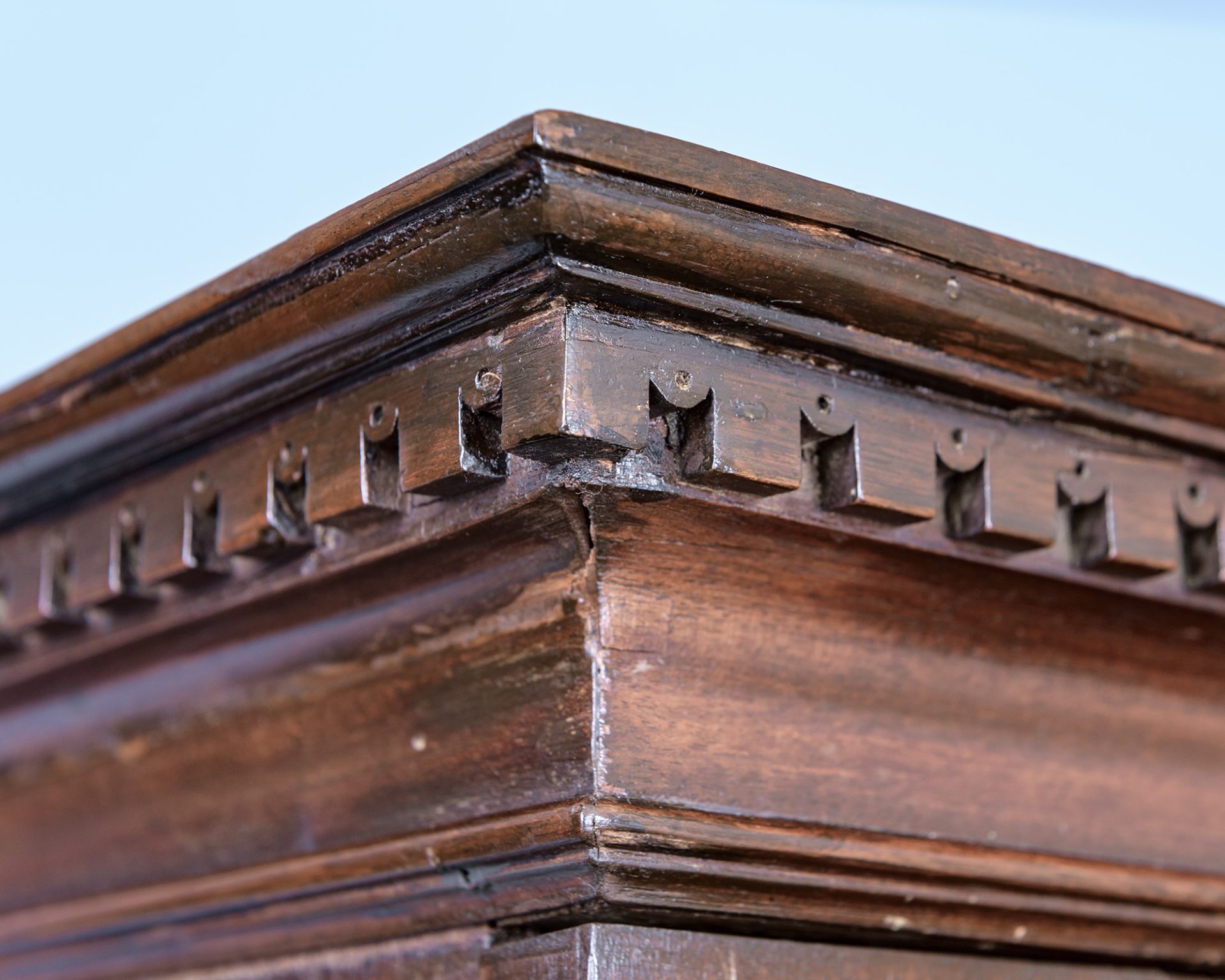
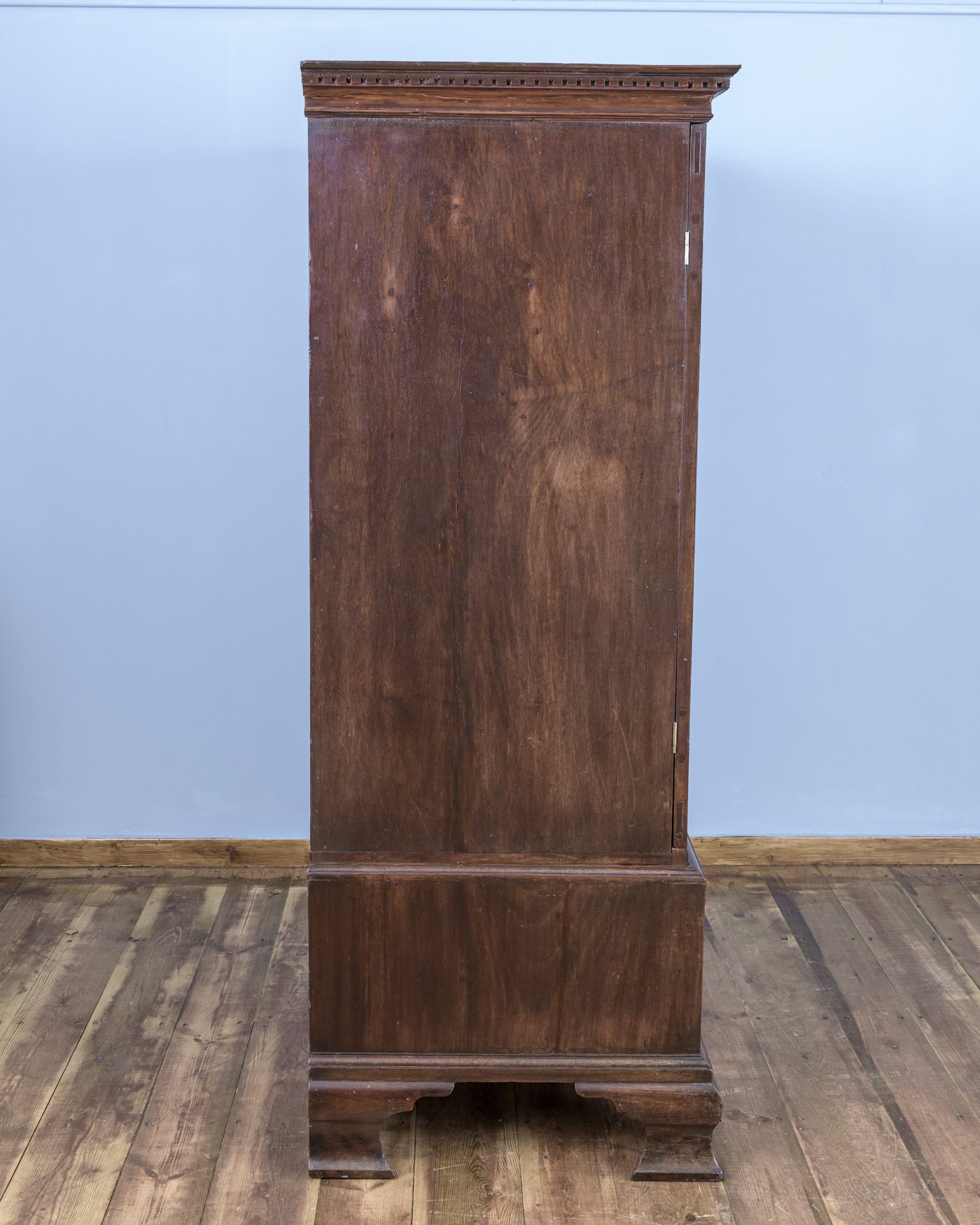
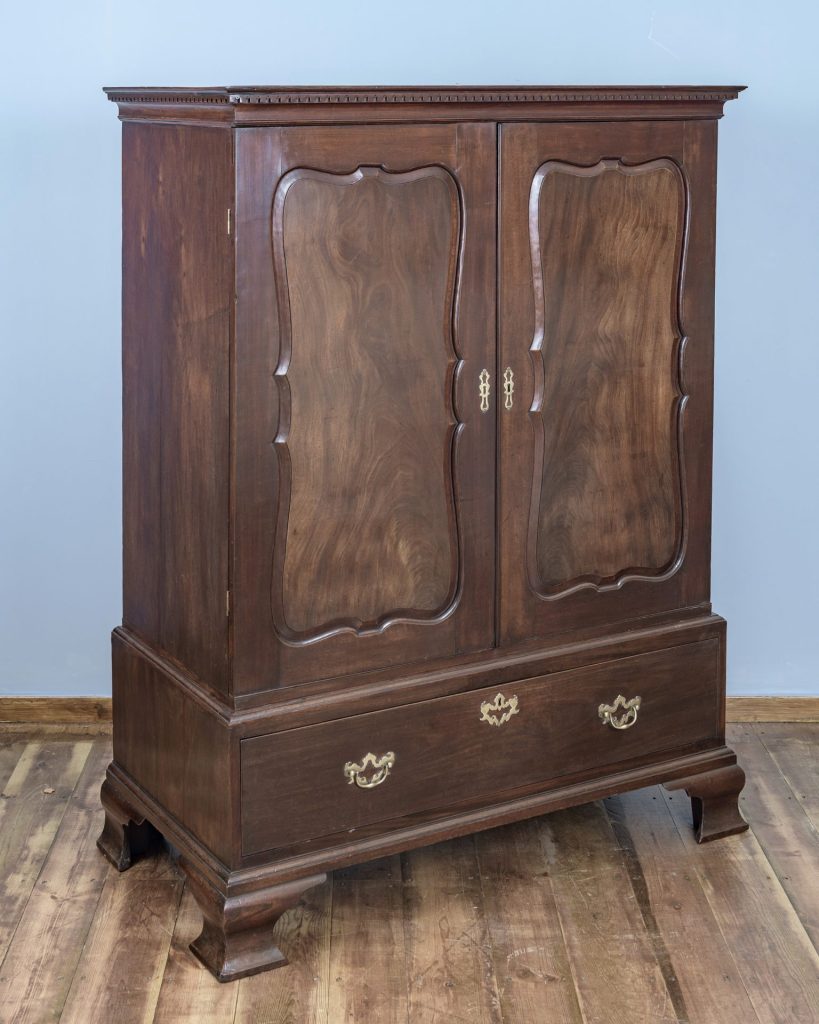
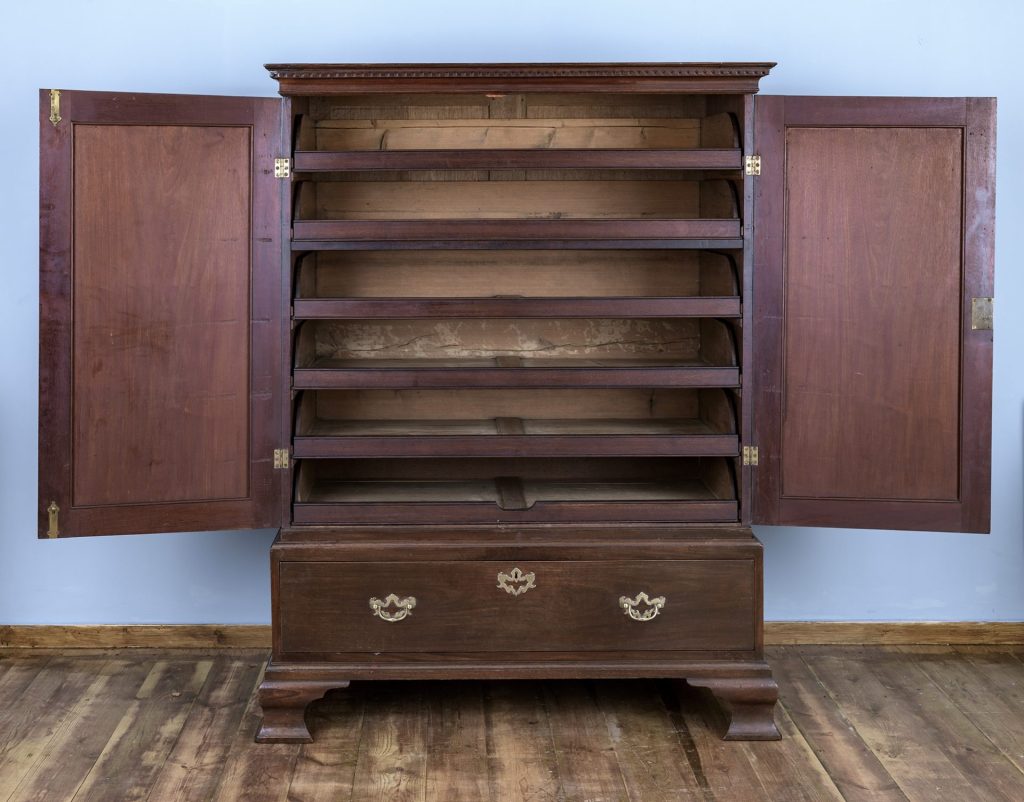
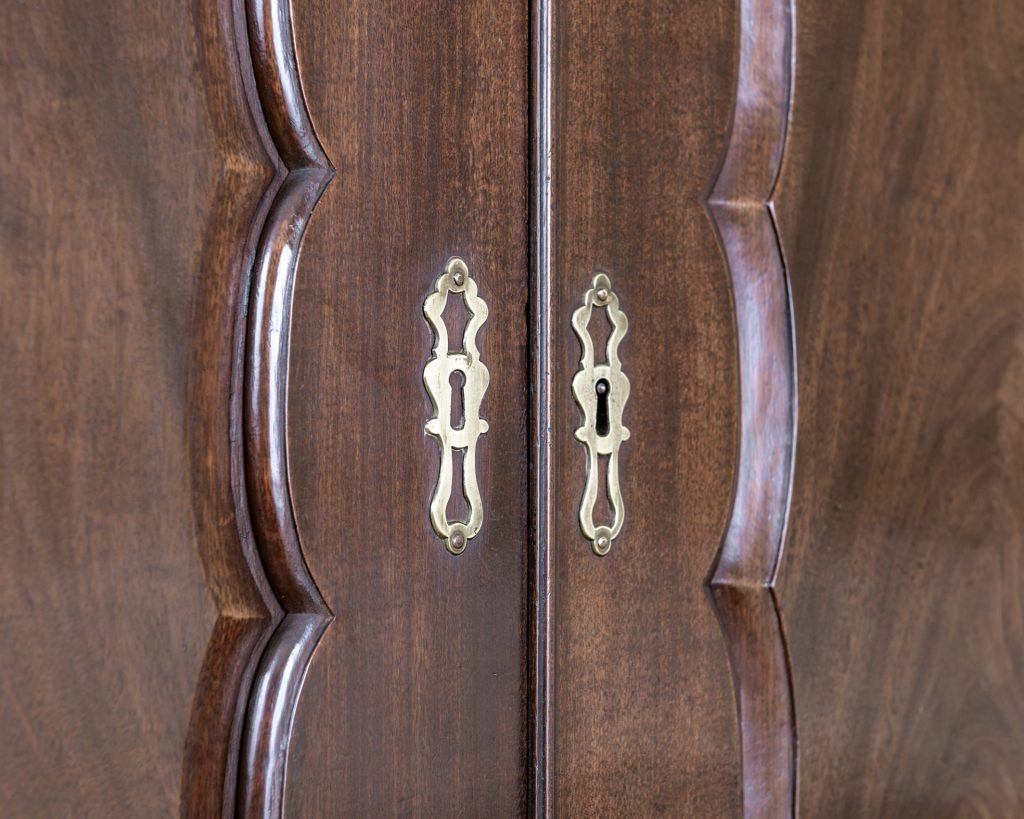
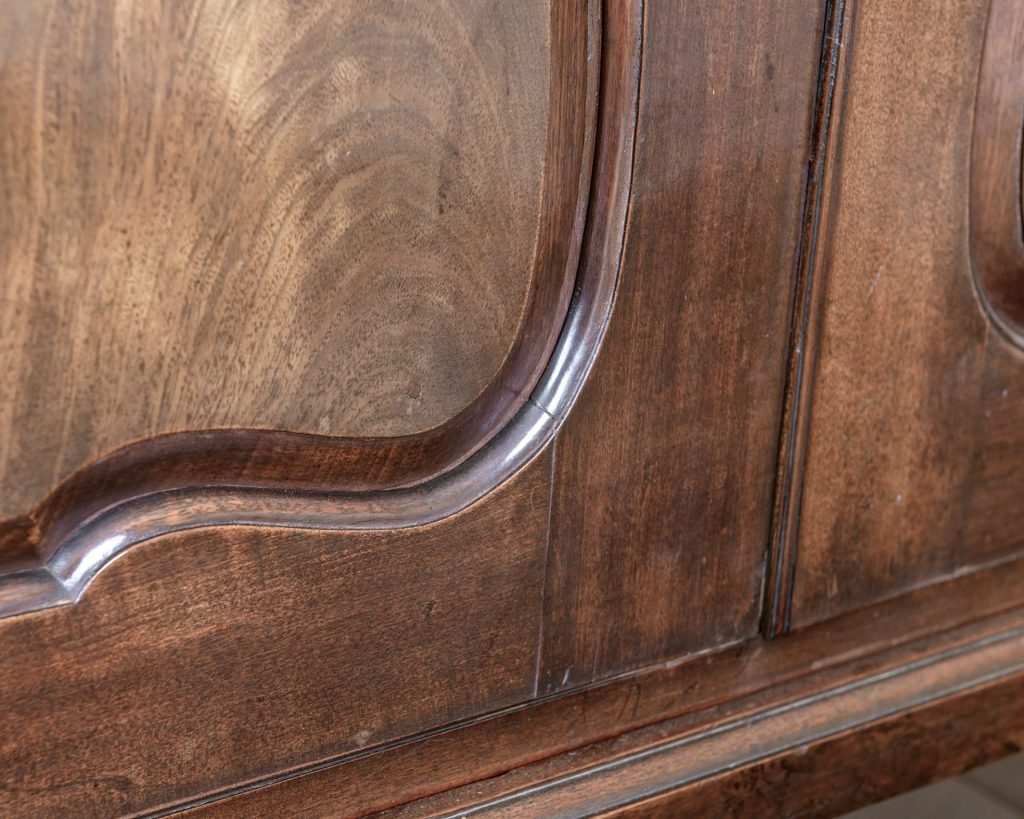
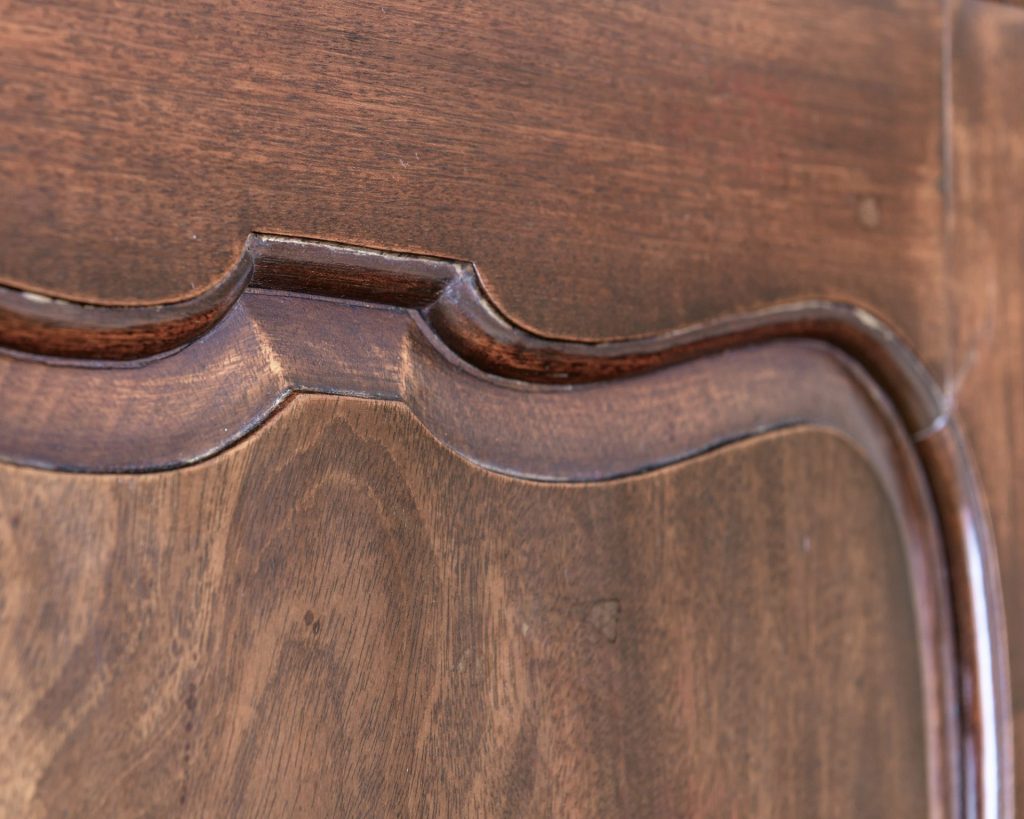
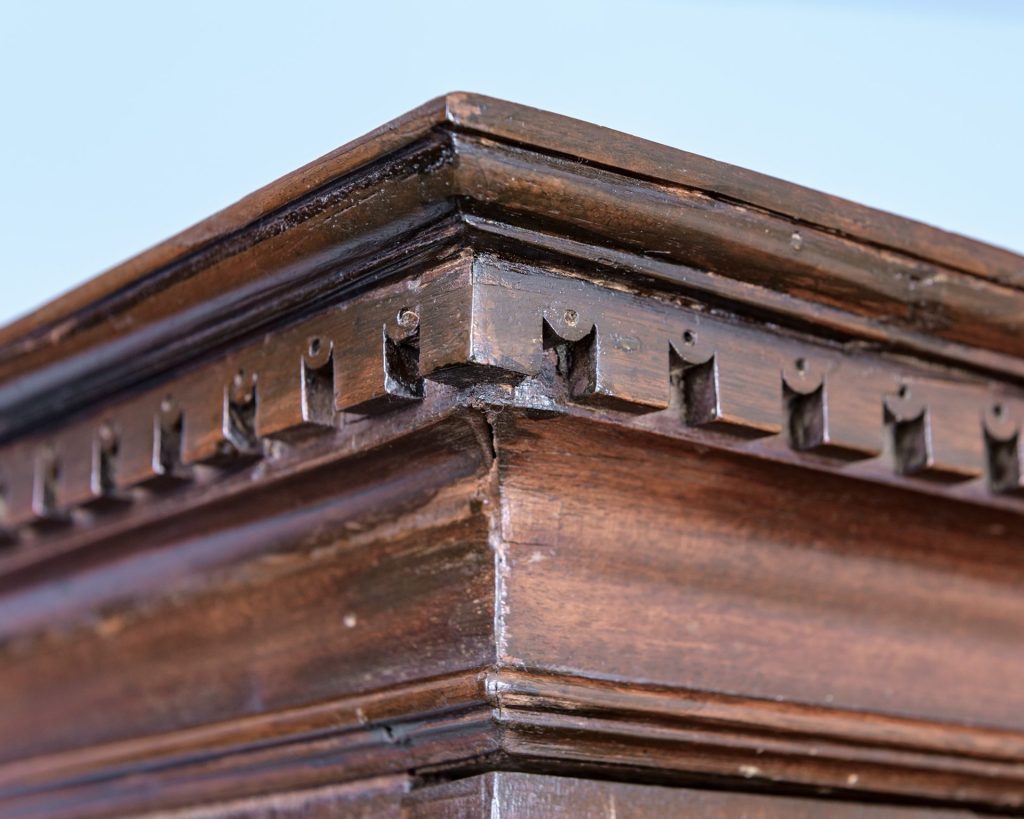
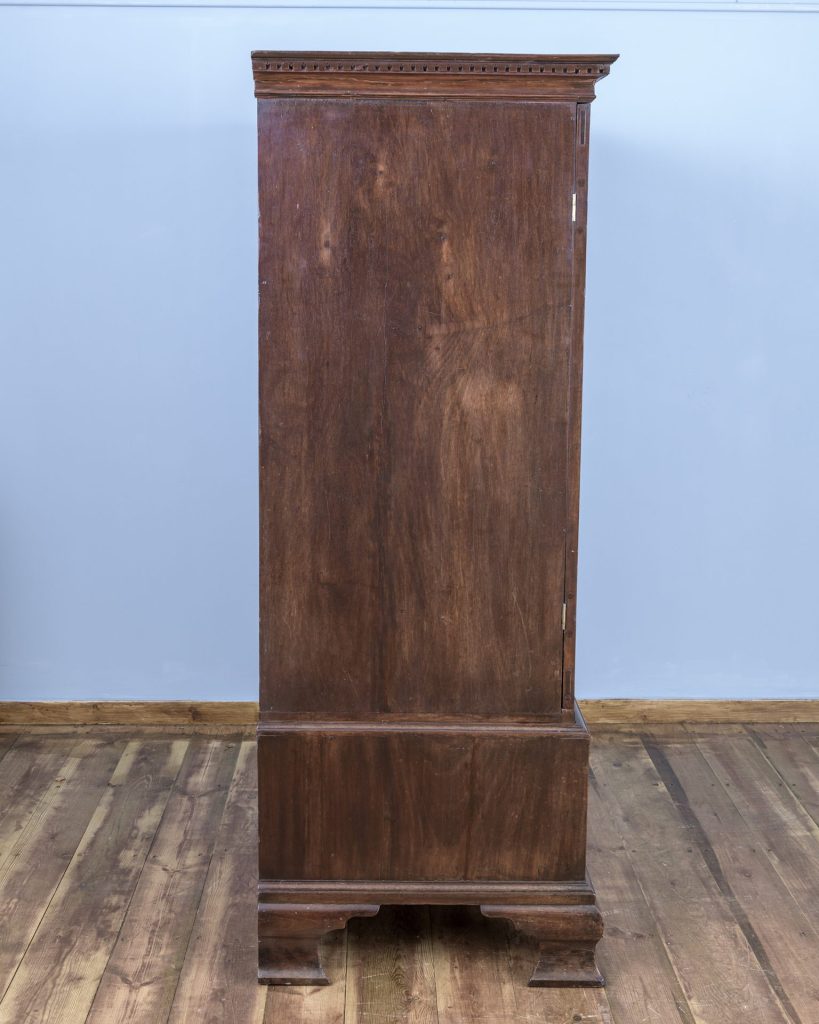
The top section of the wardrobe is decorated with a detailed dental moulding above a cavetto cornice and below two 'Cuban' mahogany full length doors, the construction of the door panels is very much in 'Giles Grendey' fashion with serpentine panels and a break to the middle, raised within a thumbnail moulding and chamfered edging.
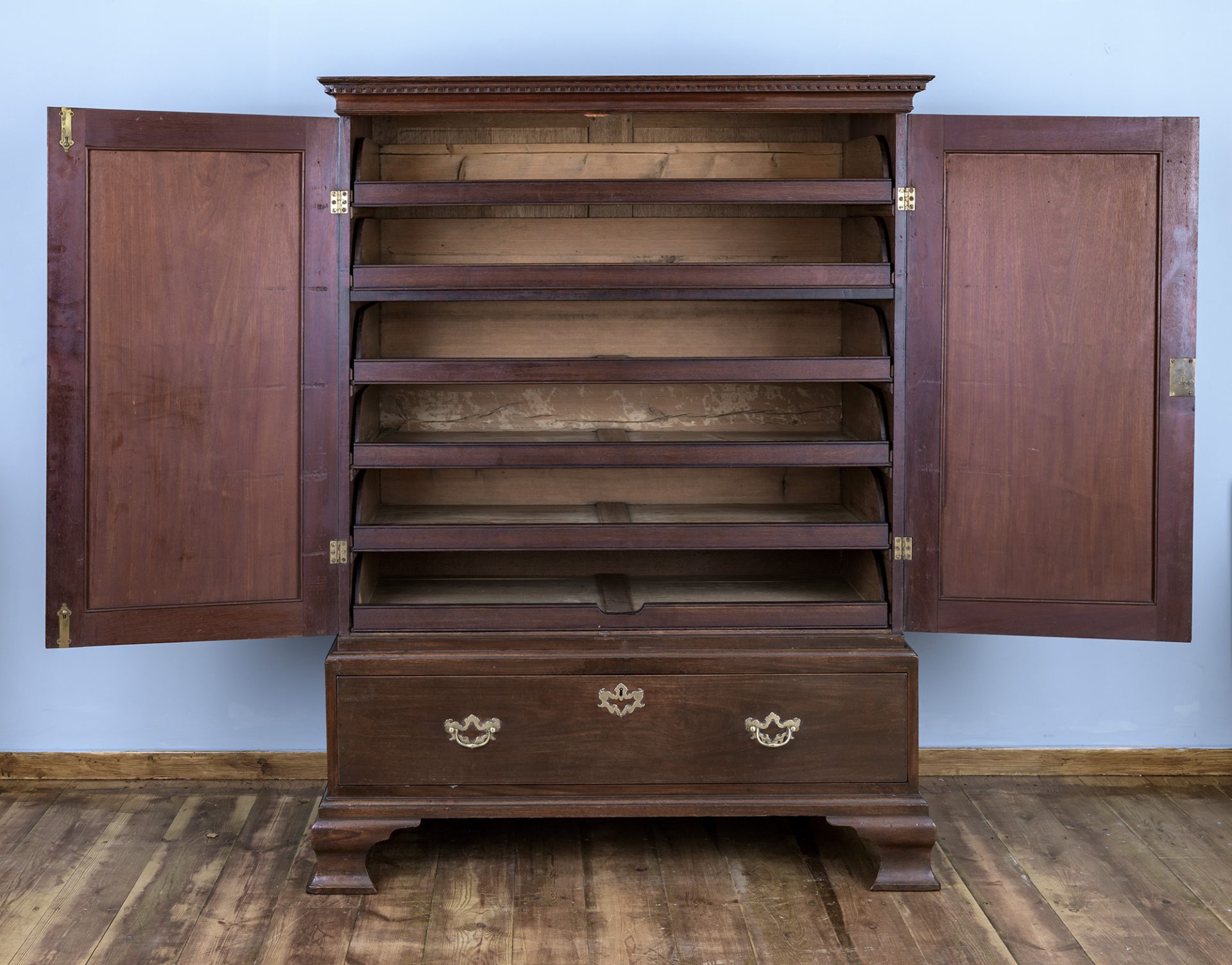
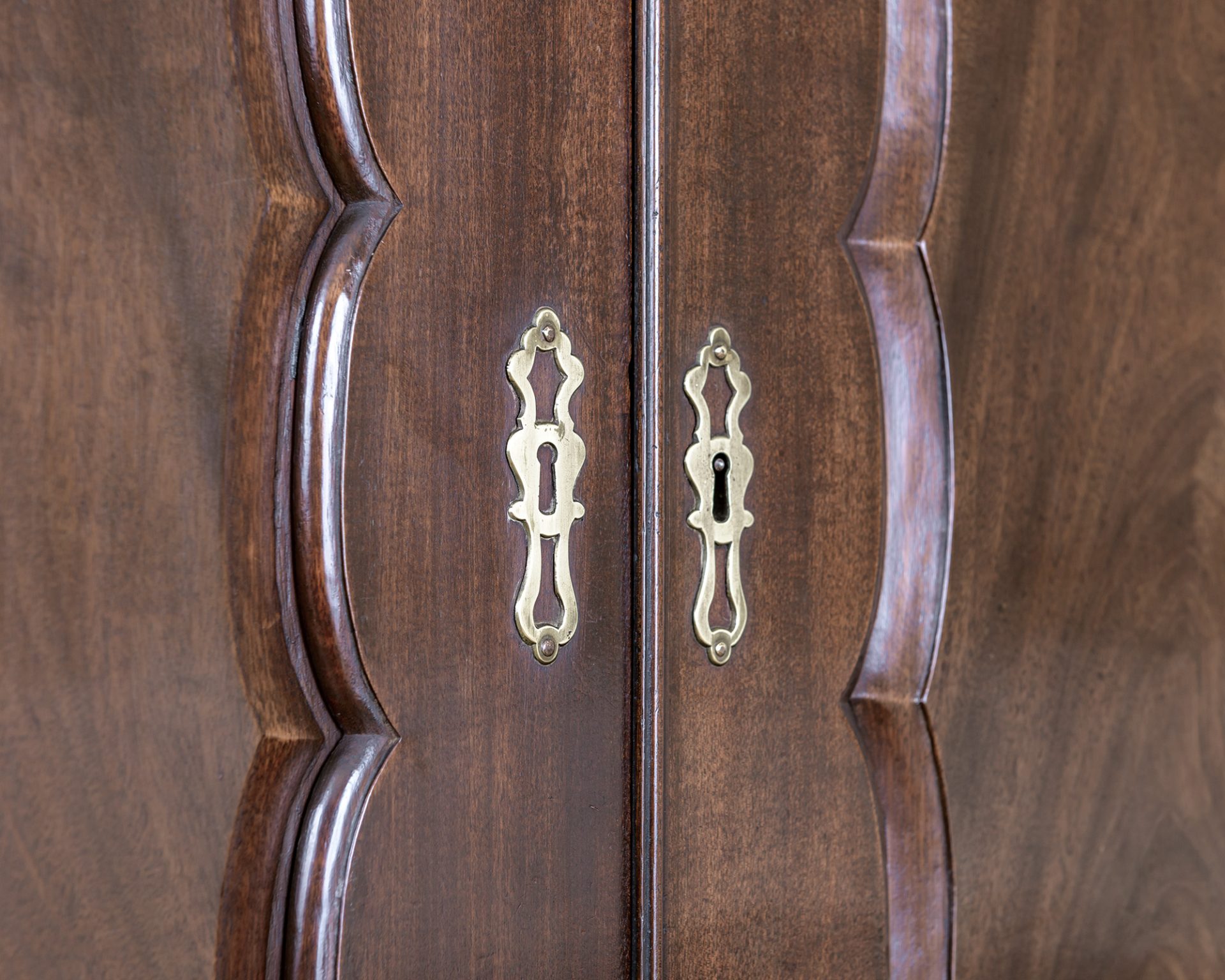
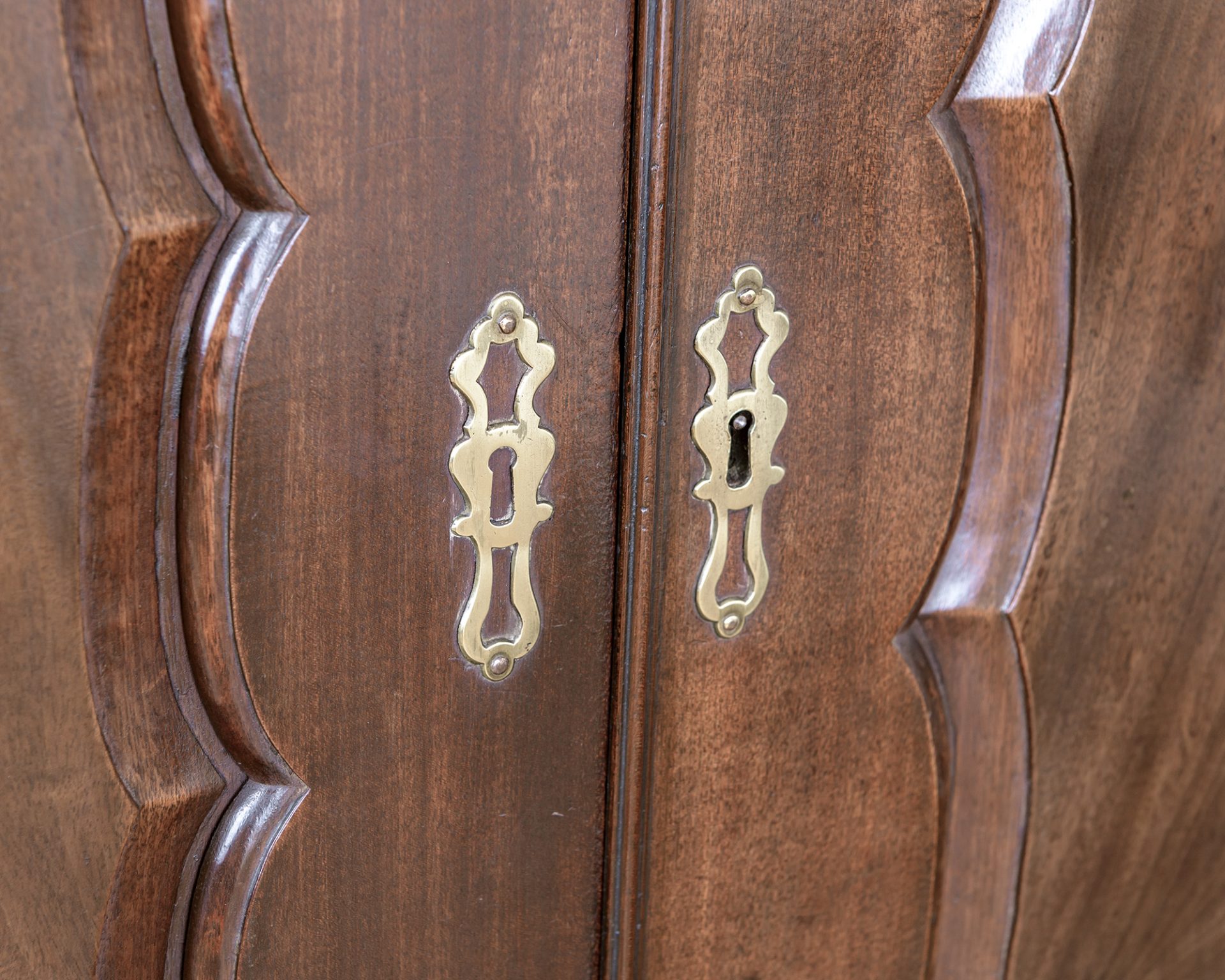
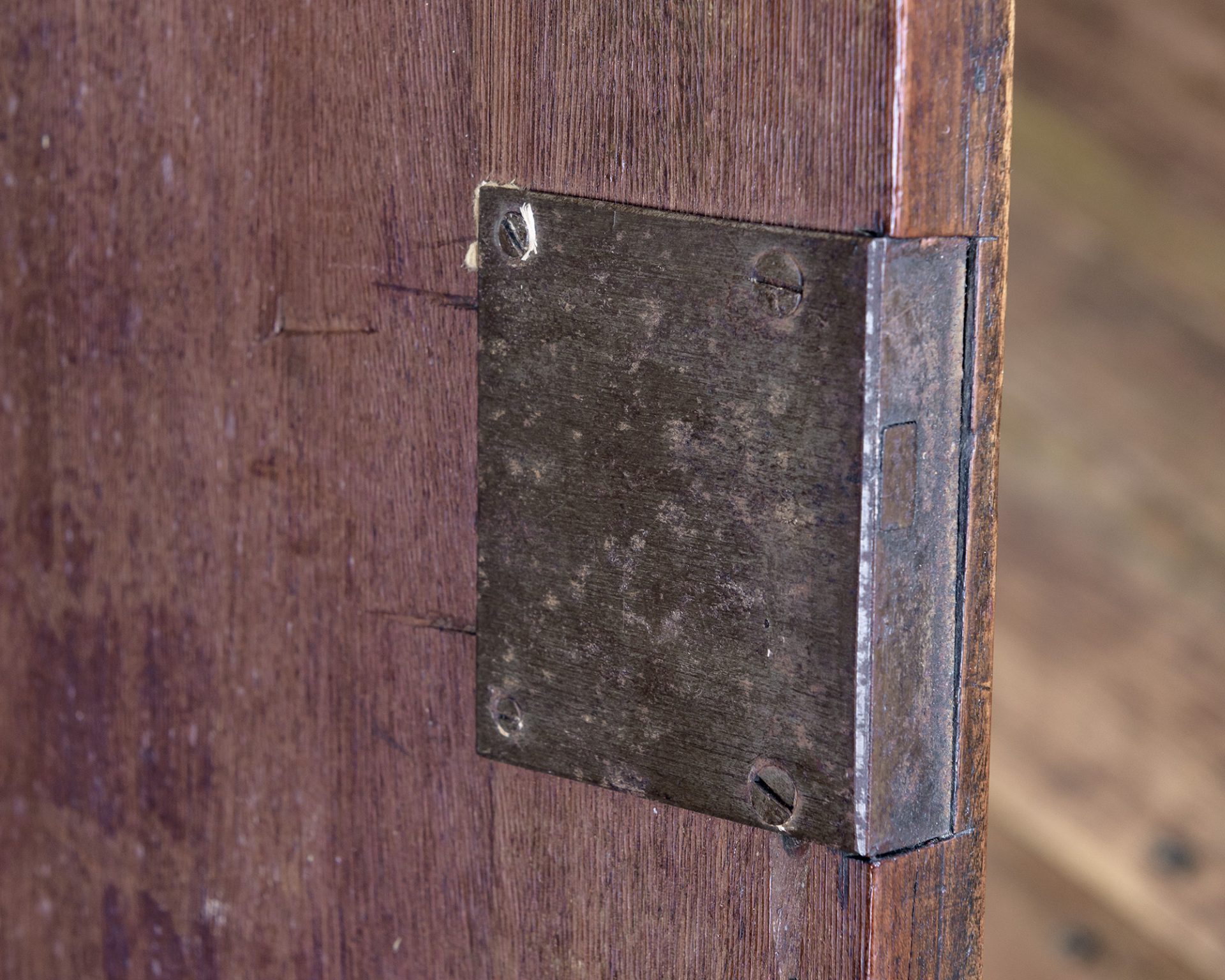
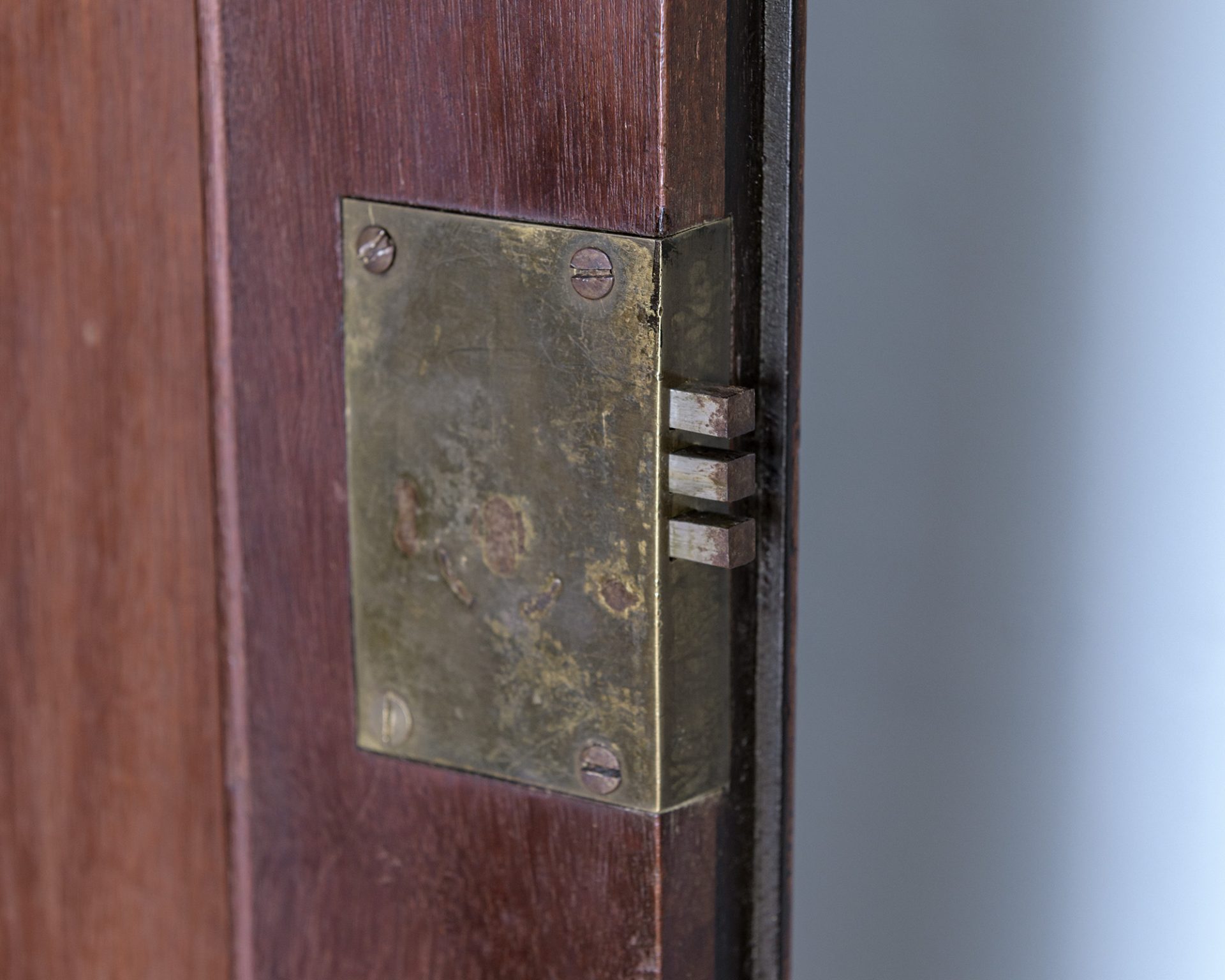
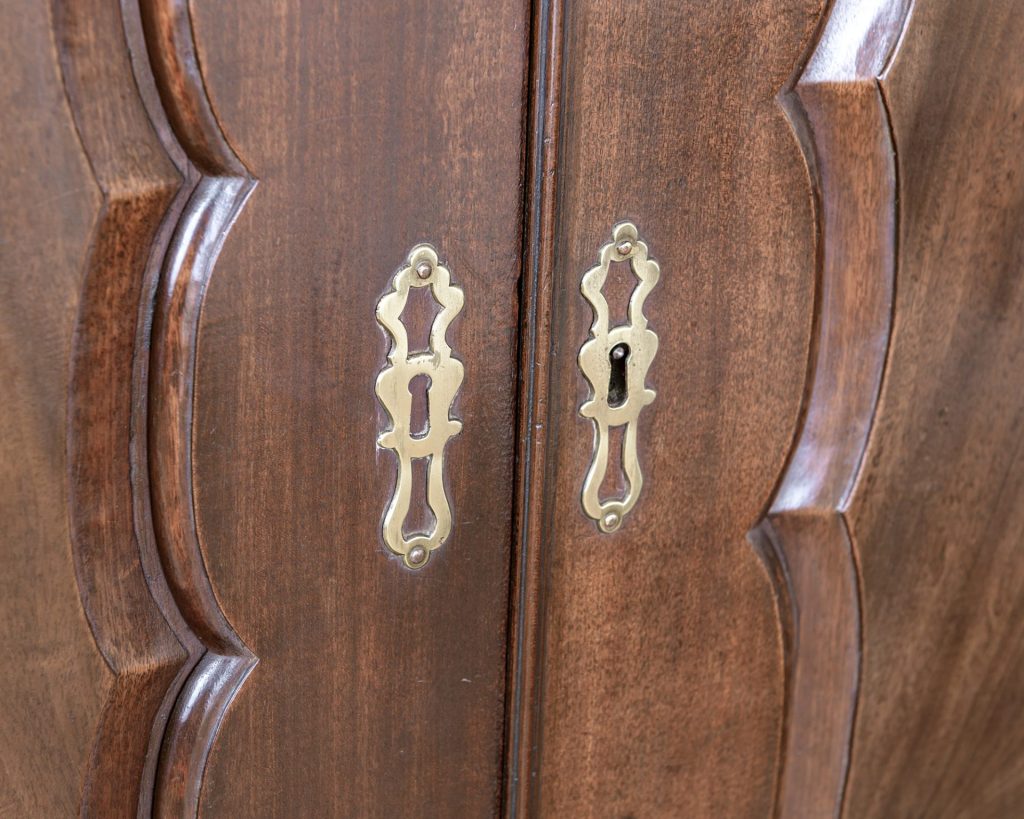
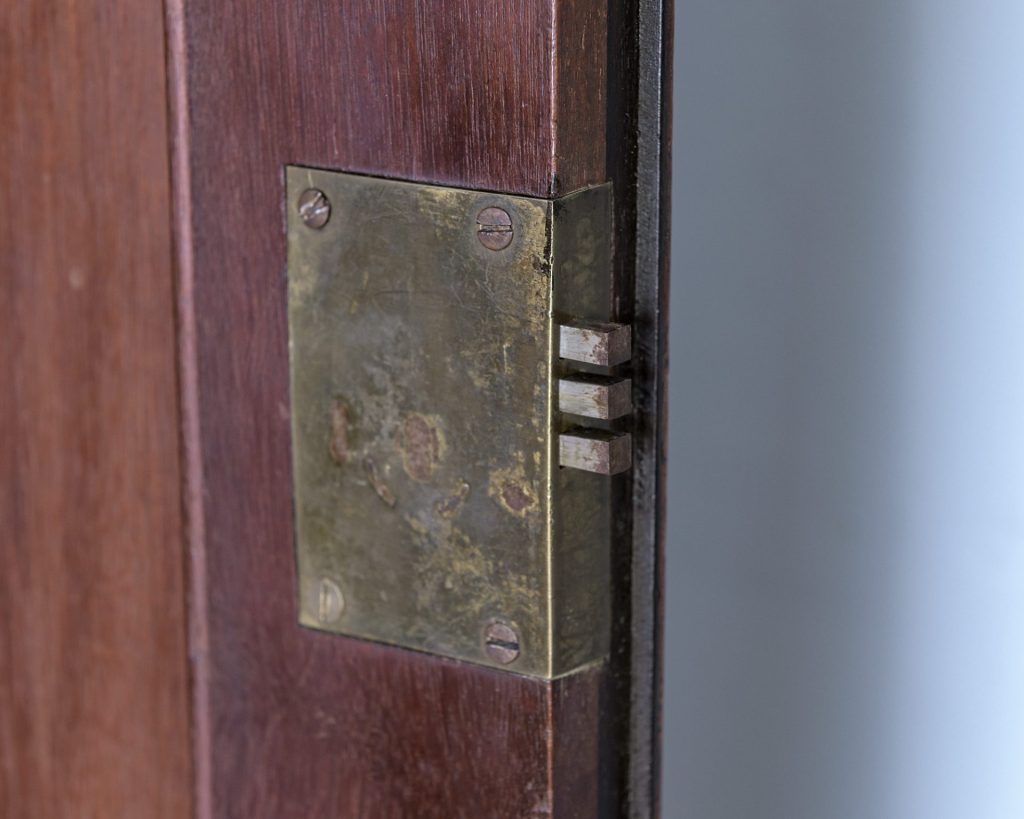
The figured doors retain an old finish with patination throughout as well as being fitted with the original gilt brass open fret escutcheons and the original 3-pin gilt brass Georgian lock, the warbrode is fitted with six oak lined and oak fronted trays.
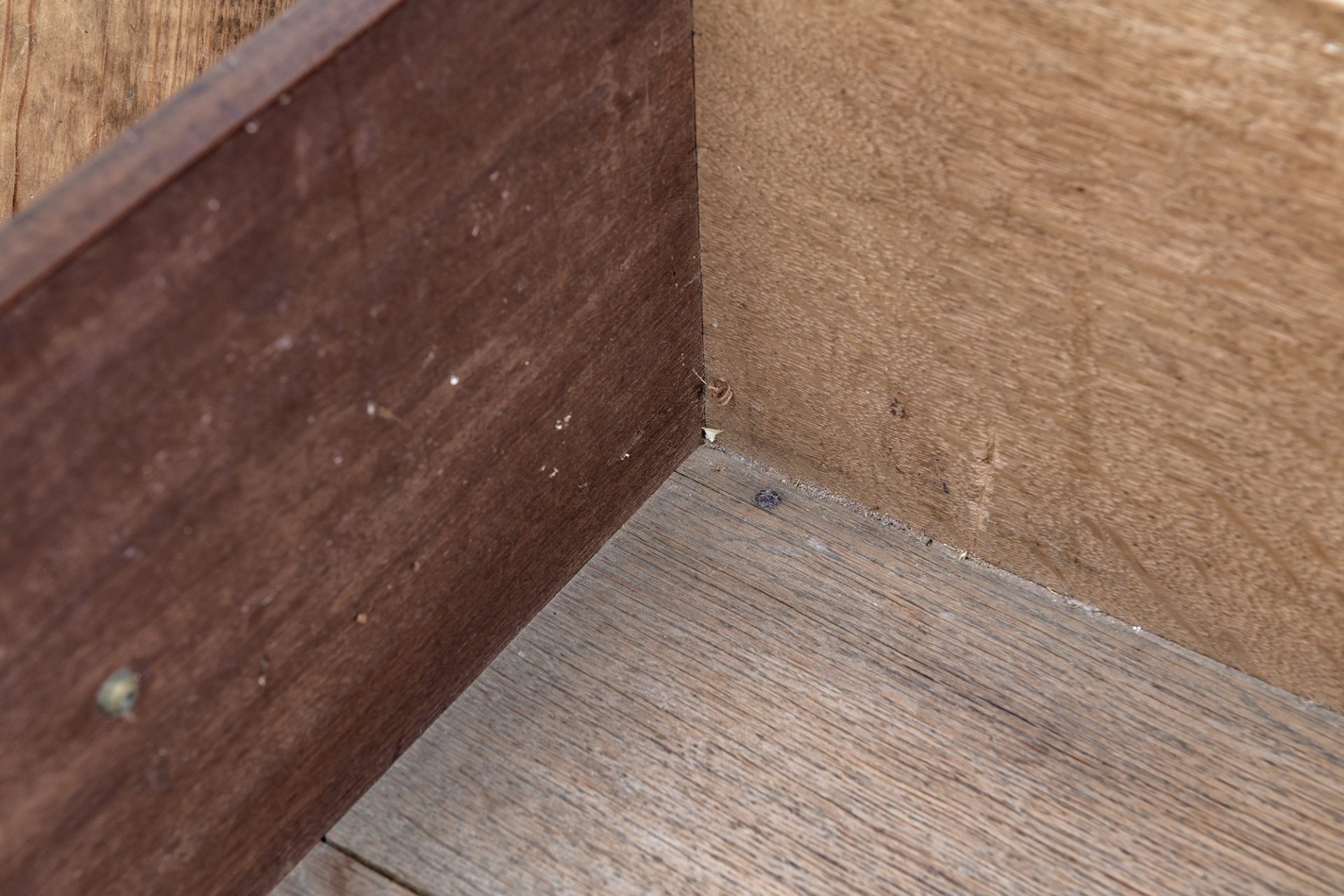
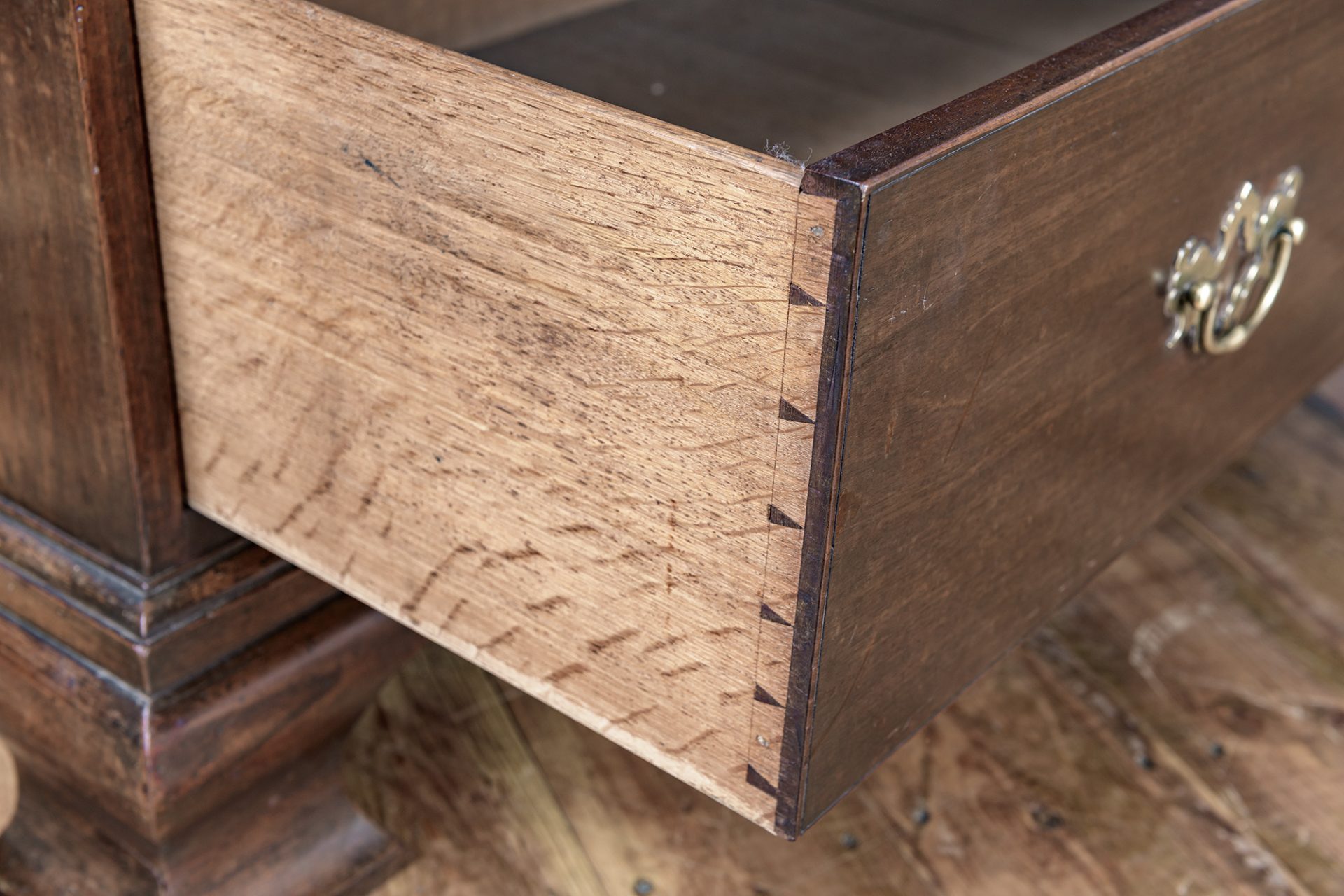
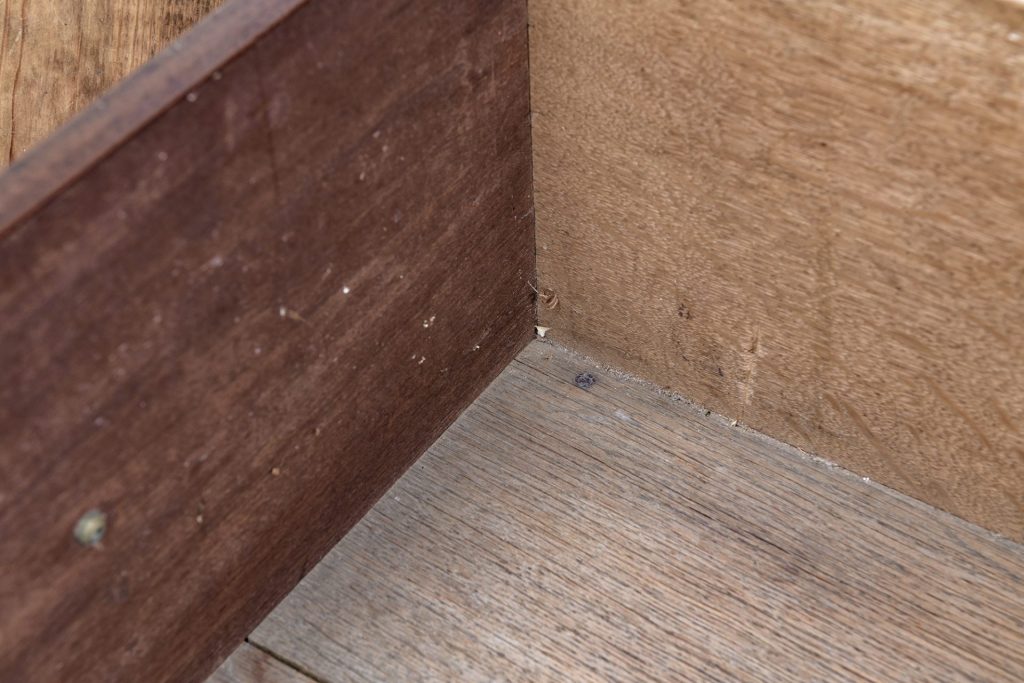
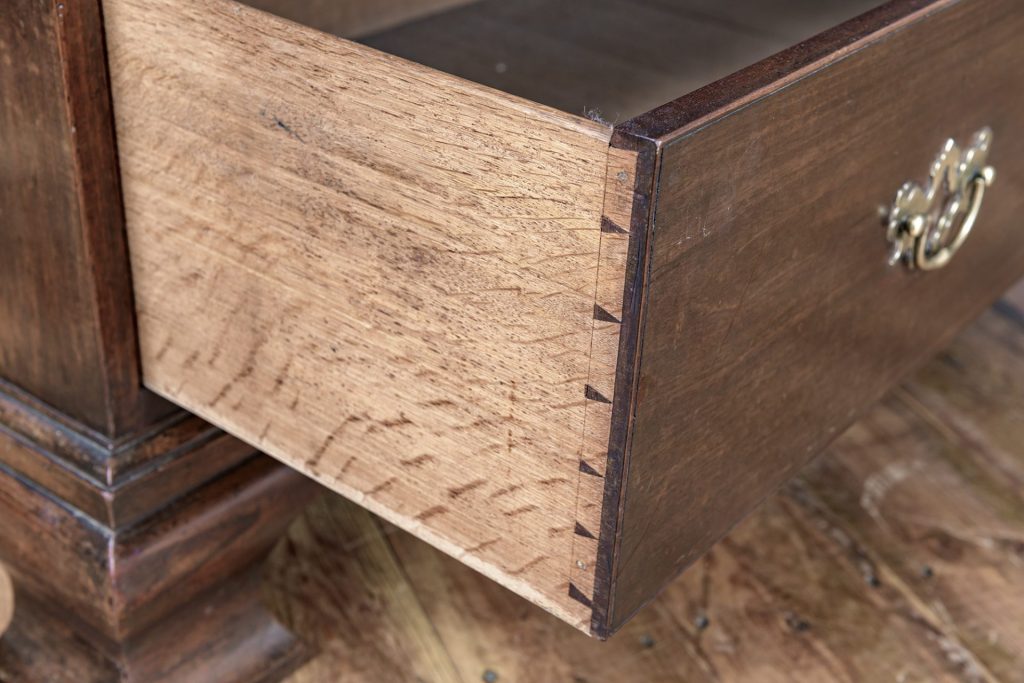
The base of the clothes press is fitted with a single full length drawer and is separate to the the top section so allowing the wardrobe to break into two separate pieces. The single deep drawer is made with English oak to the sides and ash panels to the drawer base and constructed with the finest Cuban mahogany dovestails to the front section of the drawer.
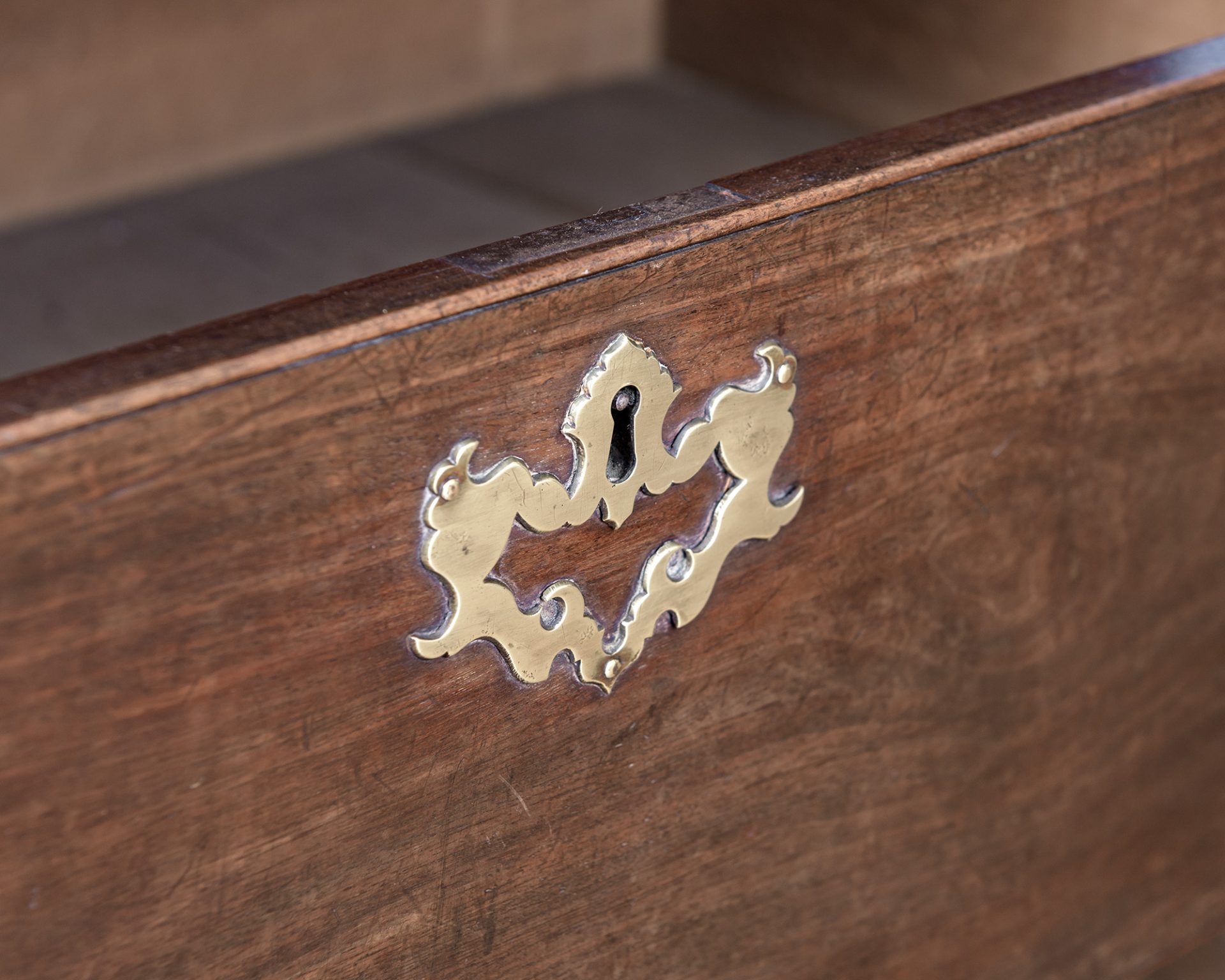
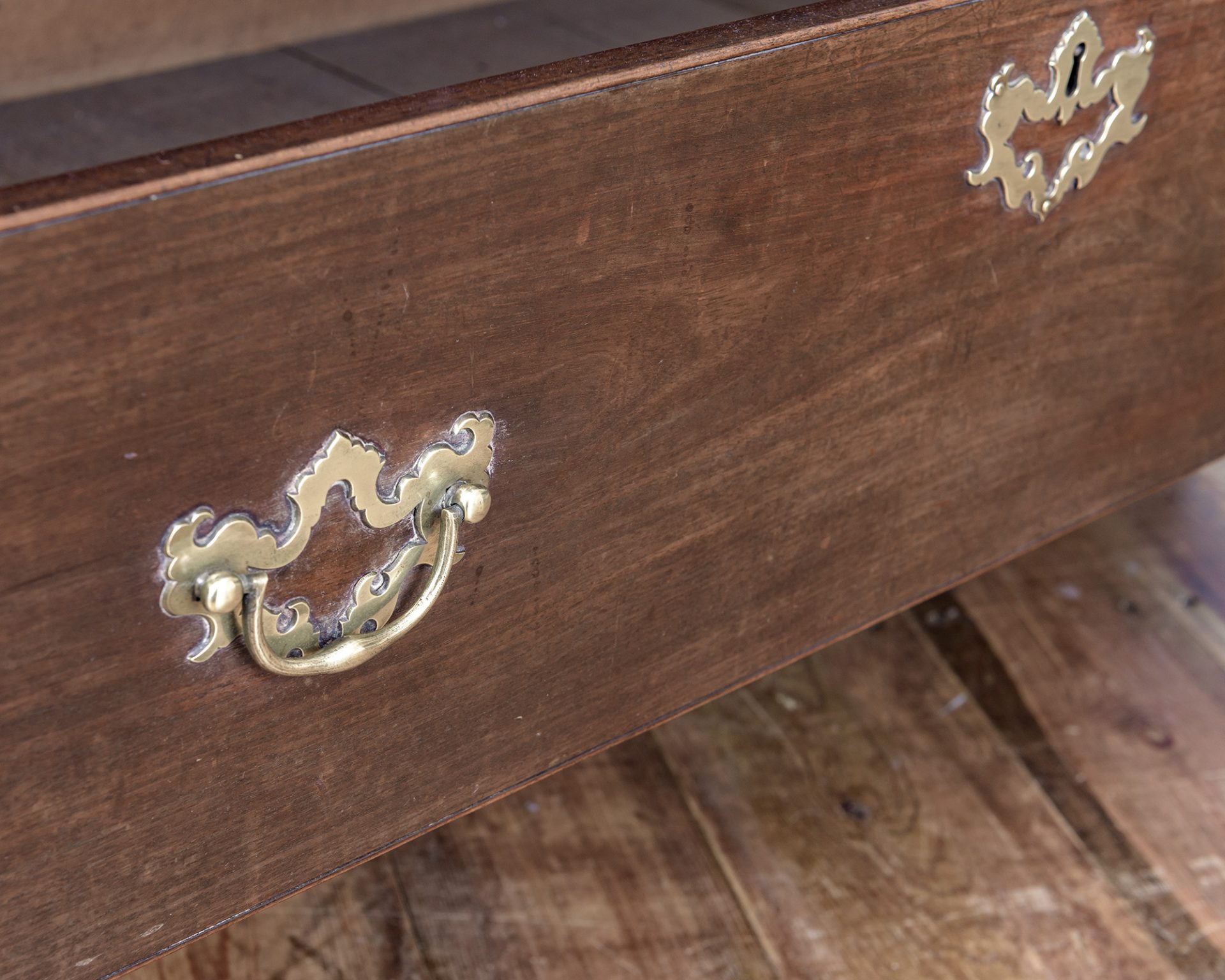
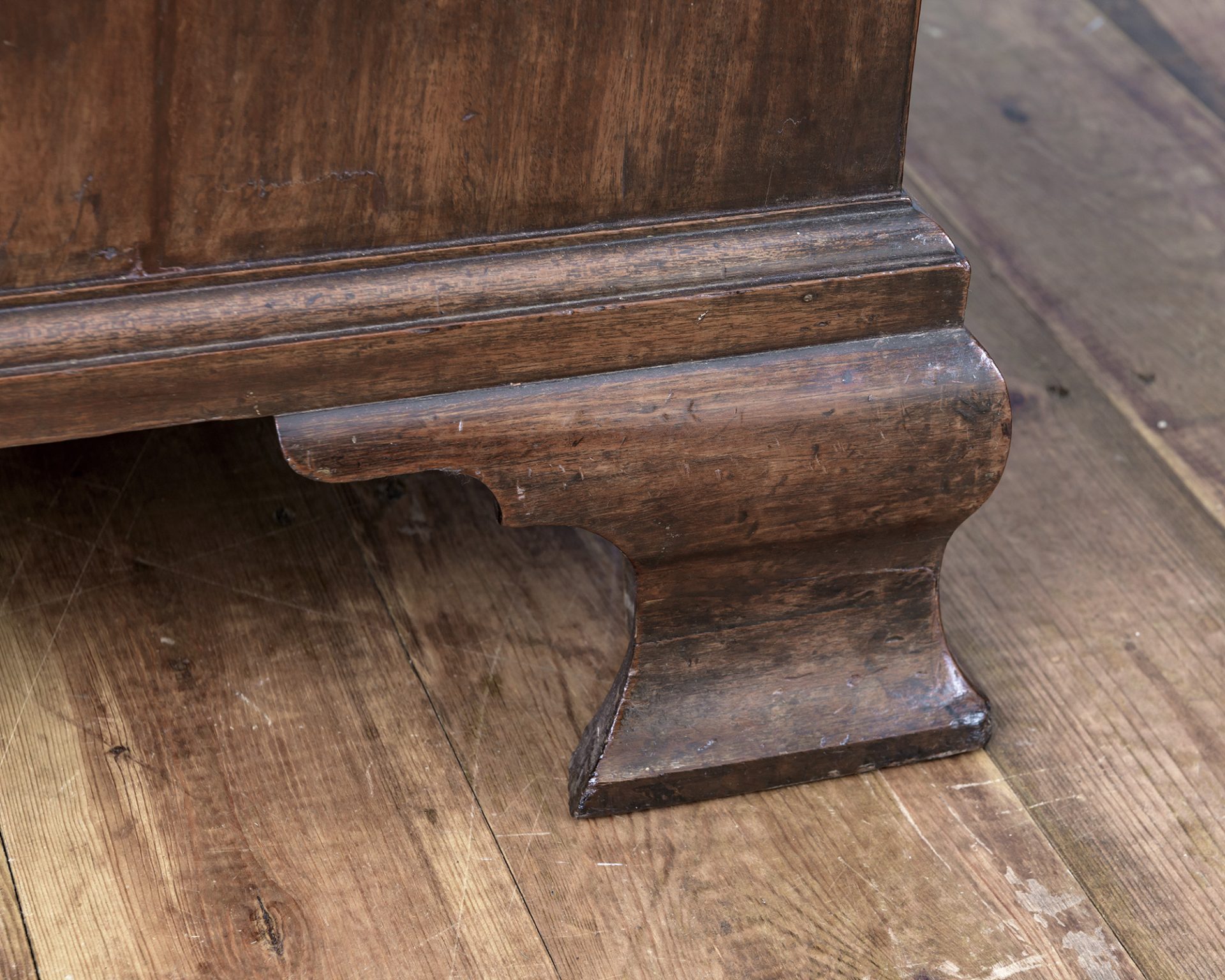
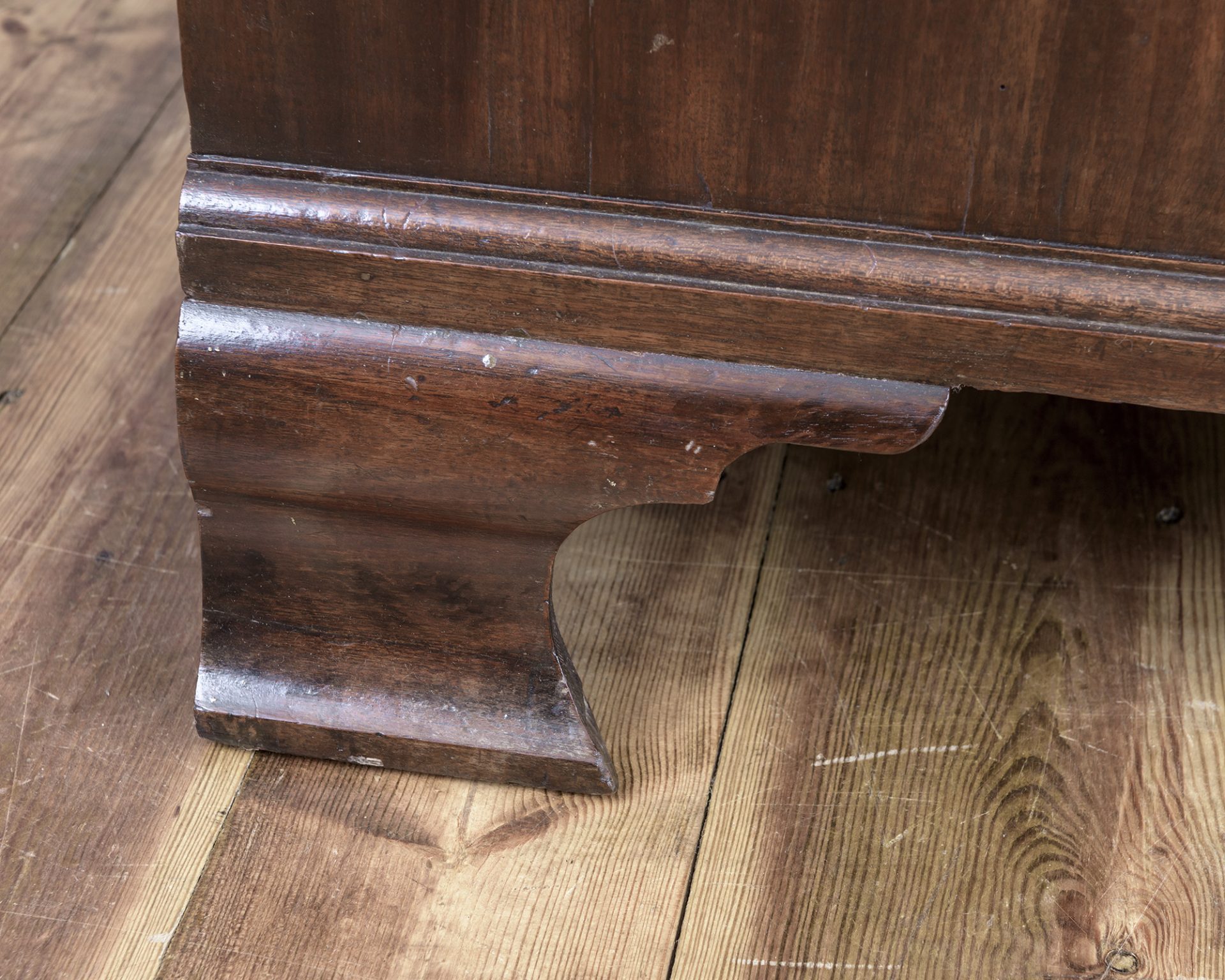
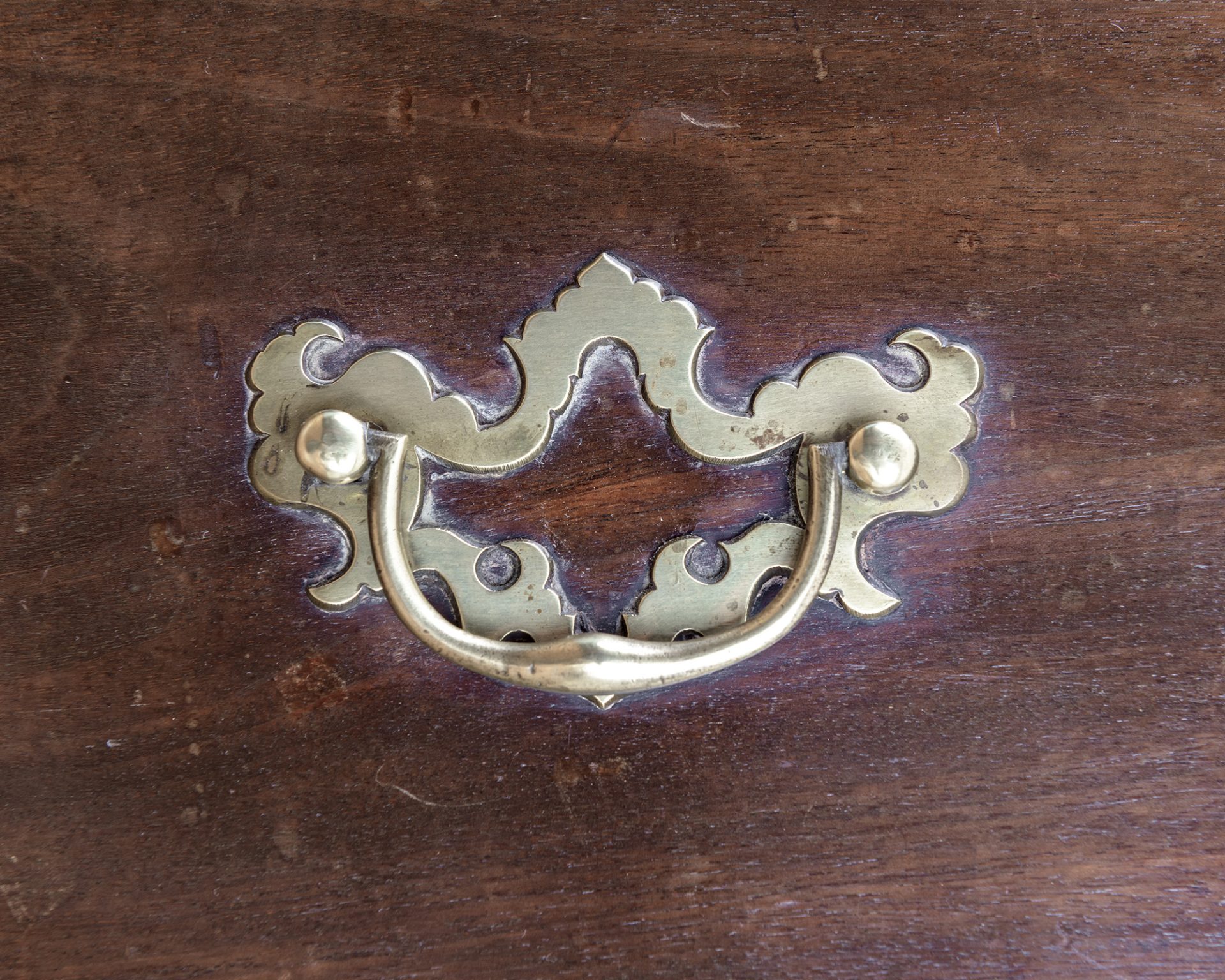
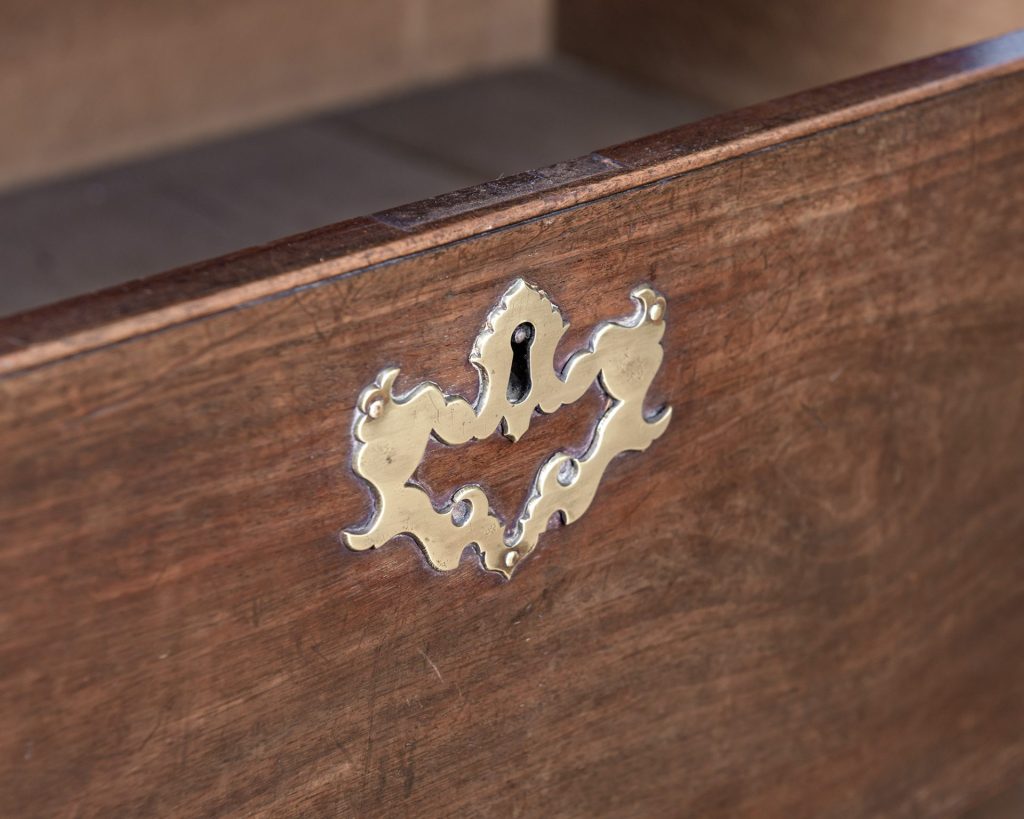
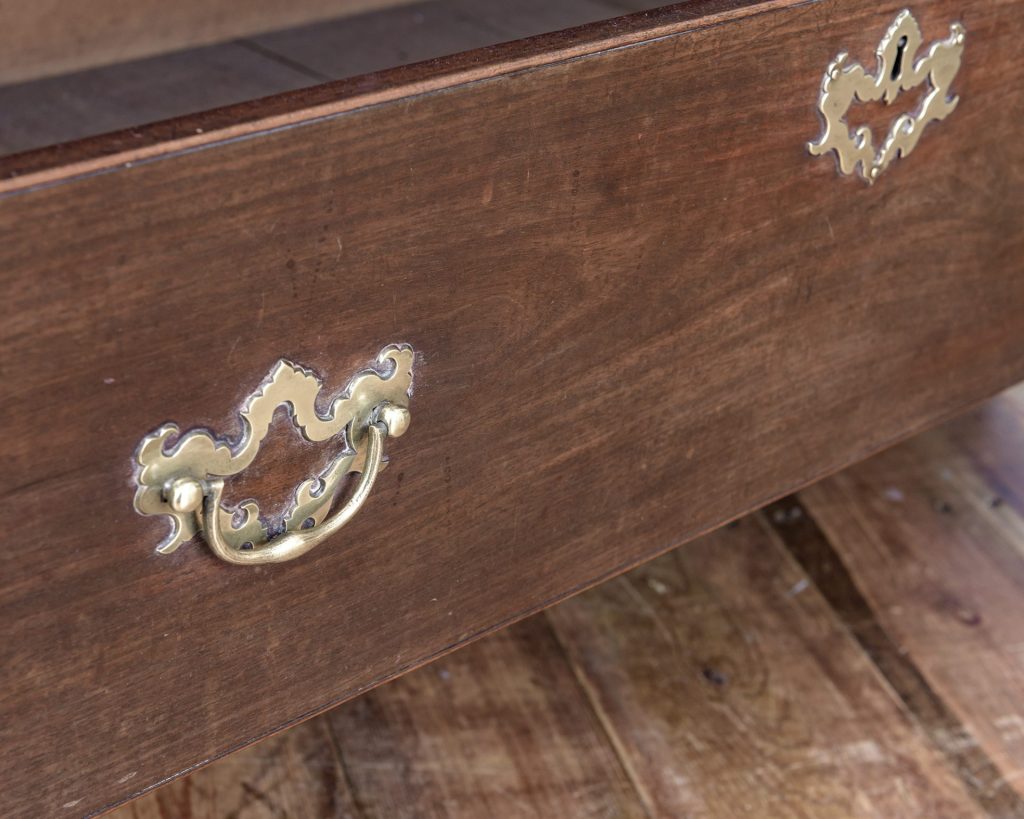
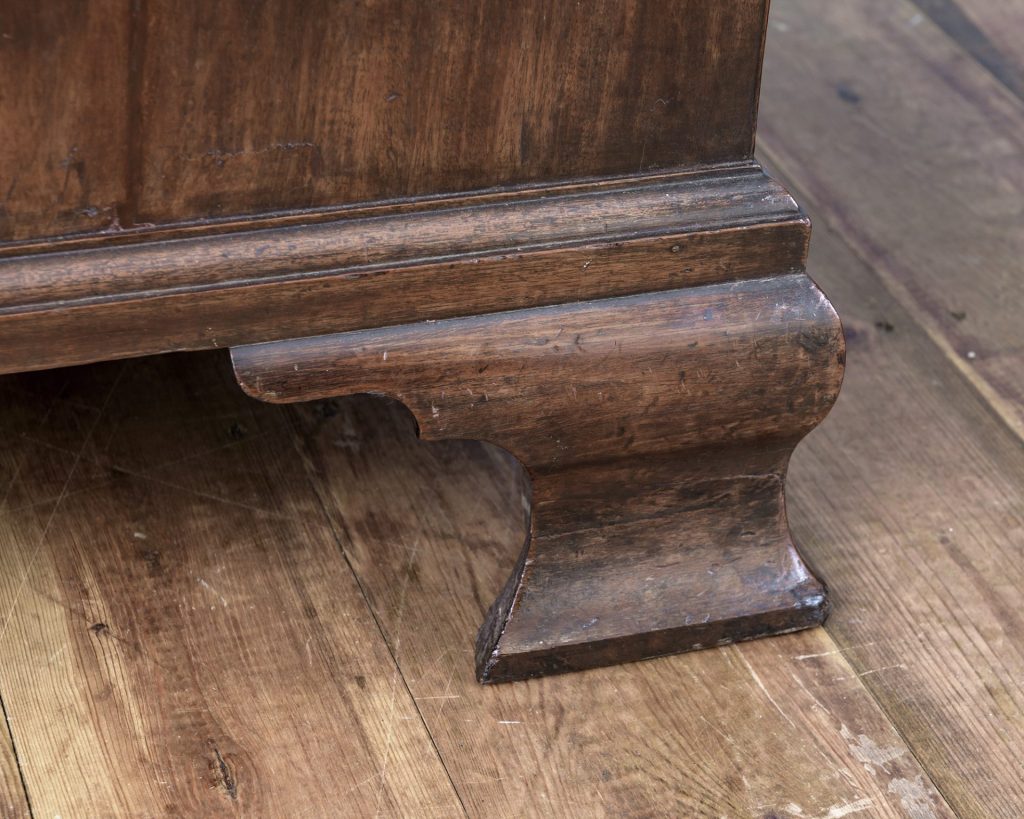
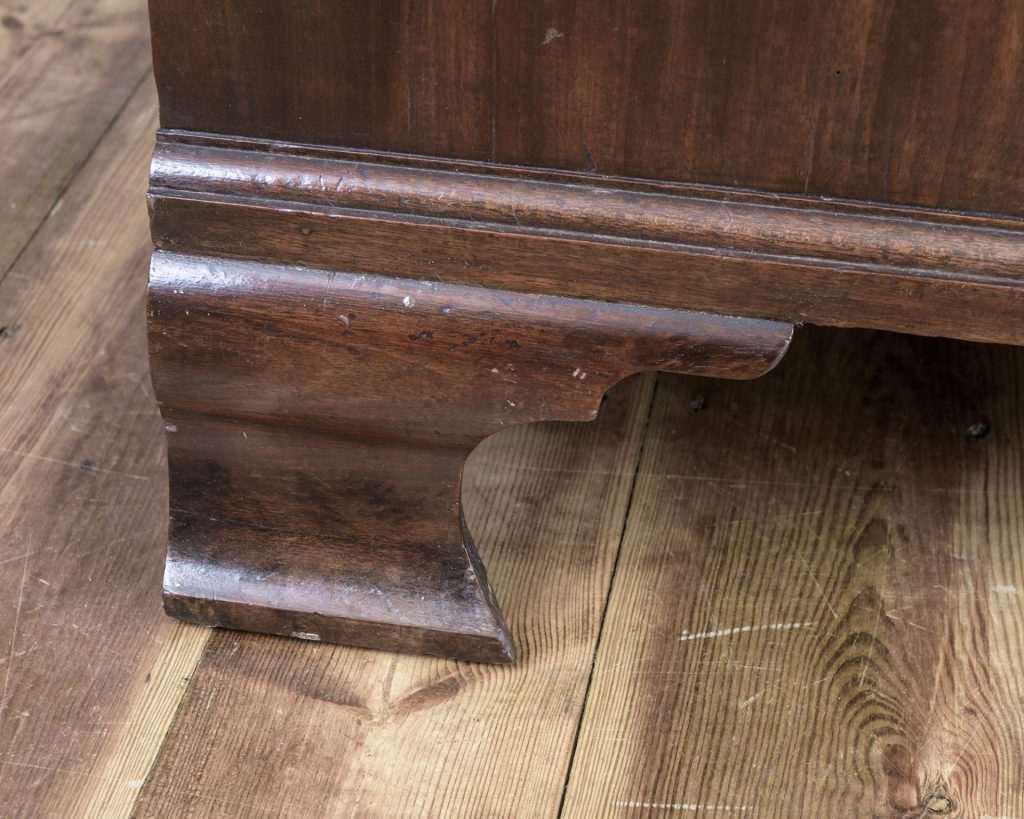
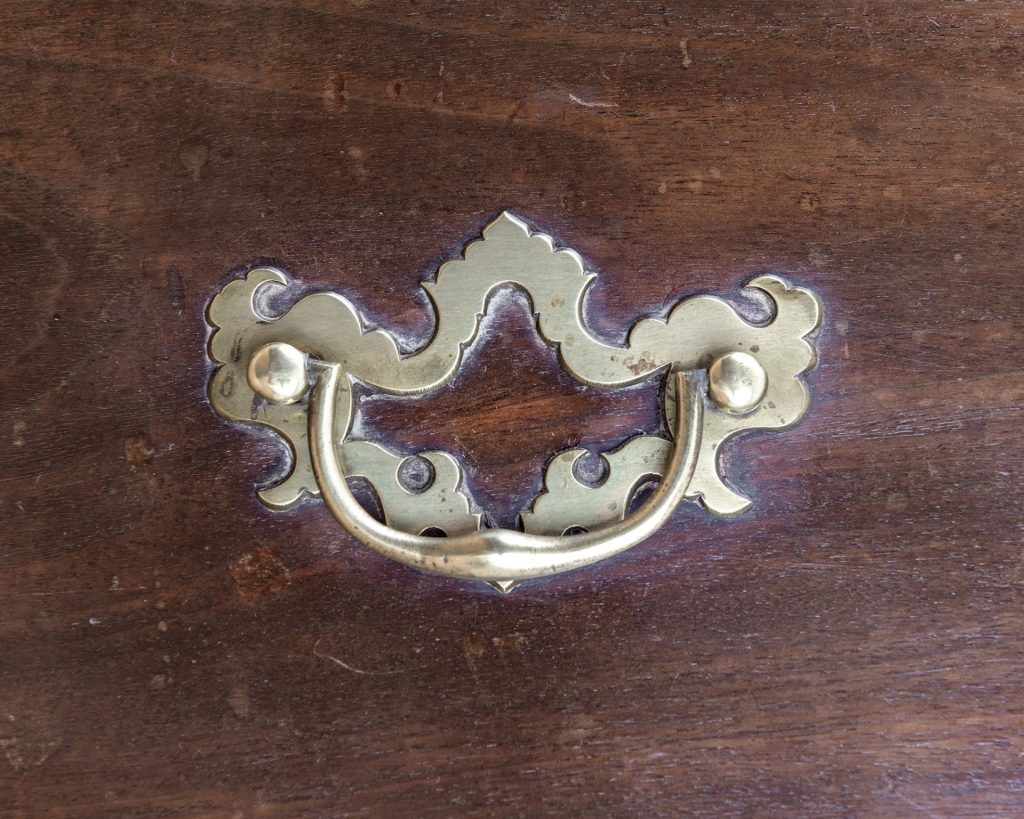
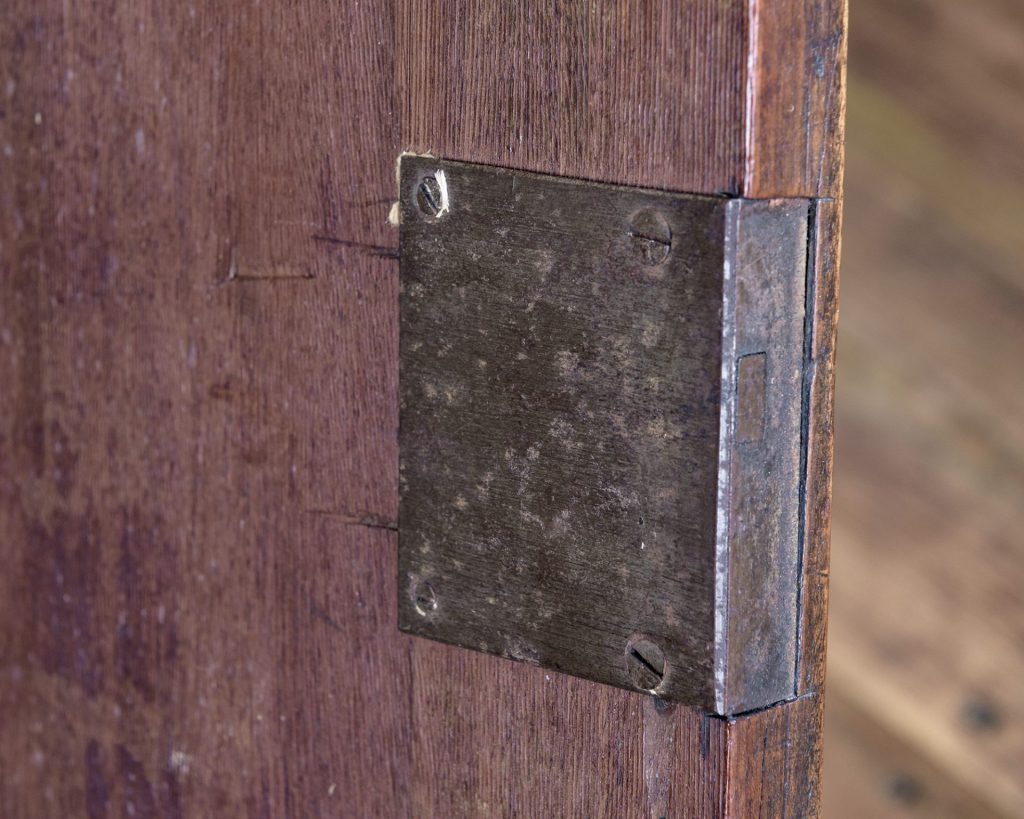
The base section is fitted with the original steel lock as well as retaining the original George II open fret back plates and gilt brass swan neck handles and is raised on oversized George II ogee bracket feet.
Condition
Excellent, fully working pull out slides, drawers, with a rare size and general outline.
One original tray, Freshfords re-constructed five Georgian oak lined trays to fit the wardrobe, the options were to discard the original and make a pure hanging cupboard or leave the original tray and make a hanging cupboard OR the more comprehensive option of restoring the piece back to its original purpose and then allowing a new owner to remove, store the trays if desired and making a hanging space.
At the time of listing this clothes press it is the only one currently on the global market, they are rare examples.
Literature
Giles Grendey (b. 1693) was one of the most prolific cabinet-makers of George II’s reign, due partly to the fact that he occasionally labelled his furniture, unlike most English cabinet-makers of the period.
After serving a seven-year apprenticeship, he became freeman in 1716 at the age of 23. By 1726, he had his own workshops at Aylesbury House in Clerkenwell, London, where he employed a fleet of cabinet-makers producing mainly walnut and mahogany furniture. Some of the firm’s chairs are stamped with initials inside the seat rails and legs, which usually indicate the individual cabinet-makers responsible for making the piece of furniture. The workshop, therefore, must have been of considerable size making it necessary to mark the pieces, presumably for payment to the individual maker.
Giles Grendey also traded in timber and japanned furniture. The latter made famous by the discovery of R. W. Symonds of a vast commission to the Dukes of Infantado for the Castle of Lazcano in Spain, where some seventy-two pieces of red japanned furniture were recorded in the 1930s, prior to their dispersal around the world.
Furniture by Grendey features in many prominent houses, including Kedleston Hall in Derbyshire as well as Stourhead and Longford Castle in Wiltshire. Further afield his pieces have been traced back to Spain, Italy, Portugal, Norway, Denmark and Sweden; catering to this international market by adapting his designs, to suit the prevailing fashions in different countries.
By 1731, if not before, Grendey had established a workshop and warehouse in St. John’s Square, Clerkenwell, and these remained his working premises until at least 1755. His dwelling house was nearby, at No 2 Lyon Street. Grendey remained active into the 1760s, becoming Master of the Joiners’ Company in 1766, but probably retiring shortly thereafter. In the 1770s, Grendey – now styled ‘gentleman’ – bought a country house at Palmer’s Green, a village a few miles outside London, complete with a coach house, stable and grounds. He died in March 1780, at the age of eighty-seven.
Grendey’s was a large business. When fire destroyed his premises in 1731 he was said by the London Daily Post, to have lost furniture to the value of £1,000 ‘pack’d for Exportation’, in addition to an easy chair worth 500 guineas. In August 1740, The London Evening Post described him as ‘a great Dealer in the Cabinet way’. Grendey was an importer and dealer in timber and had business dealings with some of London’s most eminent cabinet-makers, among them George III’s cabinet-maker, John Cobb (1710–1778), who married Grendey’s daughter, Sukey, in 1755. Grendey’s clients included several notable eighteenth-century figures, such as Sir Richard Colt Hoare (1758–1838) of Barn Elms and
Lord Scarsdale (1726 –1804) of Kedleston in Derbyshire.
Dimensions
Height 167.64cm (66 inches)
Width 127.00cm (50 inches)
Depth 63.50cm (25 inches)
Stock No: 11712
£10,750.00
In-stockMake an Enquiry
If you'd like to negotiate on this item, please make your offer below and we'll get back to you.
Reserve Item
Request more images
© 2026 Freshfords Fine Antiques